VIEW CATALOGUE OF WORKS
-
VIEW CATALOGUE OF WORKS -
FOR IMMEDIATE RELEASE
The Clay Studio Presents: Radical Americana
Monumental Roots - New Works by Charlotte Lindley Martin & Terri Saulin
At No. 5 Butchie Alley
May 16th - July 31
Opening Reception: May 16th, 2026
July 4th Celebration Reception
Workshop - TBA
Closing Reception: July 31
Philadelphia, PA — No. 5 Butchie Alley invites the city to step into Radical Americana: Monumental Roots, an exhibition where wild gardens, lost architectures, inherited traditions, and centuries of porcelain whisper to one another across time. In the hands of Charlotte Lindley Martin and Terri Saulin, clay becomes a place of memory and reclamation — a tender, maximalist archive of what America was, what it pretends to be, and what still blooms despite our forgetting.
Presented as part of the Semiquincentennial initiative led by The Clay Studio, Radical Americana is one of a consortium of exhibitions celebrating Philadelphia’s enduring legacy as a center for art, craft, and civic imagination.
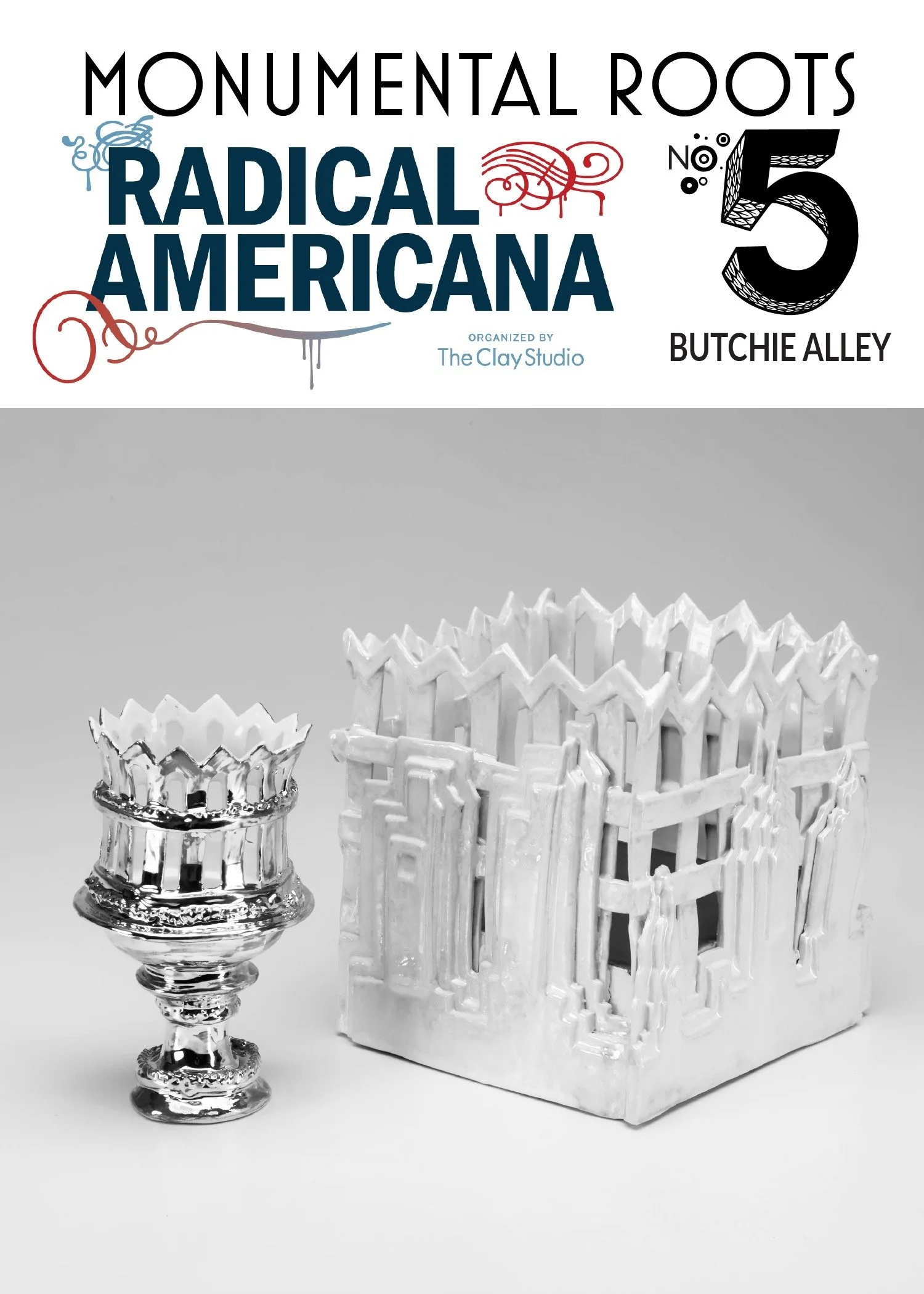
Charlotte Lindley Martin — Radical Roots in Porcelain
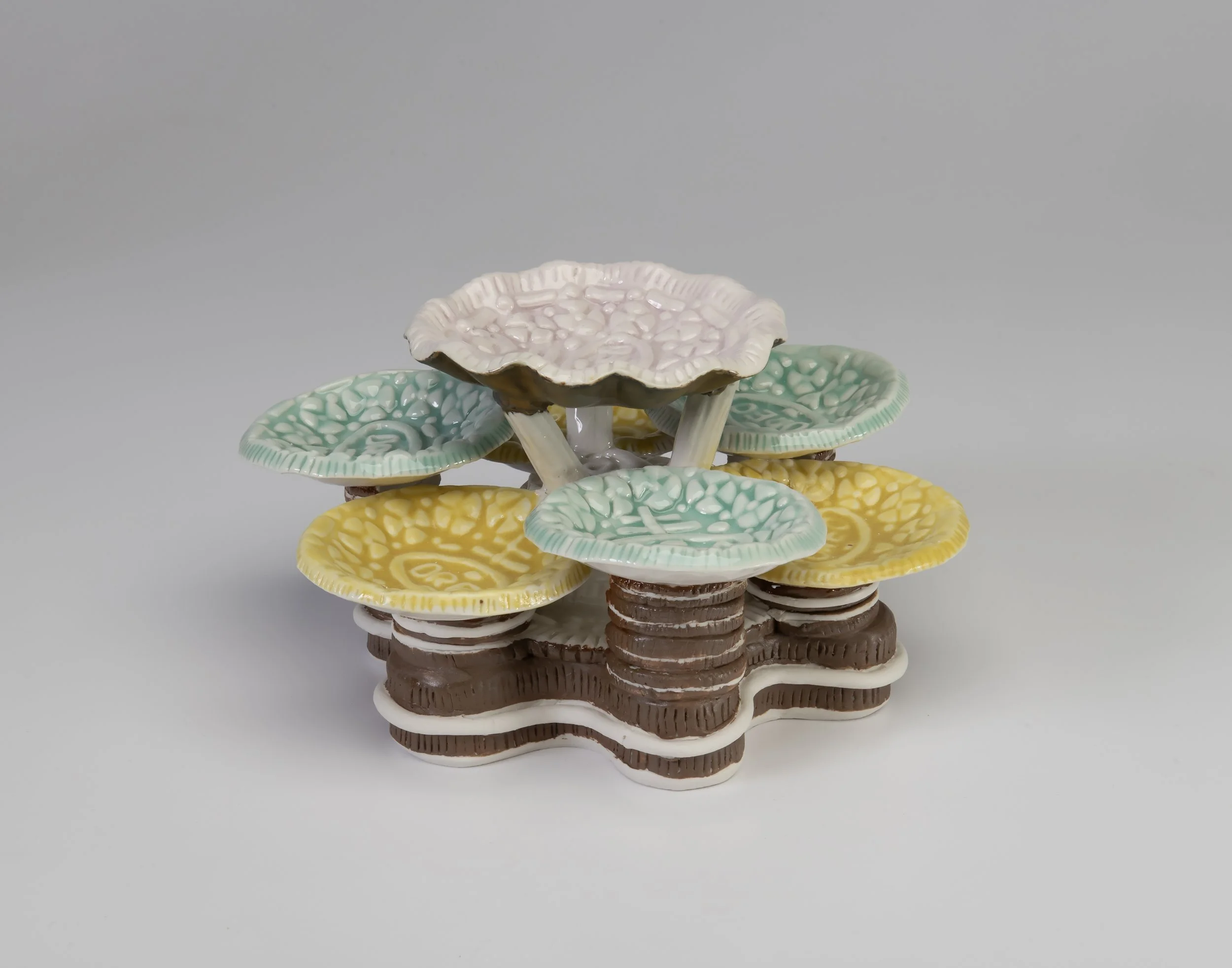
Charlotte Lindley Martin approaches porcelain the way one approaches a beloved, mature garden: not to prune it into submission but to listen and help it flourish. Her ceramic works begin with feeling – mystery, mischief, exuberant beauty – and from there she adds the deep roots of craft that run from eighteenth century Sevres porcelains to her own family’s British craft heritage with its bohemian flourish.
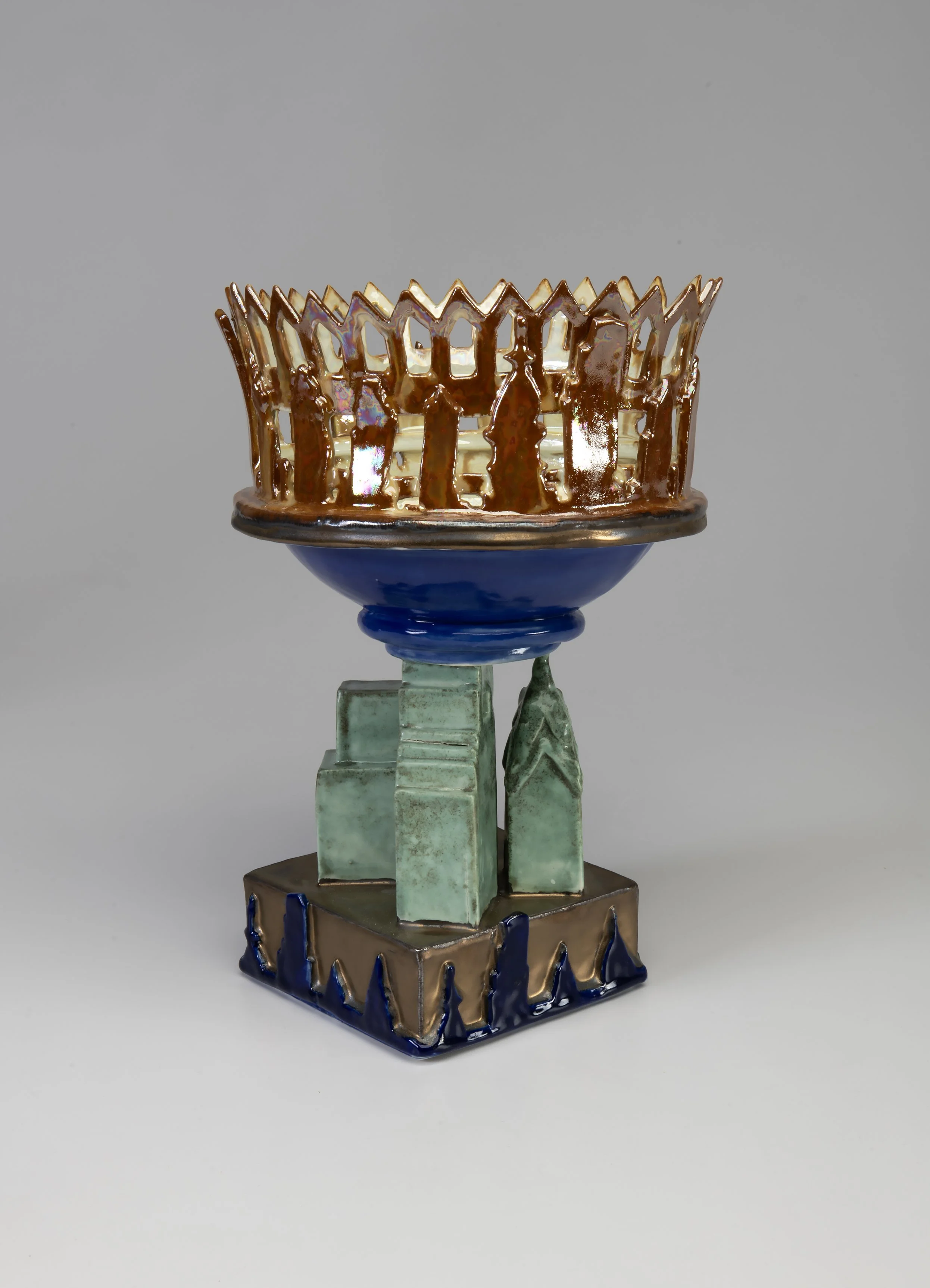
In response to the theme of Radical Americana, Charlotte harvests ceramic moments from the eighteenth through twentieth centuries. From her research on potteries in the Philadelphia and Trenton areas, she has chosen four works that called to her for contemporary radical interpretations. A Pickle Stand from 1776 made by the Philadelphia China Manufactory becomes a witty commentary on delicacy and industrialization. A Fruit Basket by Tucker and Hemphill of Philadelphia produced in
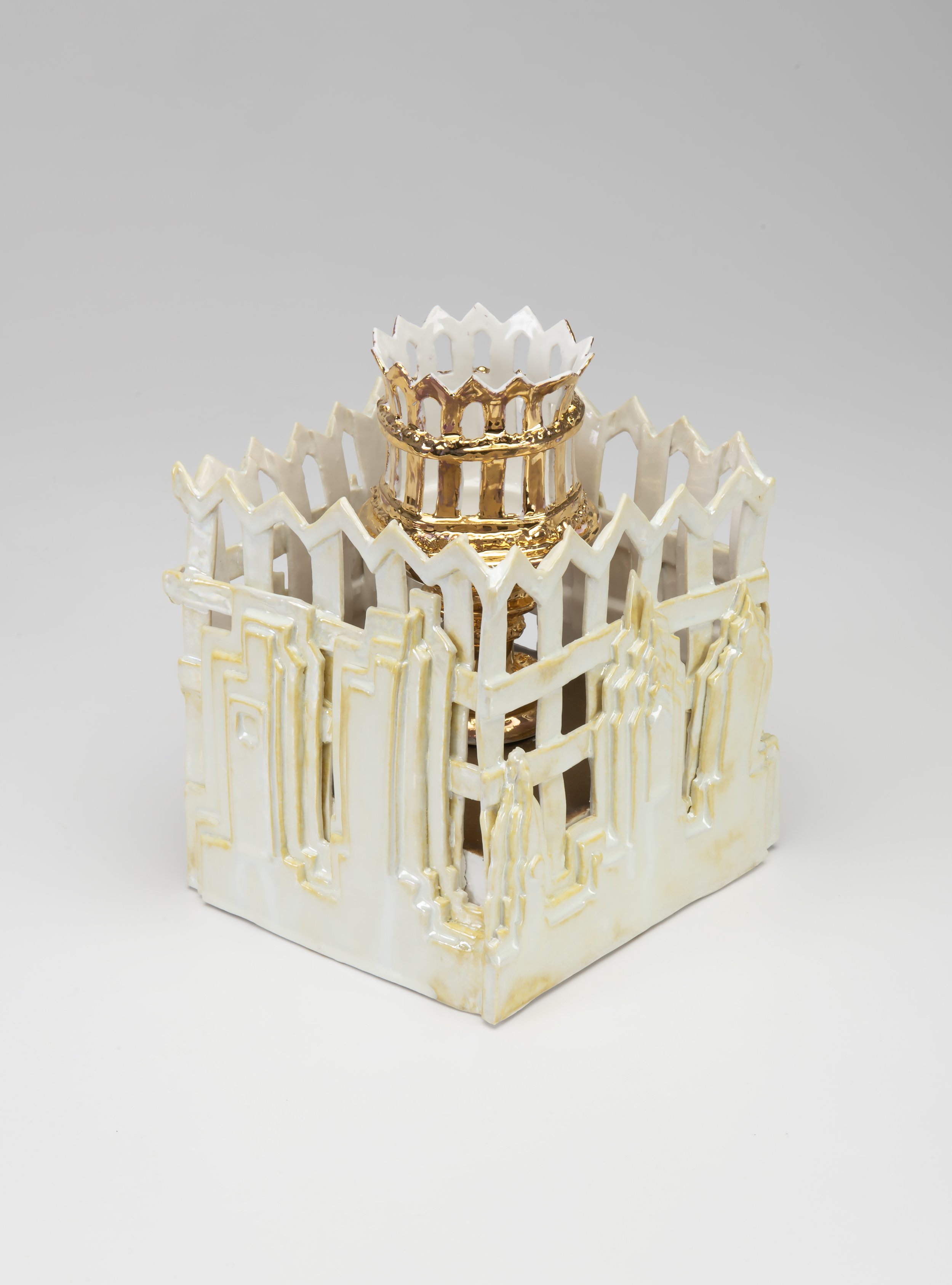
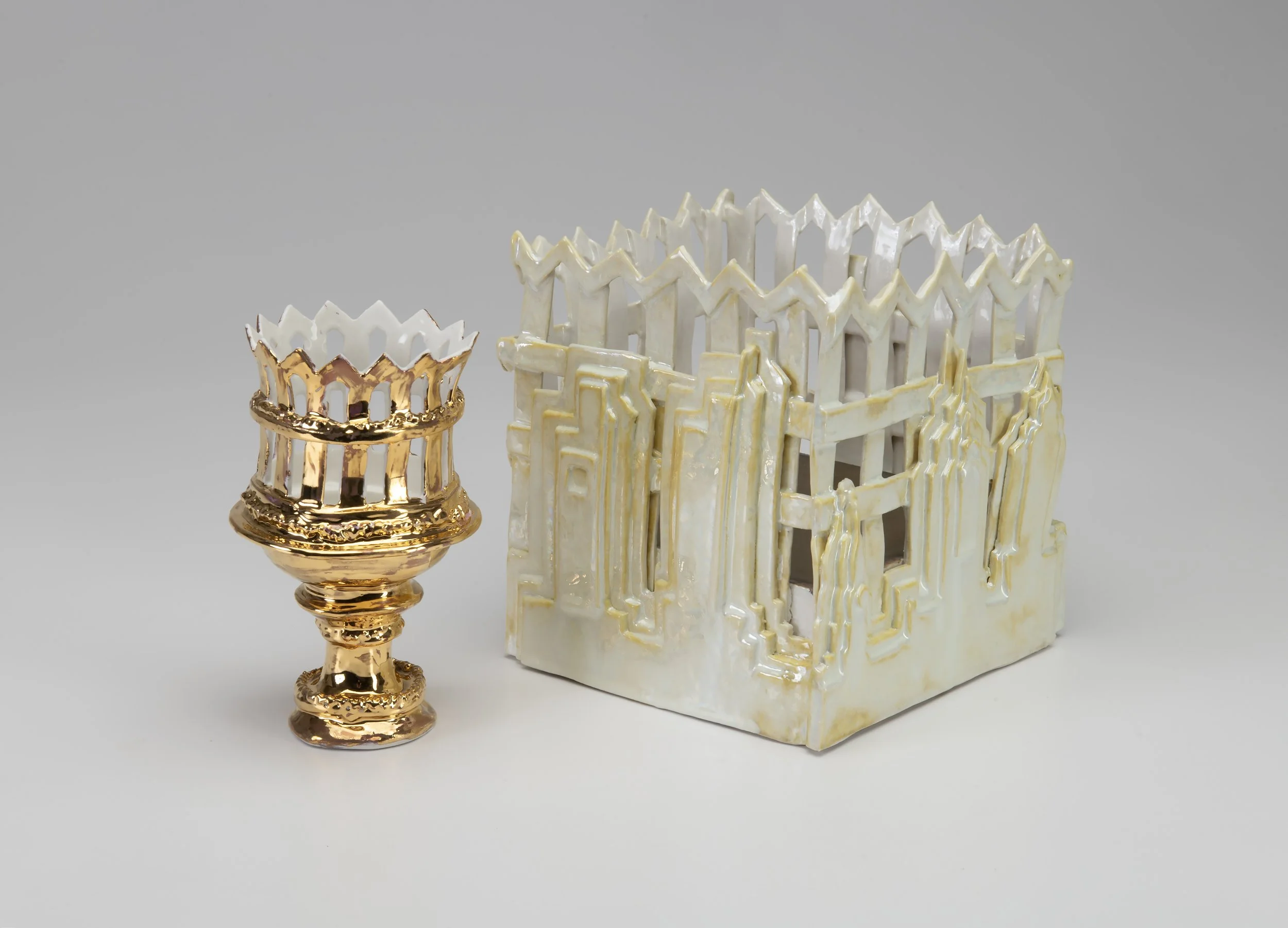
1838 becomes a modern meditation of the changing Philadelphia skyline. Then, from the Philadelphia Centennial Exhibition of 1876 the eccentric Baseball Vase modeled by Isaac Broome for the Ott & Brewer Pottery in Trenton becomes a small monument to the passions of Philadelphians for their city. And finally, from the 1974 opening of the legendary Helen Drutt Gallery in Philadelphia, Charlotte is inspired by the work of three famed local artists represented by that gallery, Rudi Staffell, Lizbeth Stewart and Paula Winokur whose works reflect the whimsy, the beauty, and the depth of the Philly Spirit.
Charlotte’s research into the time periods and their representative objects become the soil for her 2026 Americana Porcelains. Since the word “radical” comes from the Latin word for “root”, Charlotte asks what is at the root of being American, of being a Philadelphian? It is, she artistically concludes, staying connected to our local history and then reimagining it in new, bold, mischievous ways that capture the spirit of our times.
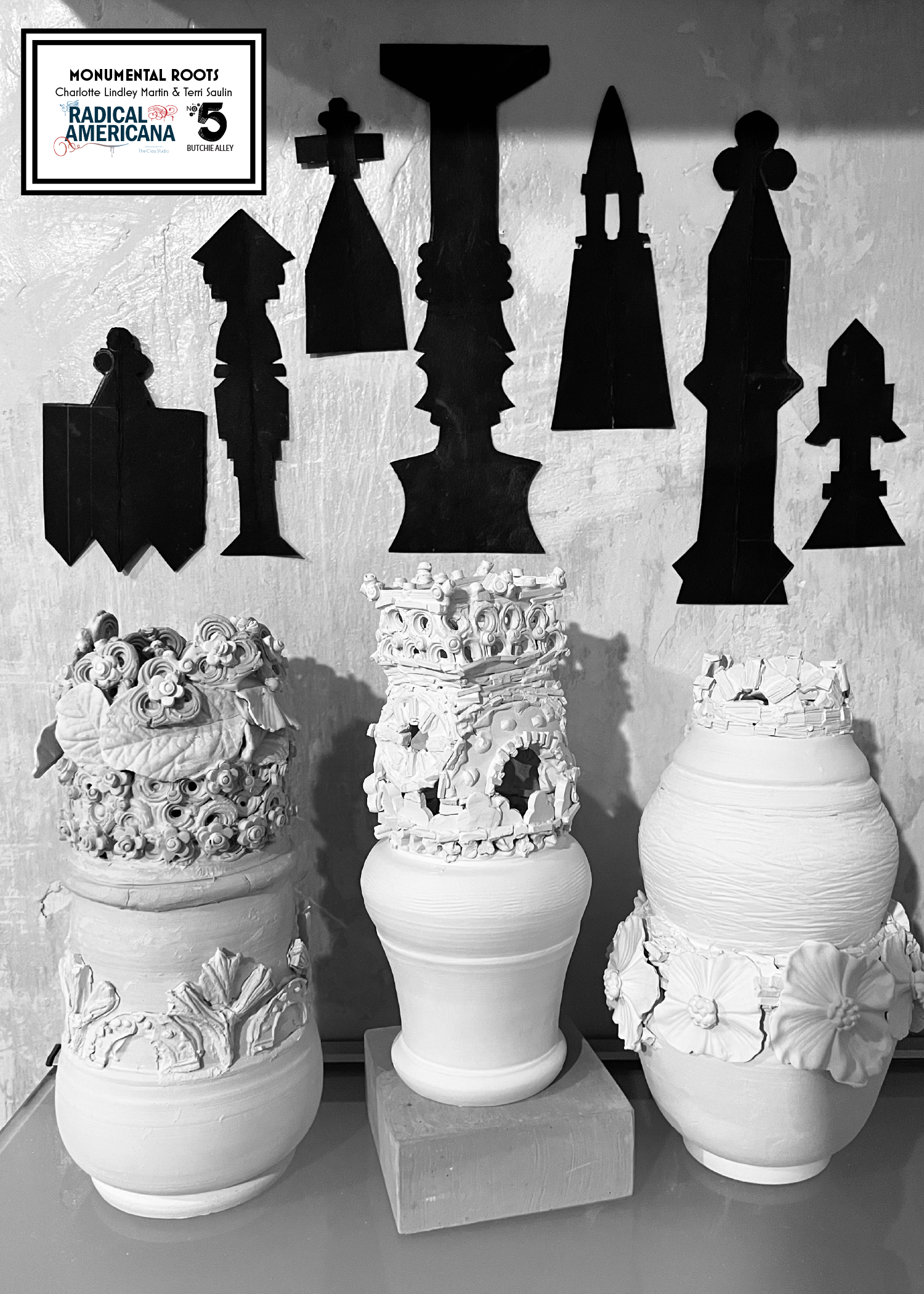
Terri Saulin — Vessels for the Lost Garden
Philadelphia’s magic thrives in its quiet scraps of green — the Mugunghwa and hollyhocks at Palumbo Park; the secret garden behind the Ack-a-me on Passyunk; “down the lakes” at FDR Park where neighbors fight for meadows; and the plantings lovingly tended by Peter and Jim, two nurses who heal their community one Columbus Square flowerbed at a time.
For Terri Saulin, these gardens are acts of radical caretaking. Her project, Vessels for the Lost Garden, honors these living spaces while resurrecting two vanished giants of Philadelphia design: Hermann Schwarzmann’s 1876 Horticultural Hall — formerly the city’s glass cathedral of plants — and the muscular, idiosyncratic ornament of Frank Furness, much of which has been erased by “progress.”
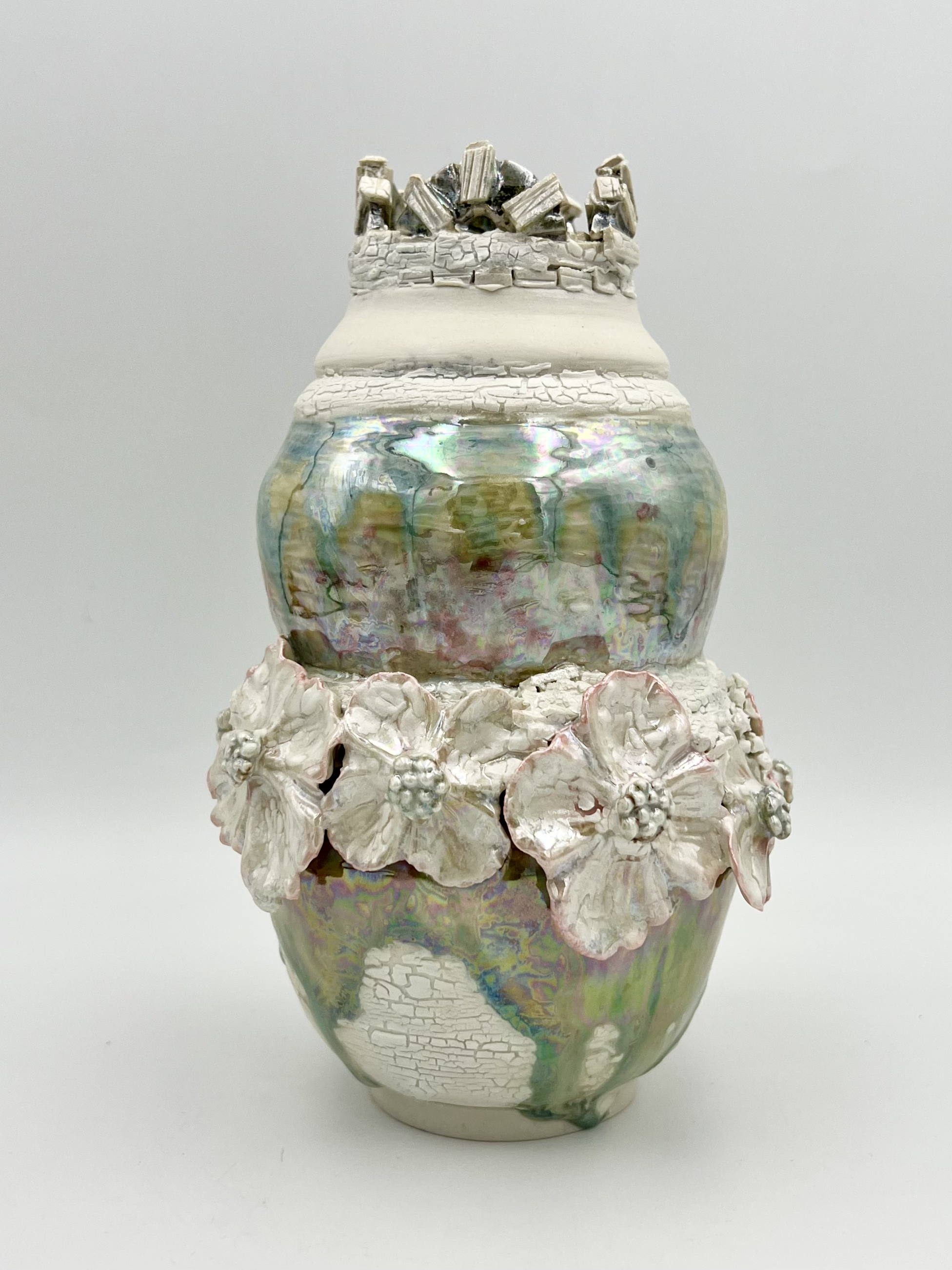
Saulin’s porcelain vessels function as reliquaries: handbuilt architectural forms shaped from ribs, arches, tiny bricks, iron tracery, and greenhouse geometry. The ornament is softened by clay, becoming botanical — petals as finials, leaves as columns. Each vessel corresponds to a specific plant gathered from a community garden: Peter’s poppies, marigolds, dogwoods, a magnolia from Saulin’s own yard, roadside clippings from her walk past Logan Circle toward Moore.
The project is grounded in fieldwork across South Philadelphia’s gardens and hidden lots, and in architectural research at PAFA, the Centennial Bank, The Library Company, the Fairmount Park Conservancy, and archives documenting the demolished Horticultural Hall.
Saulin writes: “These vessels are tiny monuments that can be held in the hand — resurrecting what was once monumental into something tender, local, and defiantly thriving.”
A Shared American Tenderness
Martin listens to historic porcelain. Saulin listens to gardens and ruins. Together, they propose a Radical Americana shaped not by grand monuments alone, but by acts of care — the revival of a form, the tending of a plot, the insistence that beauty belongs equally to people and plants.
Their collaboration unfolds at No. 5 Butchie Alley, Saulin’s garden-breathing exhibition space, where the works will be surrounded by the living flora that inspired them.
Exhibition Details
Radical Americana: Monumental Roots
Artists: Charlotte Lindley Martin & Terri Saulin
Presented by: The Clay Studio
Location: No. 5 Butchie Alley, Philadelphia
Opening: Spring 2026 - May 16th through July 31
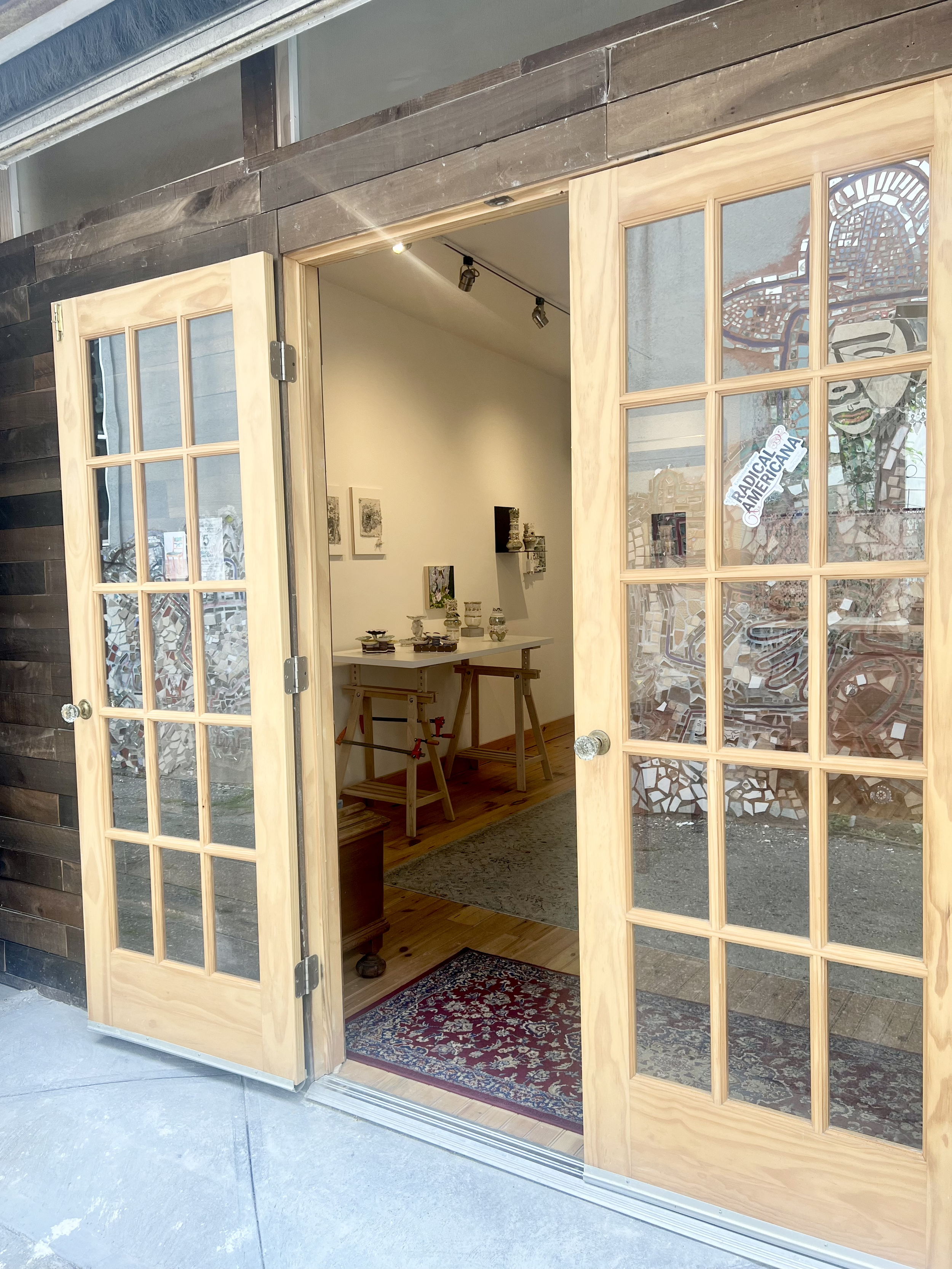
No. 5 Butchie Alley is located on the easement directly behind 1175 S. 13th Street in South Philadelphia. Enter Butchie Alley from Federal Street, just before 13th Street. Look for the vibrant mosaic mural by Isaiah Zagar that travels down the alley — the exhibition space is almost midway down the passage. Look for the “Arte Sin Limites” tile!
Take the self-guided tour of Radical Americana and learn more about each of the partner sites and exhibitions HERE!
Radical Americana : A Reflection on 250 Years
On view: April 9 – July 15, 2026
The Clay Studio will serve as an exhibition “Hub,” displaying a selection of works by participating artists at:
The Clay Studio
1425 N. American Street
Philadelphia, PA 19122
215-925-3453
Philadelphia, PA | December 17, 2025 –
In 2026, as the United States commemorates its 250th anniversary, The Clay Studio: Center for Innovation in Ceramic Art (The Clay Studio) (1425 N. American Street, Philadelphia, PA 19122) will lead Radical Americana, one of the most ambitious regional arts collaborations planned for the semiquincentennial. Created by The Clay Studio and supported by more than 20 cultural institutions, the project invites 25 artists to create new, research-driven work reflecting Philadelphia’s historic influence on American craft, civic life, and cultural identity. Radical Americana positions The Clay Studio as the central organizer, facilitating the research, partnerships, and exhibitions. Through this project, the participating artists illustrate how the ideas present during the signing of the Declaration of Independence in 1776 and the commemorations in 1876, 1926, and 1976 continue to influence the nation’s present and future.
Through Radical Americana, artists and partner organizations will illustrate how creativity can strengthen communities, inspire dialogue, and imagine a shared future. Each participating artist will conduct research with a partner institution and produce new works of art that reflect their findings. The resulting exhibitions, held across multiple venues, will include both the artwork and elements of the artist’s research, offering audiences new ways to connect art, history, and contemporary life.
For interviews, press images, or further information, please contact The Clay Studio and No. 5 Butchie Alley.
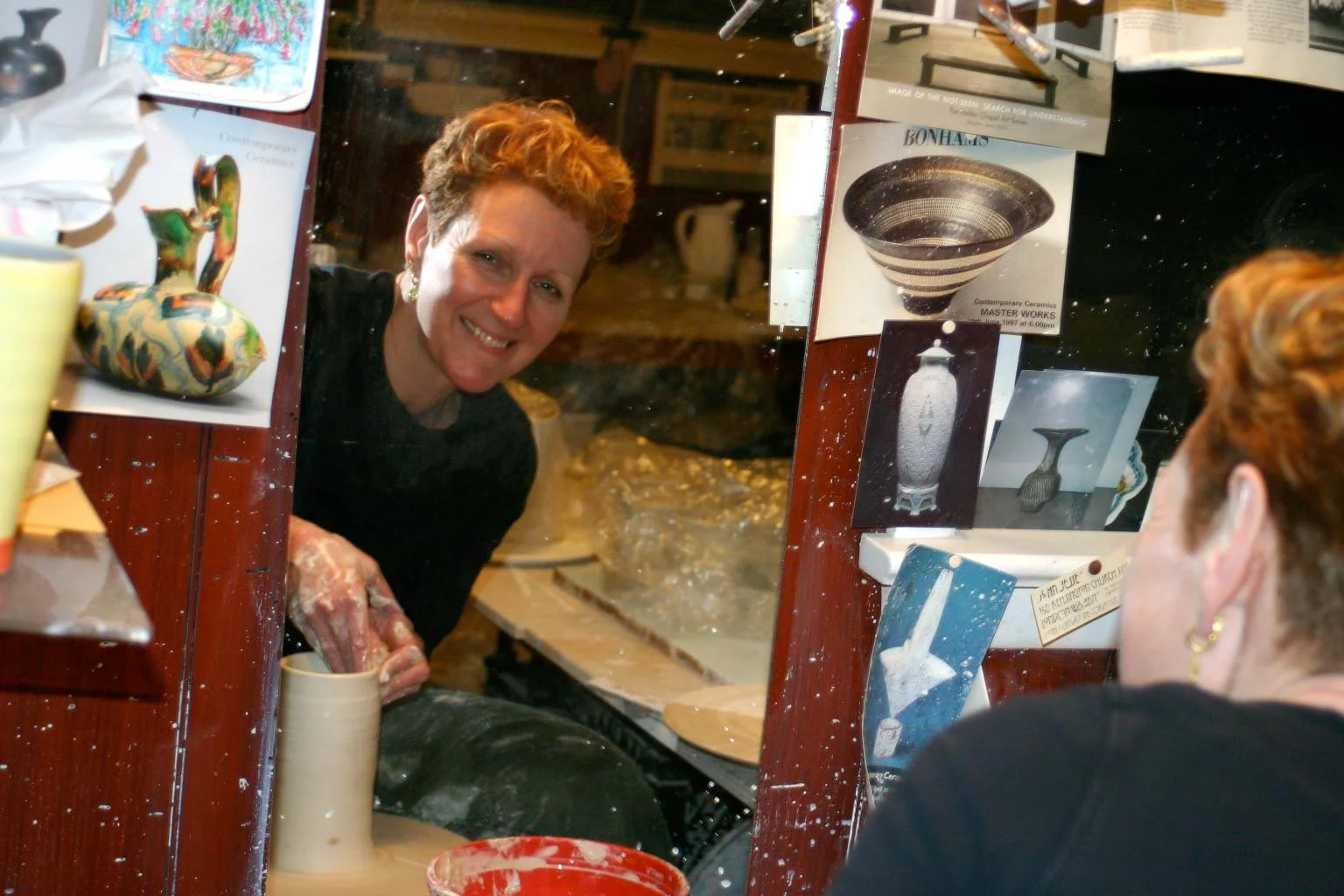
Charlotte Lindley Martin comes from a long line of artists. Born 1953 in England she travelled to the USA with her American husband in 1980. She graduated from Philadelphia College of Art in 1985 with a BFA in Crafts where she studied with Liz Stewart and Bill Daley. She mentored with Bill Daley and has taken workshops with Chris Staley and Nancy Blum, Mark Pharis, Alleghany Meadows and most recently Andrea and John Gill, and Liz Lerner. She considers these workshops her graduate studies.
Early on in her career Charlotte began to search for a way to create functional pots with colorful decorated designs using the durability of high fire clay; these she called Hand Painted Porcelain.
Charlotte continued to explore her ideas and artistic vision with Bill Daley. Exploring form and surface on her functional pots led her to the highly embellished Baroque and Rococo porcelains of the late 19th century. Bill’s advice was to make modern pots out of those baroque impulses.
Mentorship continued with Jerry Bennett and the discovery of Porcelain Paper Clay. Hand building with Porcelain Paper Clay allows her to explore ideas and push forms into new realms. Flowers adorn this work, texture informs the surface, color adds emotional impact.
Charlotte has an exhibition at the Philadelphia International Airport as part of the PHLAirportArt program. For this work she has gone a step further into the idea of the natural world and how its beauty transforms what we see as art. The art works that Charlotte has created for “Radical Americana 2026” continues her use of historical pots as inspiration. She has taken historical pots and re-imagined them as contemporary artworks for 2026.
Terri Saulin received her MFA from the University of the Arts and her BFA from Moore College of Art and Design. She is a long time member and press coordinator for Tiger Strikes Asteroid, Philadelphia and a Member/Supporter of The Clay Studio, CFEVA and In liquid Gallery, Philadelphia. She currently teaches a variety of Studio Art courses at The Agnes Irwin School, in Rosemont, PA.
Terri is the owner of No. 5 Butchie Alley. No. 5 Butchie Alley is an outgrowth of Terri’s studio. The space is secretly tucked away on a small easement in South Philly and opens into a garden of
inspiration. Terri is celebrating her fifth year offering programming, which evolves organically based on her schedule as a full time educator. She hopes to continue growing and creating a welcoming space that invites generous conversations, a place to exchange ideas and to build community in the city of Philadelphia.
Exhibitions at No. 5 Butchie Alley rotate approximately every two months. During the run of each exhibition, the exhibiting artists or Saulin herself offer workshops relating to their studio practice or relating to something currently happening in the community.
Check the website - terrisaulin.com - for details about events and workshop offerings.
Regular gallery hours are Saturday and Sunday, 12 p.m. - 4 p.m.
Appointments on other days are always welcome! Email - terrisaulin@terrisaulin.com
The gallery is located on an easement directly behind 1175 S 13th Street. Enter Butchie Alley from Federal Street, just before 13th. Look for the Isaiah Zagar mosaic mural.
AVAILABLE WORKS
-
AVAILABLE WORKS -
CHARLOTTE LINDLEY MARTIN
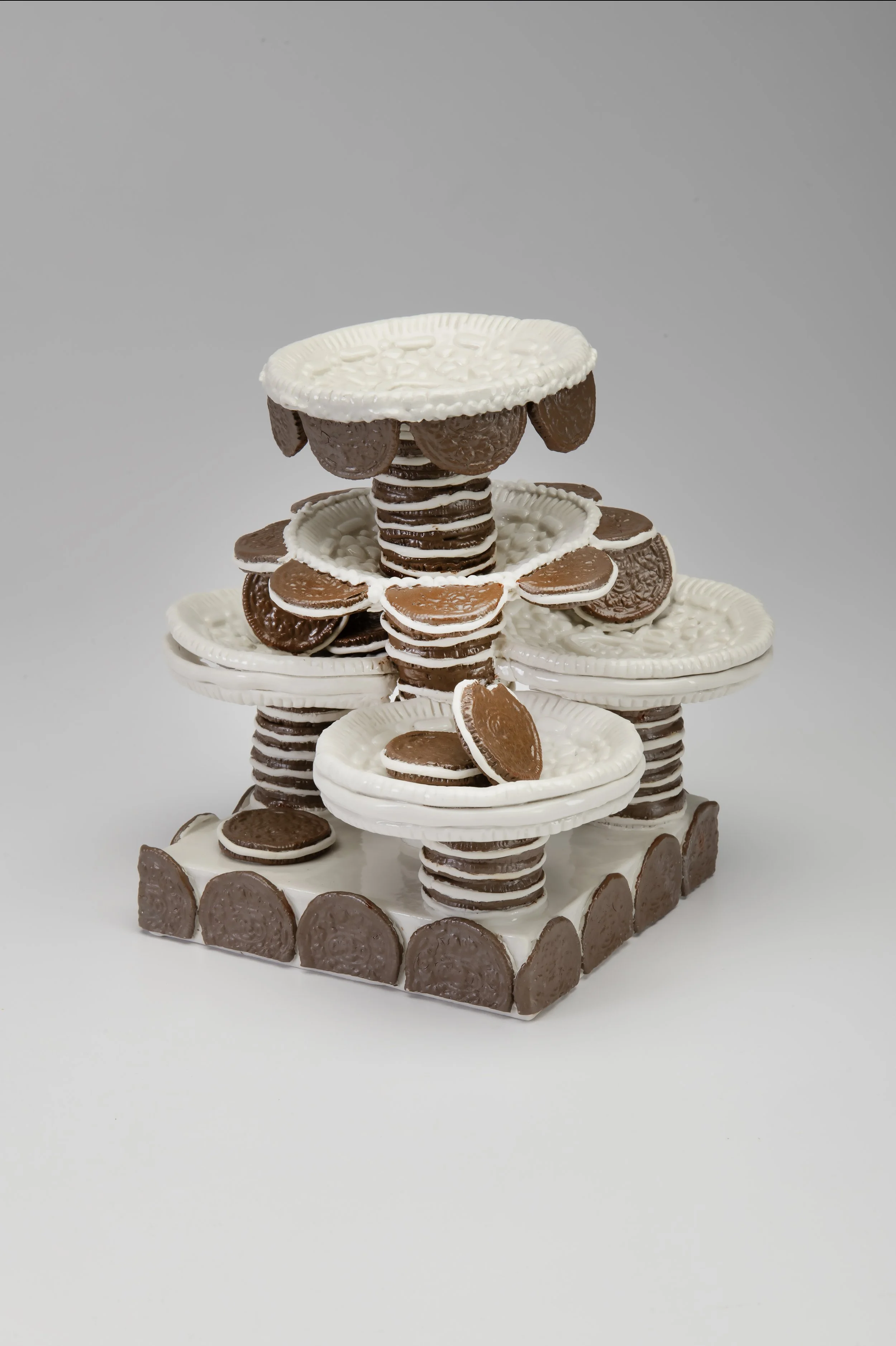
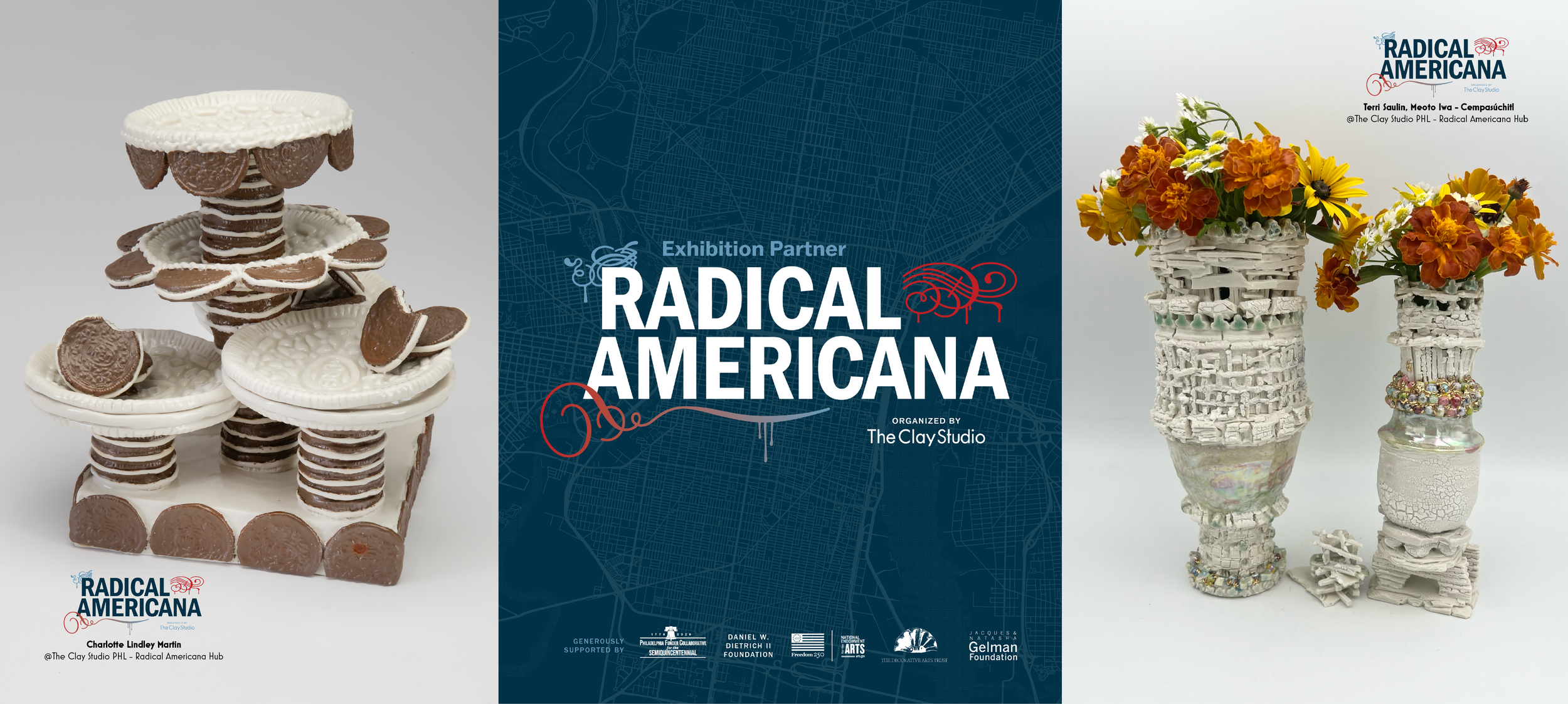
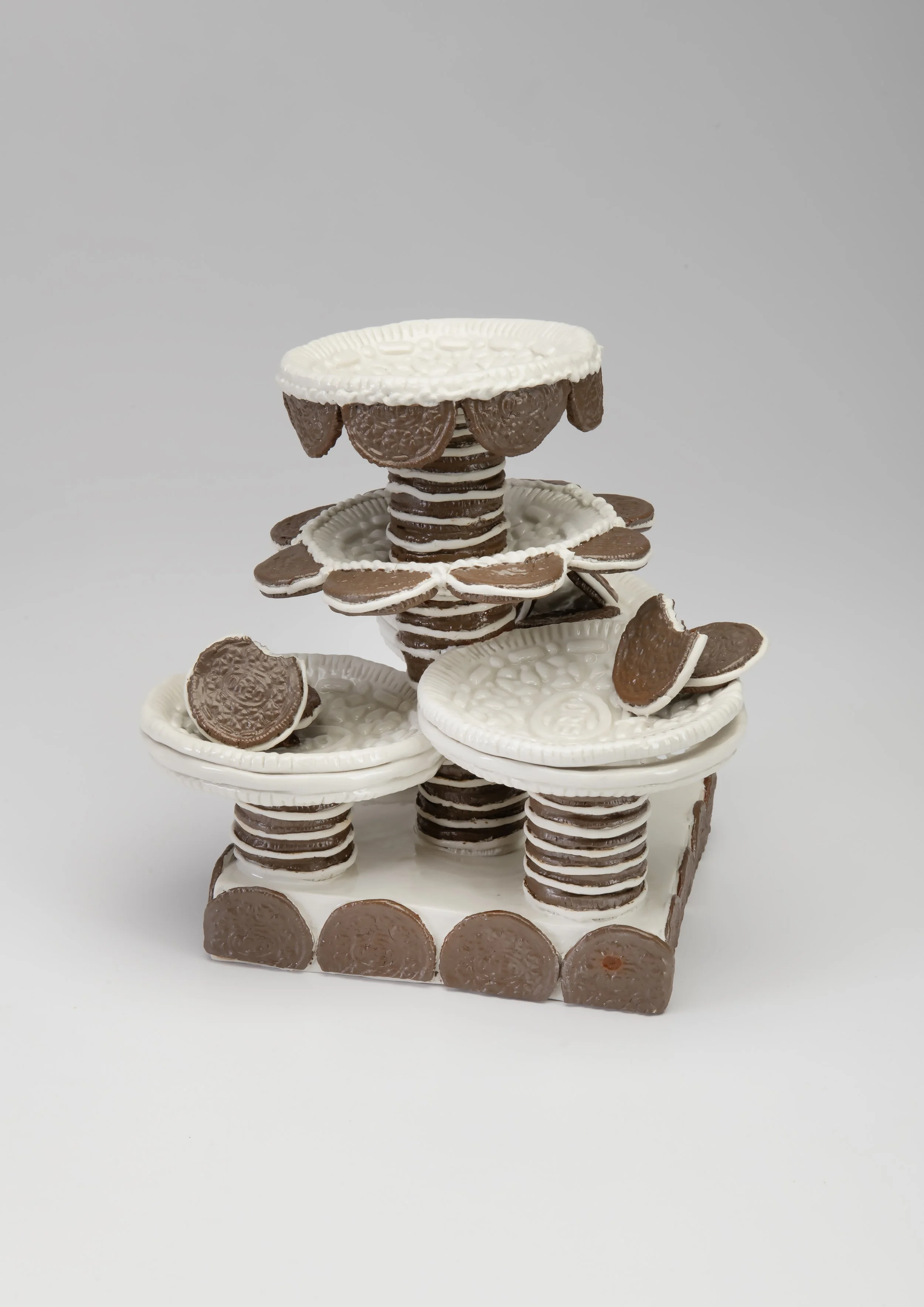
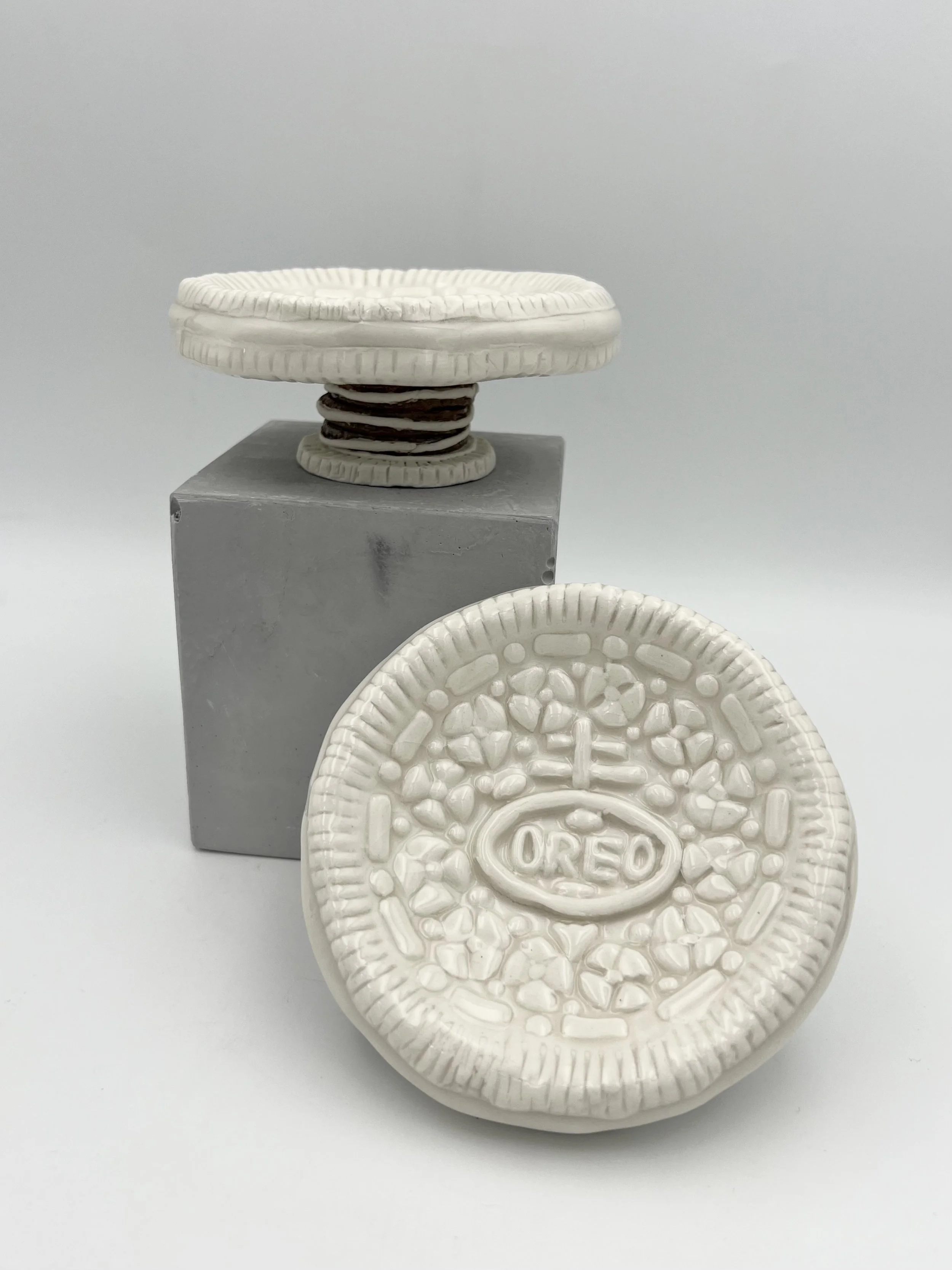
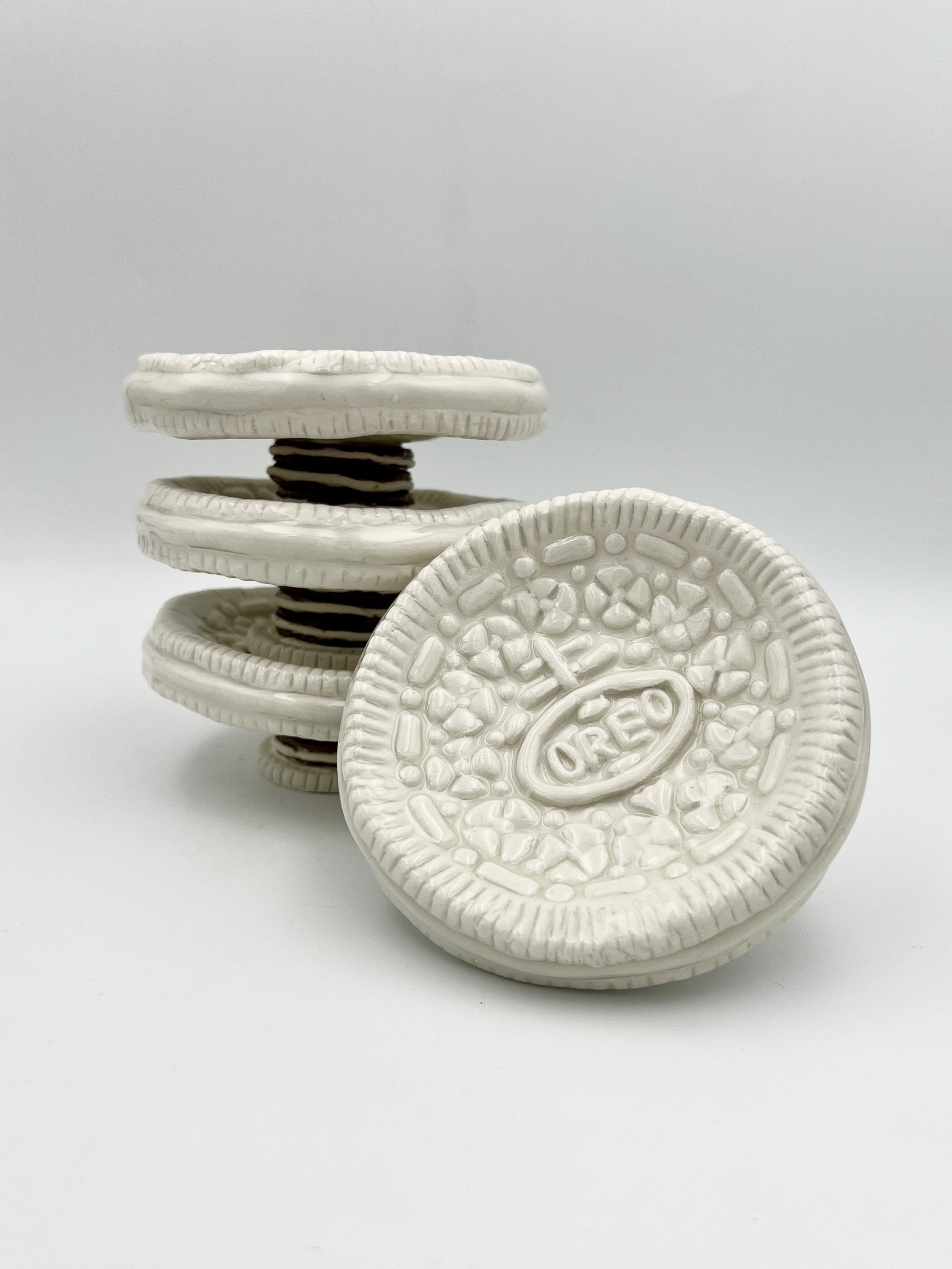
Charlotte Lindley Martin: Oreo Stand, $500, 9hx9x8”, On View at The Clay Studio , “Radical Americana Hub”

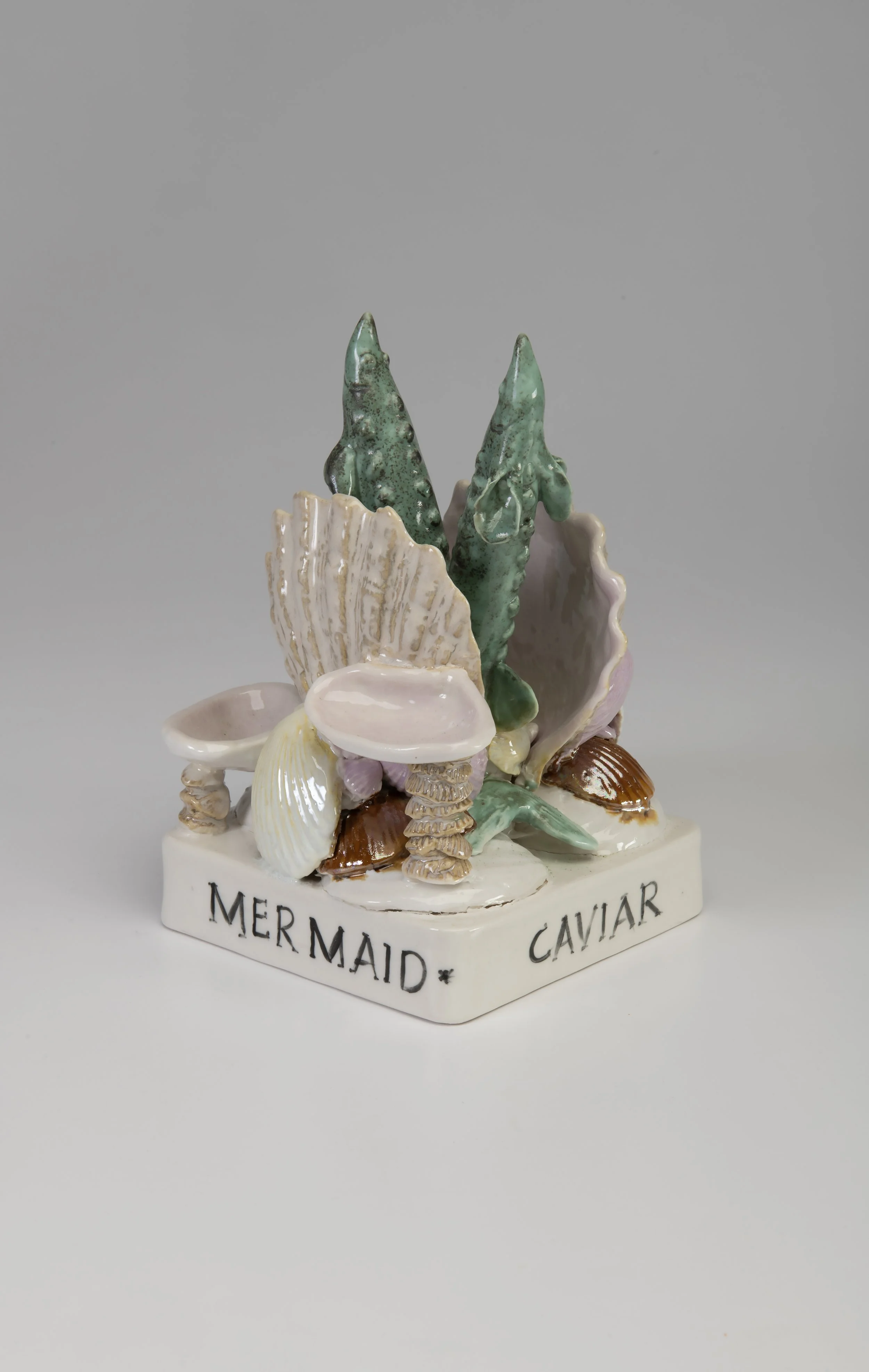
Kissed by a Lusty Mermaid - Caviar Stand, $450, 7hx5x6”
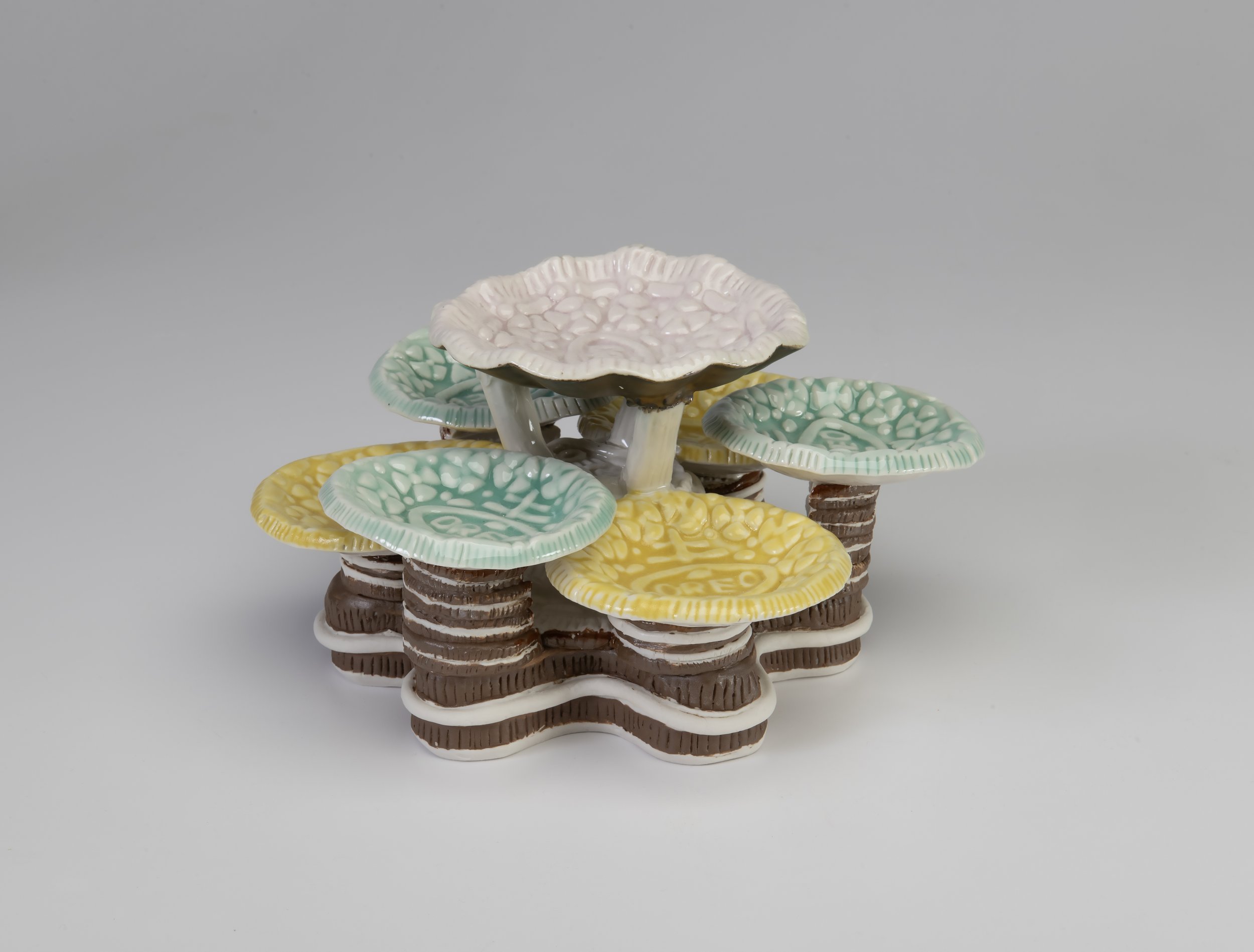
American Hero - Oreos in Action, $400, 4.5hx8dia”
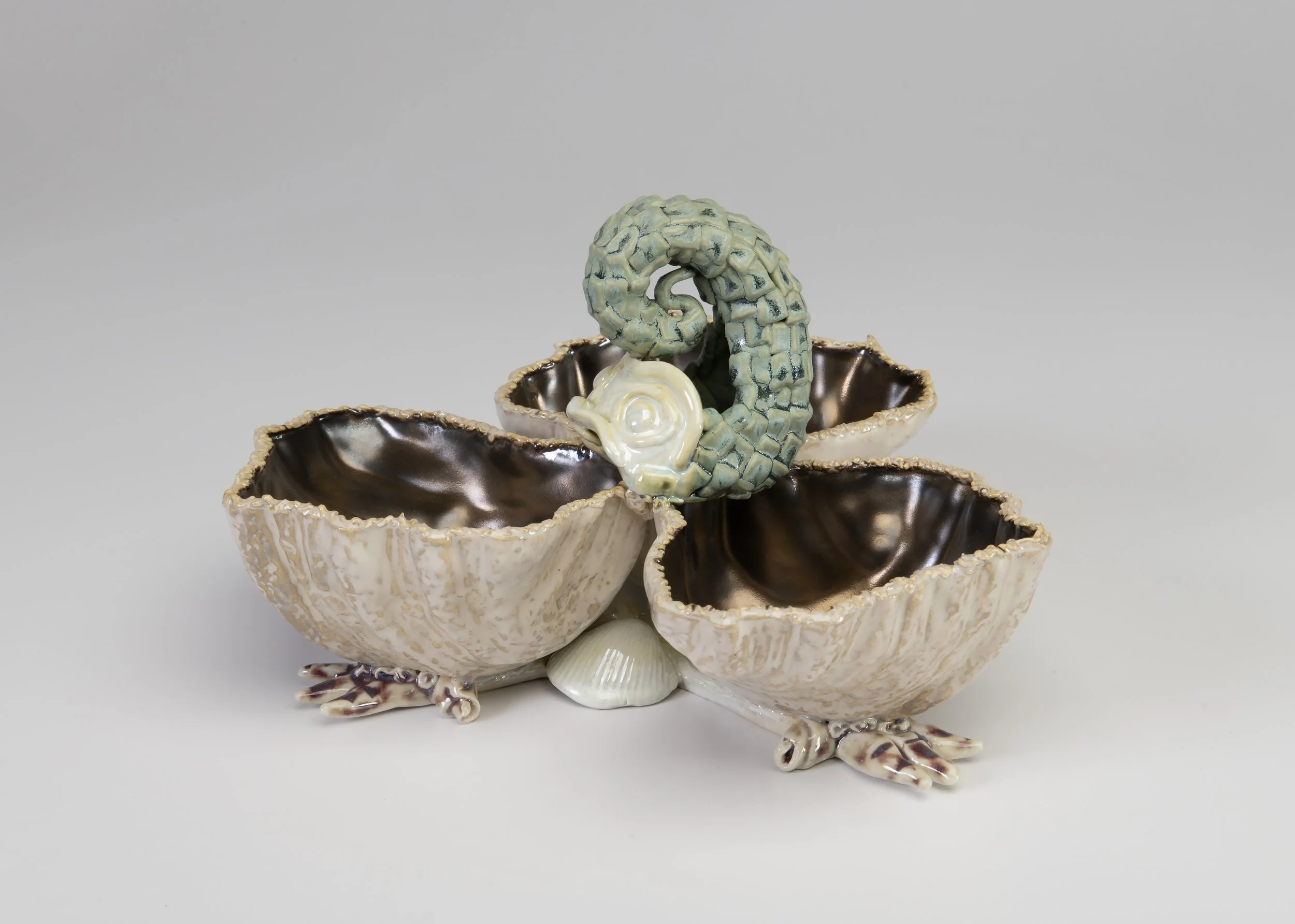
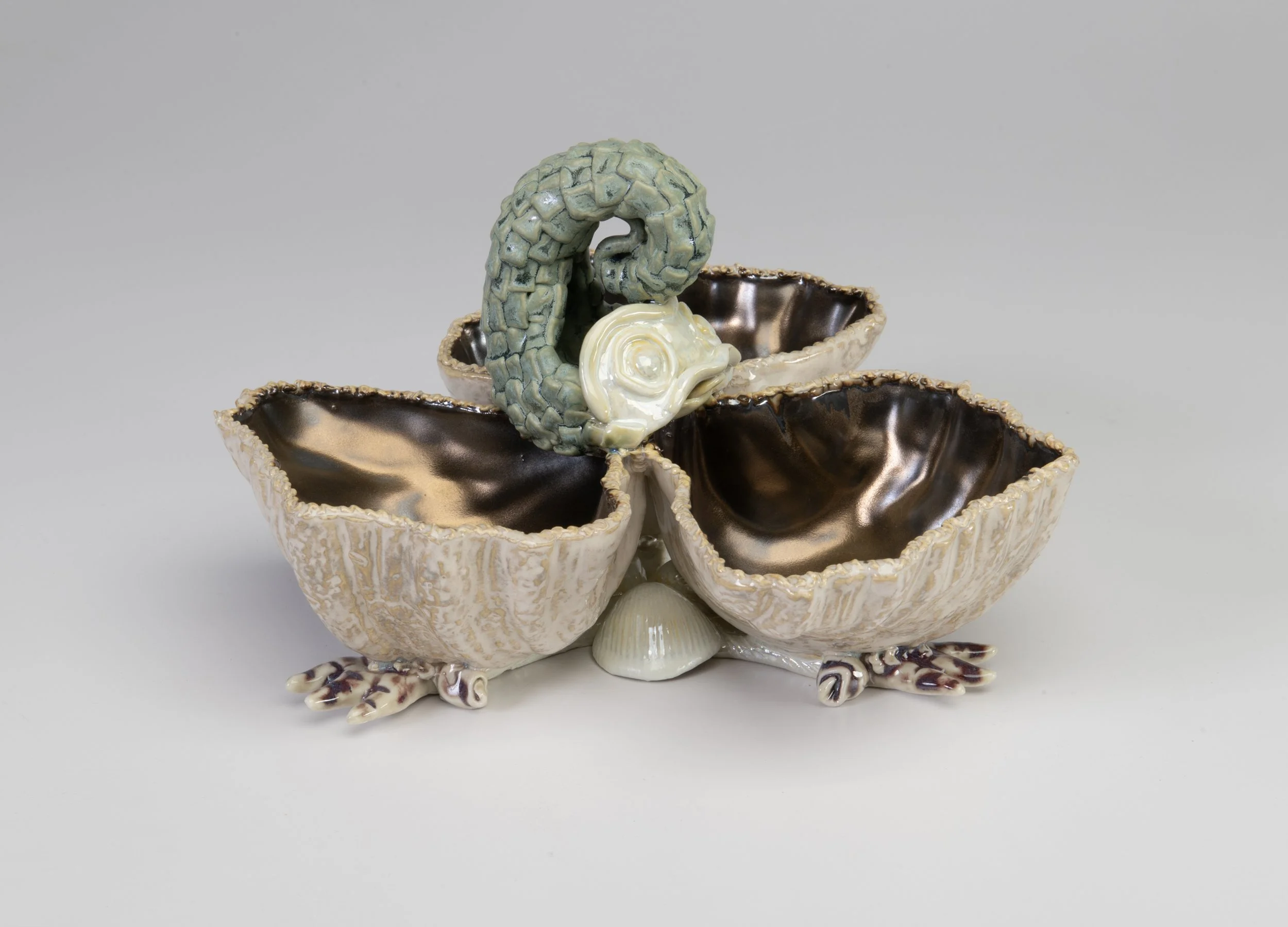
Sea Monsters Delight, $525, 6hx10x9”
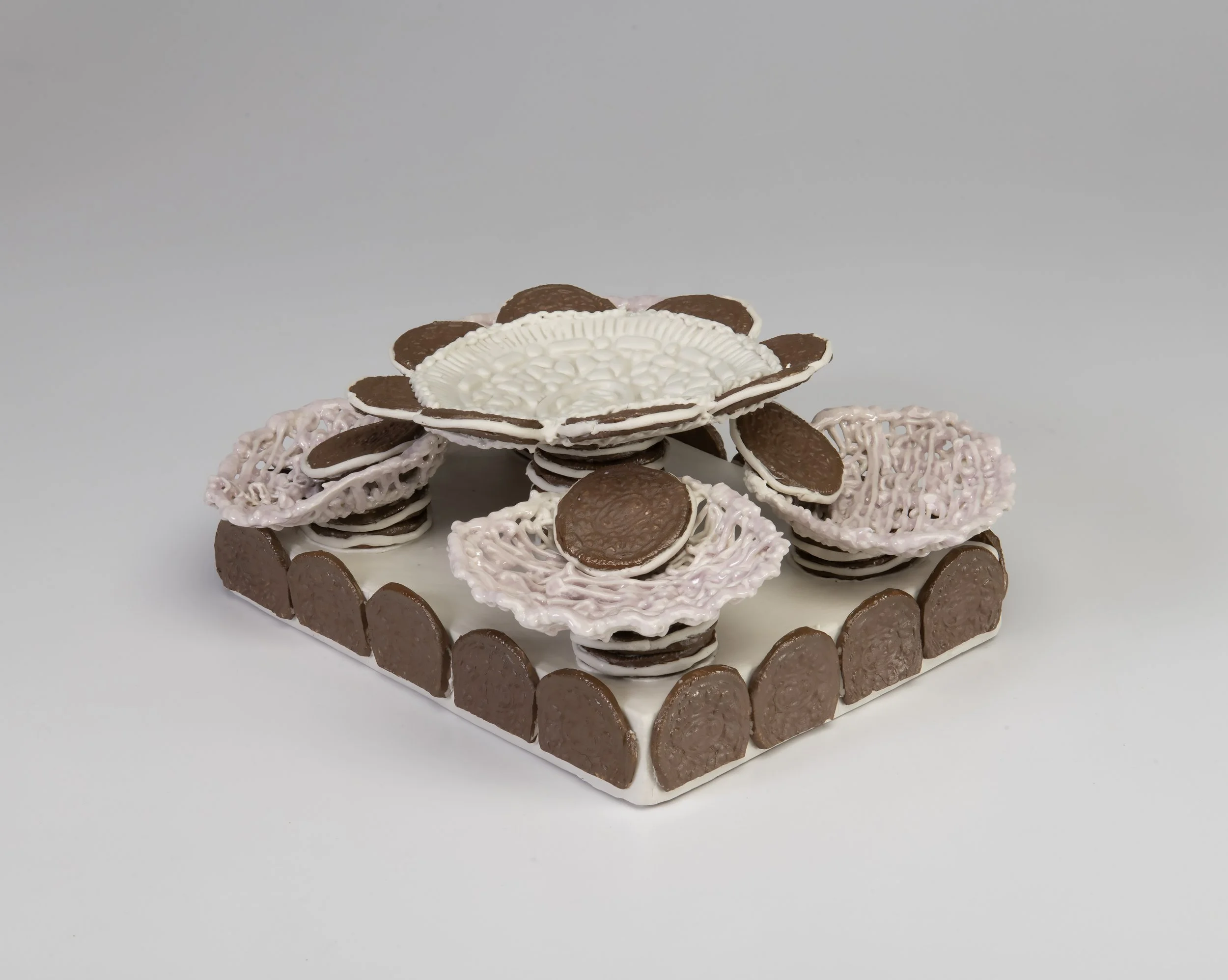
American Hero - Oreos at Rest, $425, 4hx8x9”
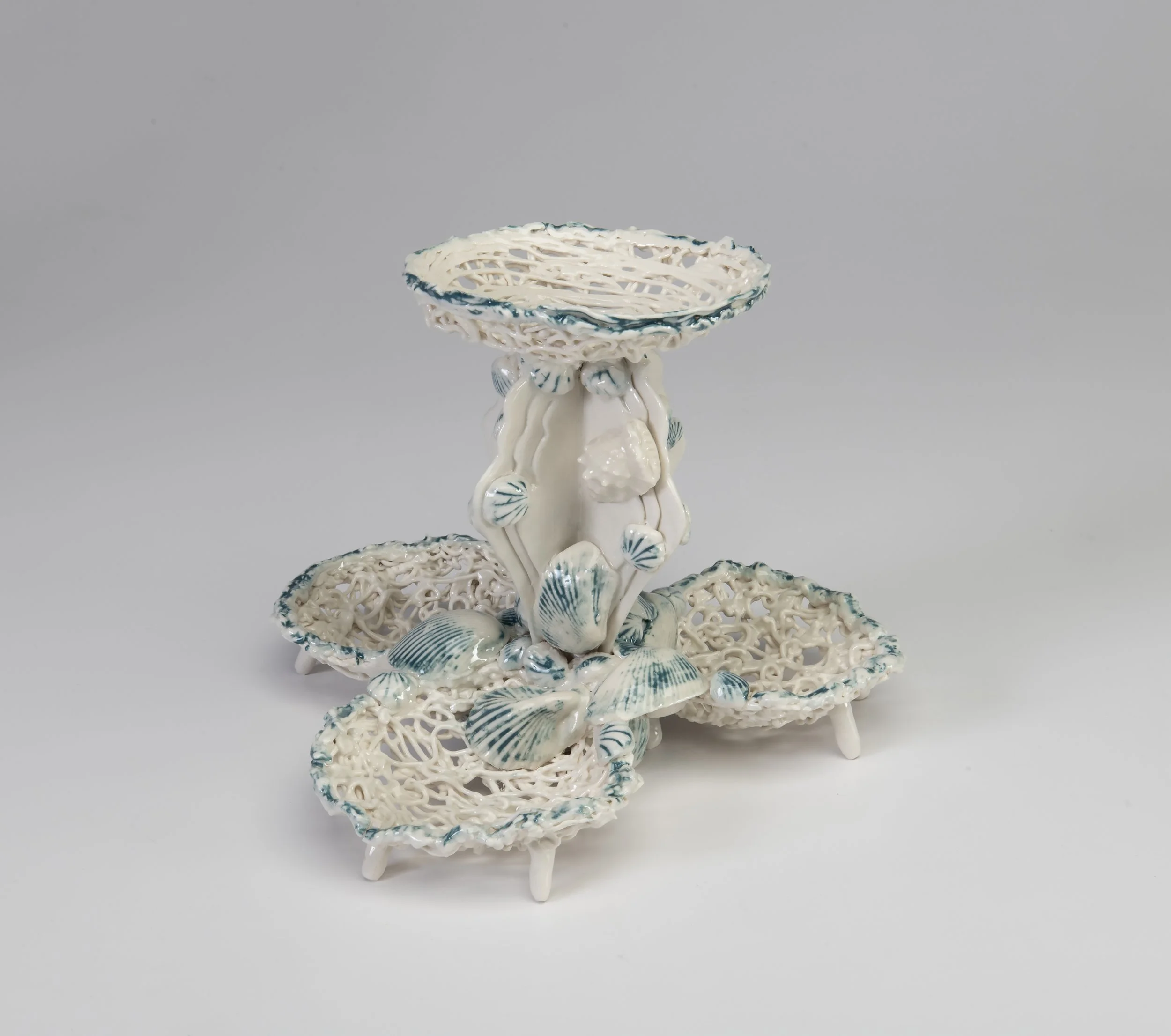
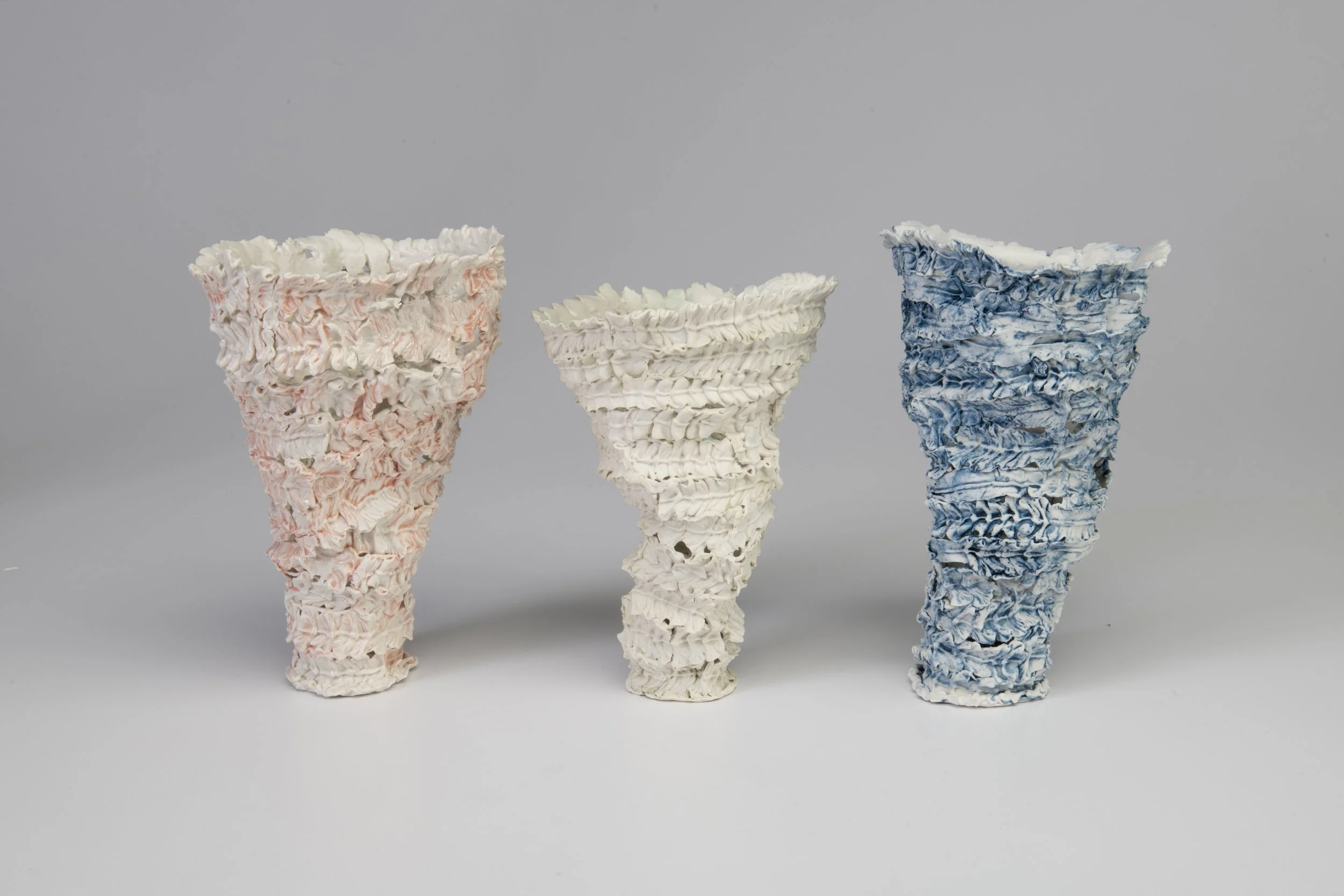
Lacy Pickle Stand, $300, 6.5hx8x9”
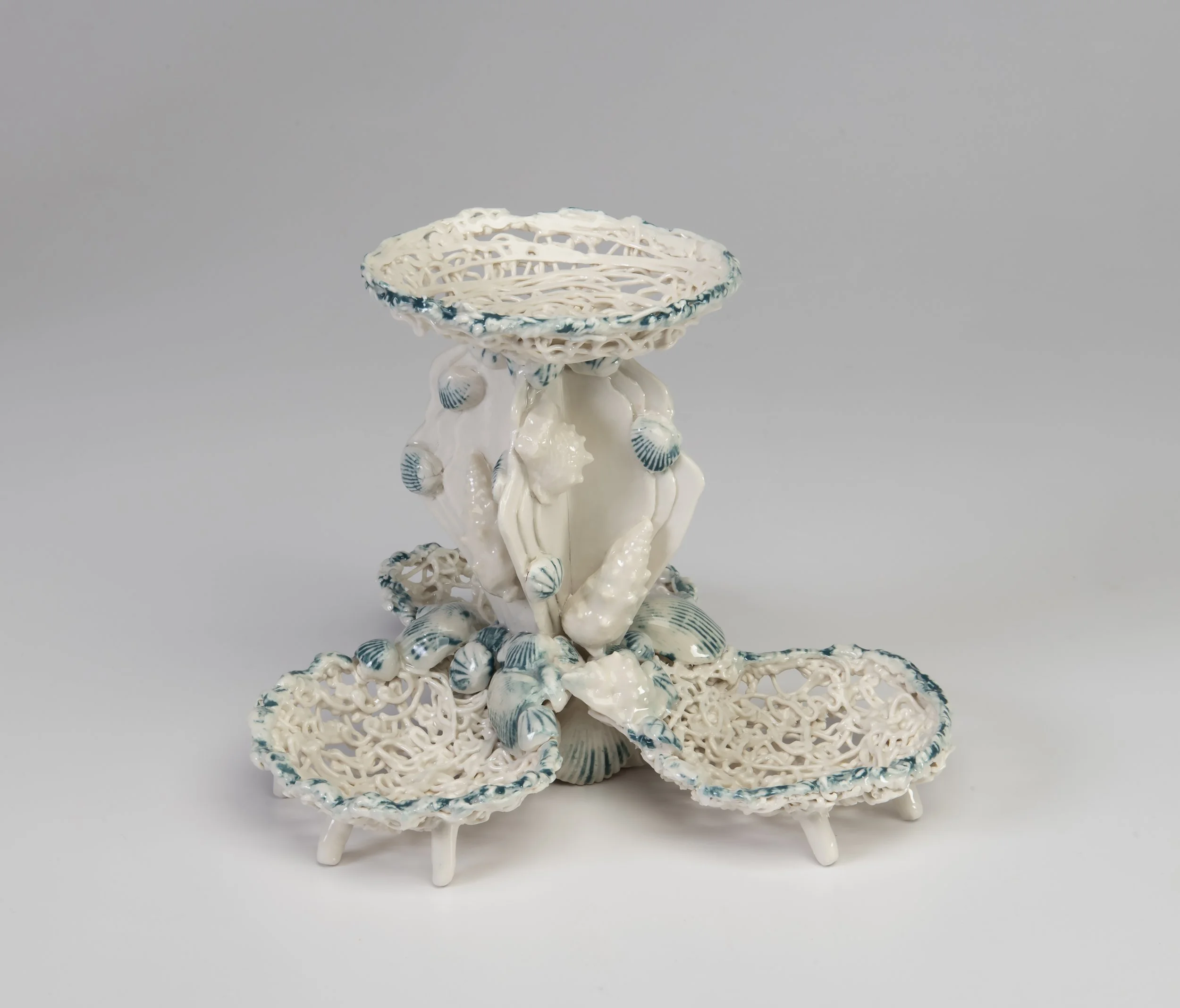
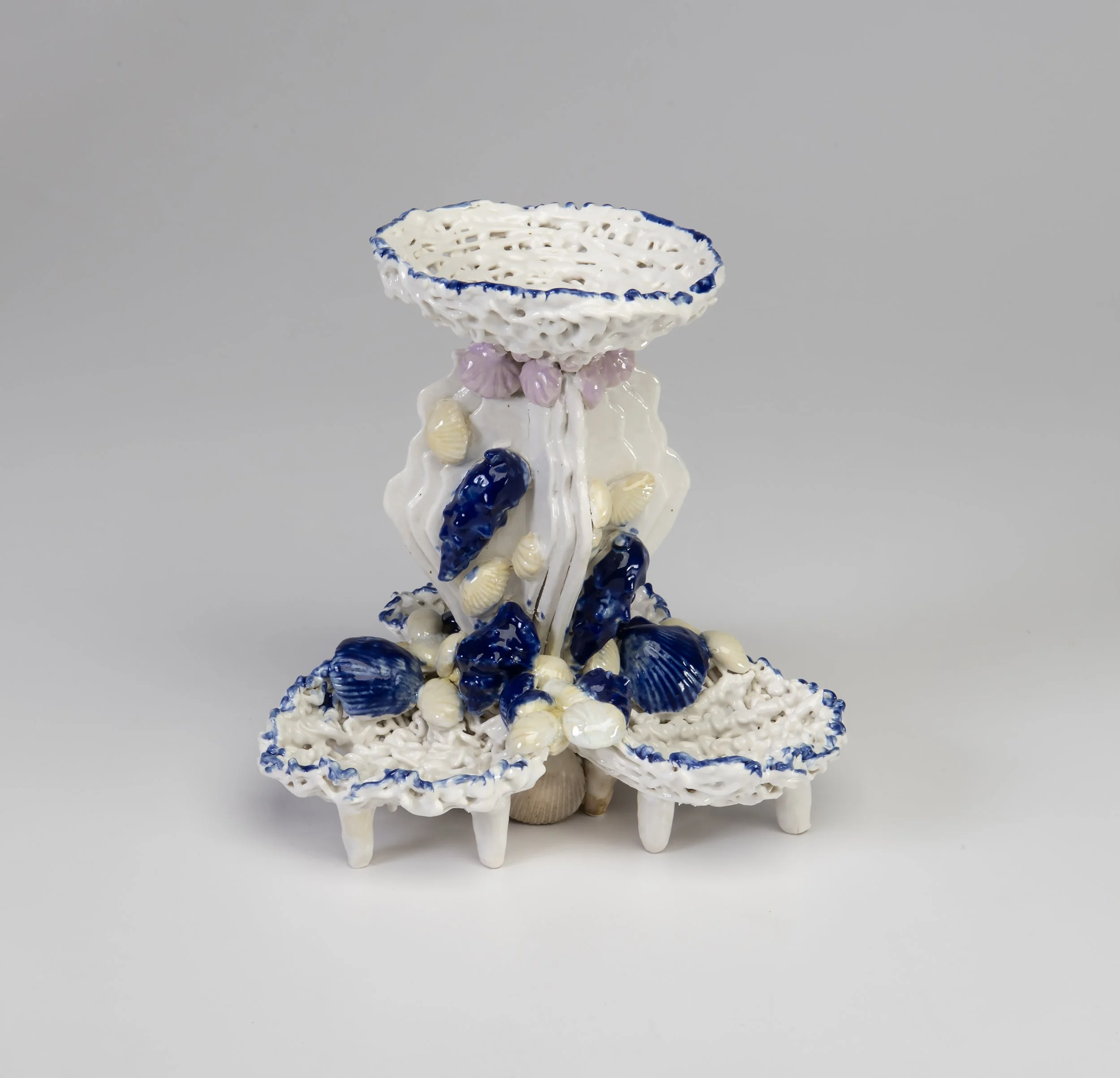
Lacy Pickle Stand Deep Blue, $300, 7hx7x7”
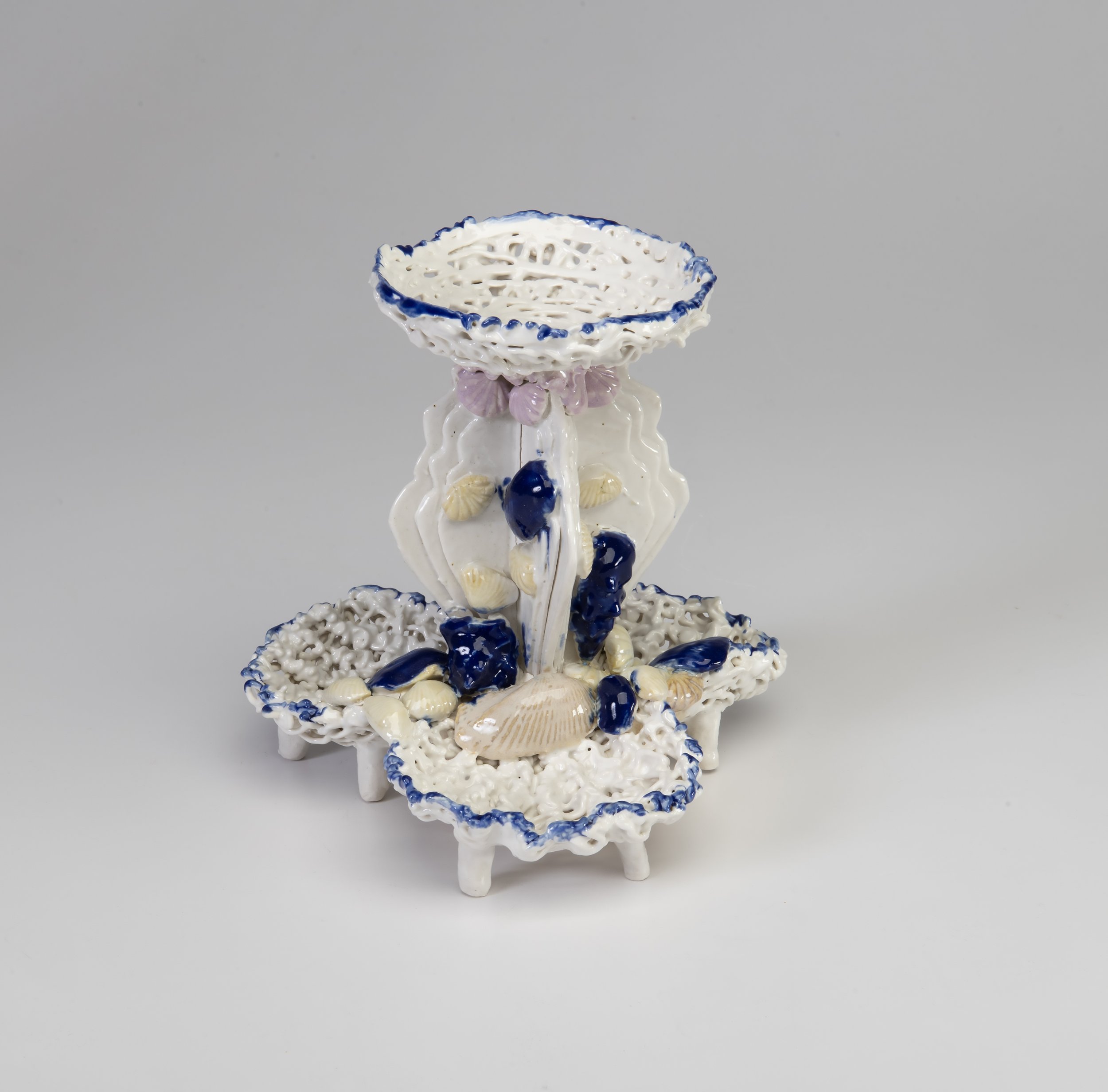
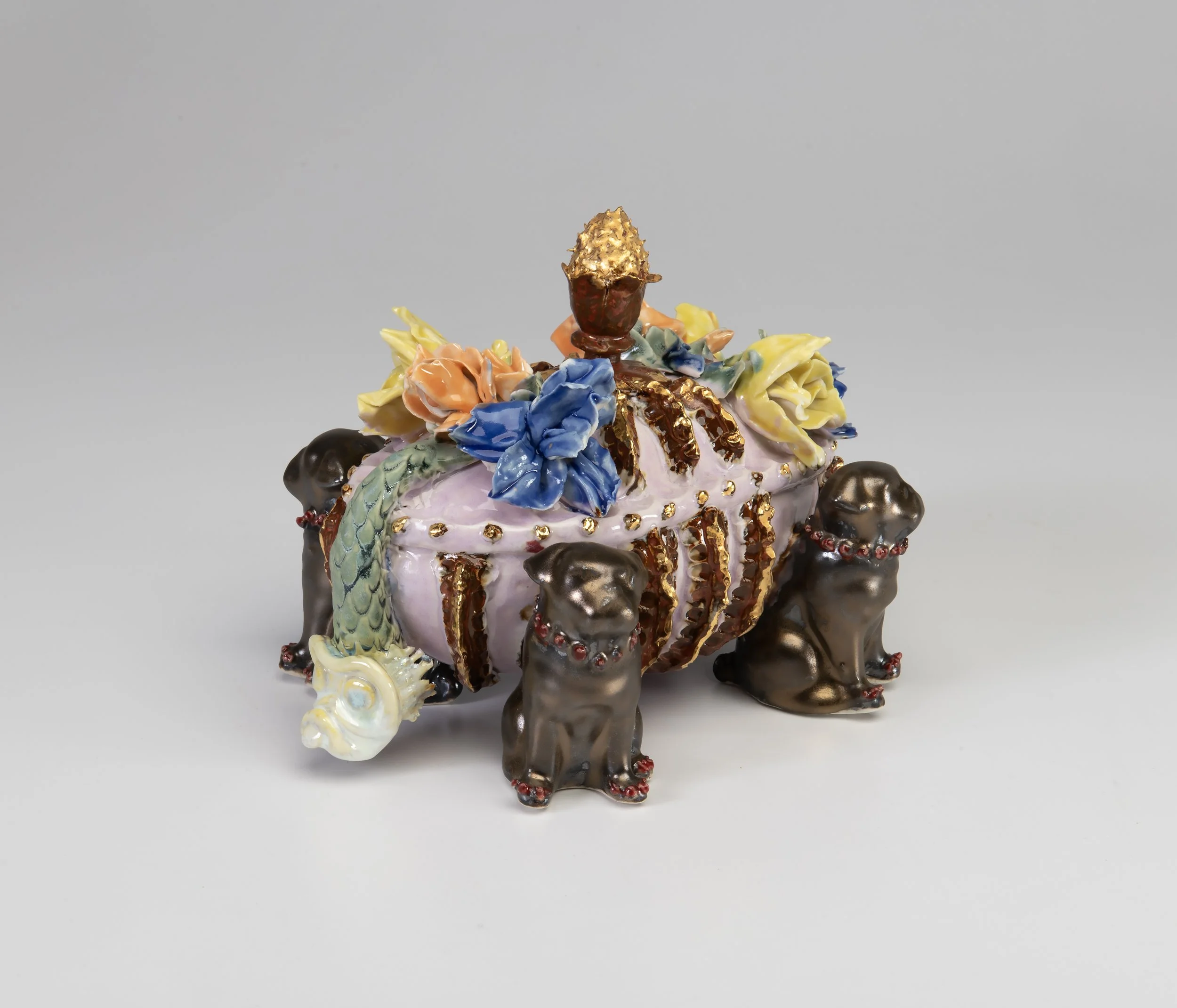
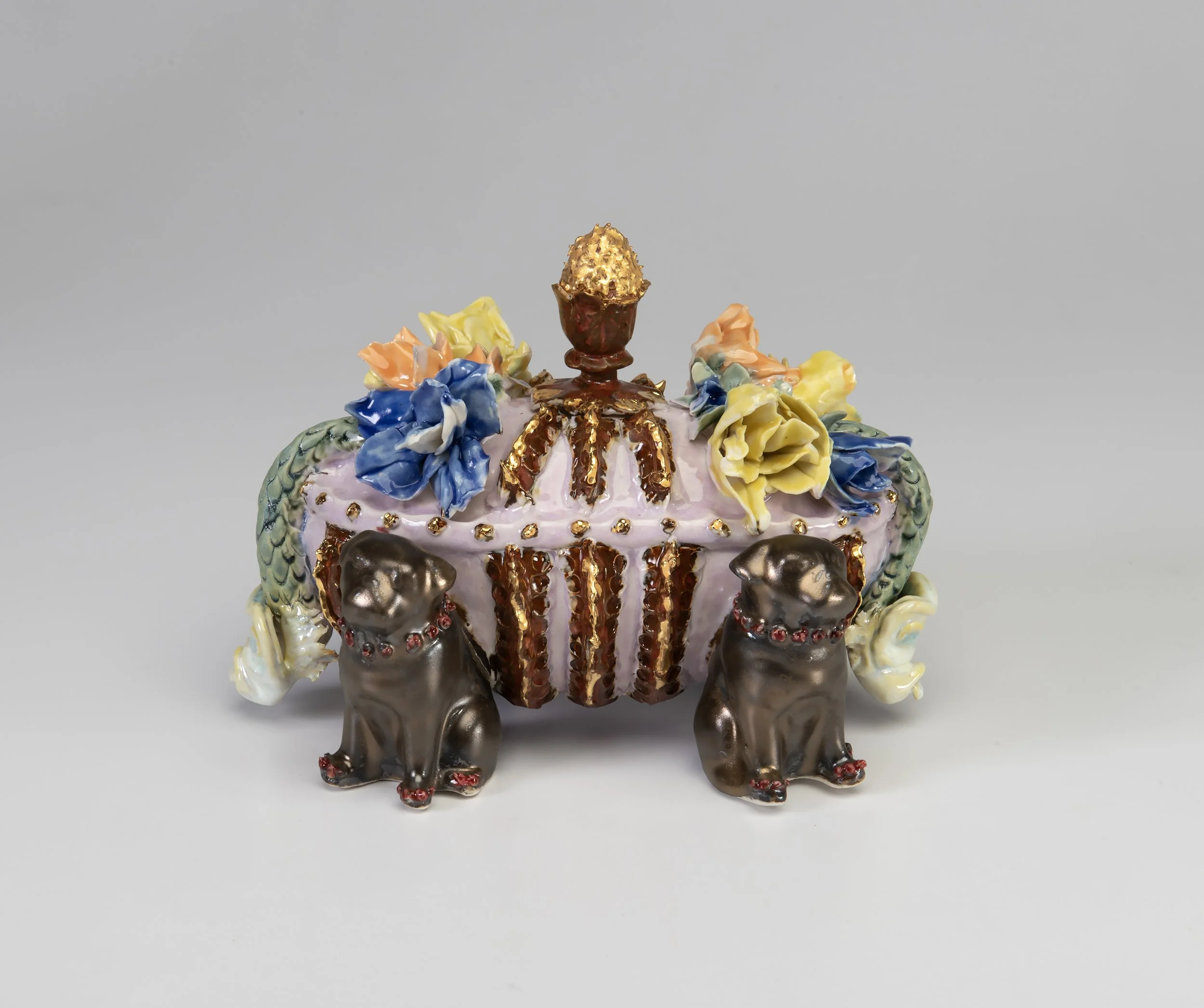
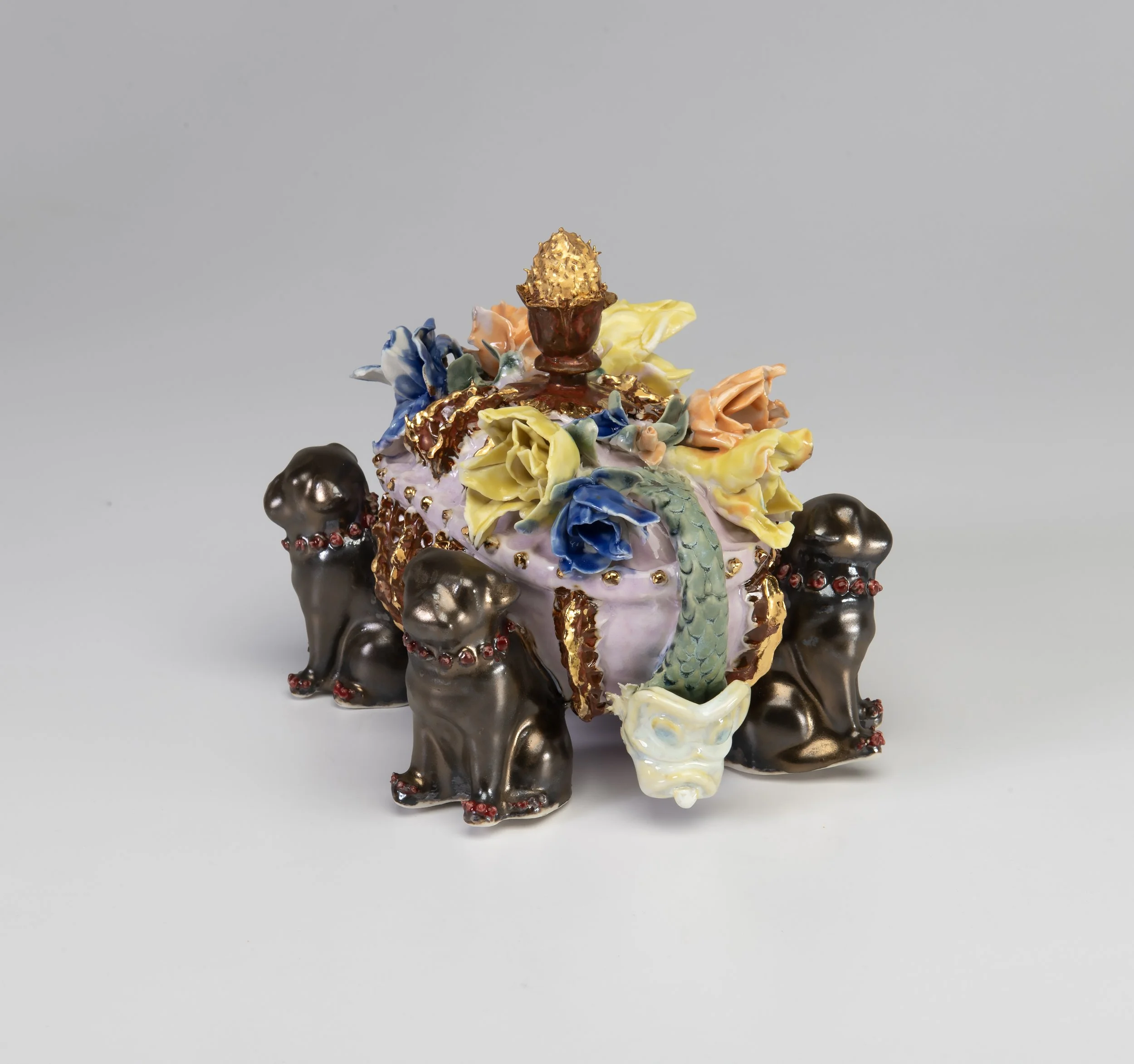
Pugnaciously Baroque - Ode to Liz Stewart, $660, 6hx8x5” (SOLD)
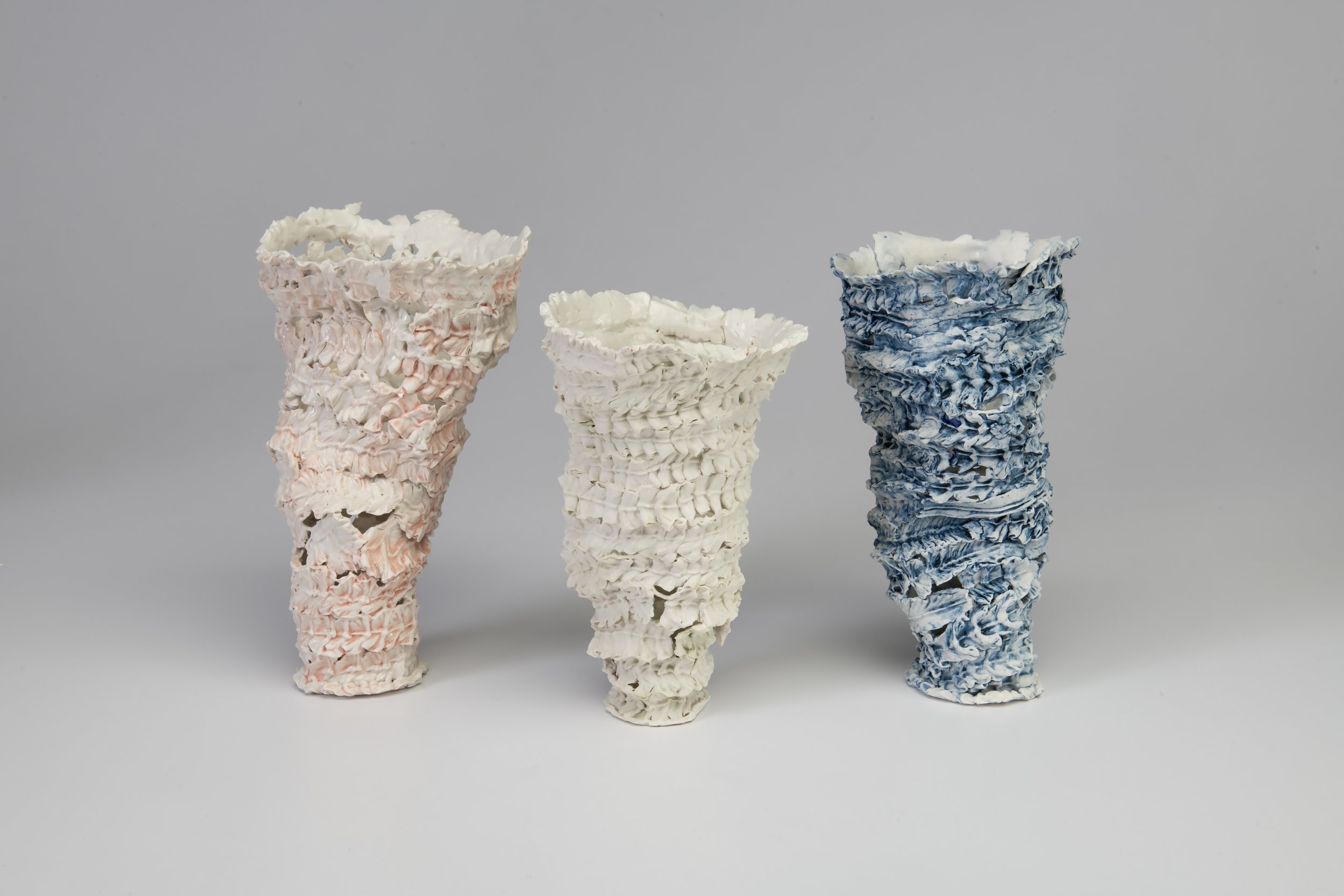
Radical Rudi Red, White, Blue - Ode to Rudi Staffel, $150 each, 8hx5dia” ( SOLD - White)
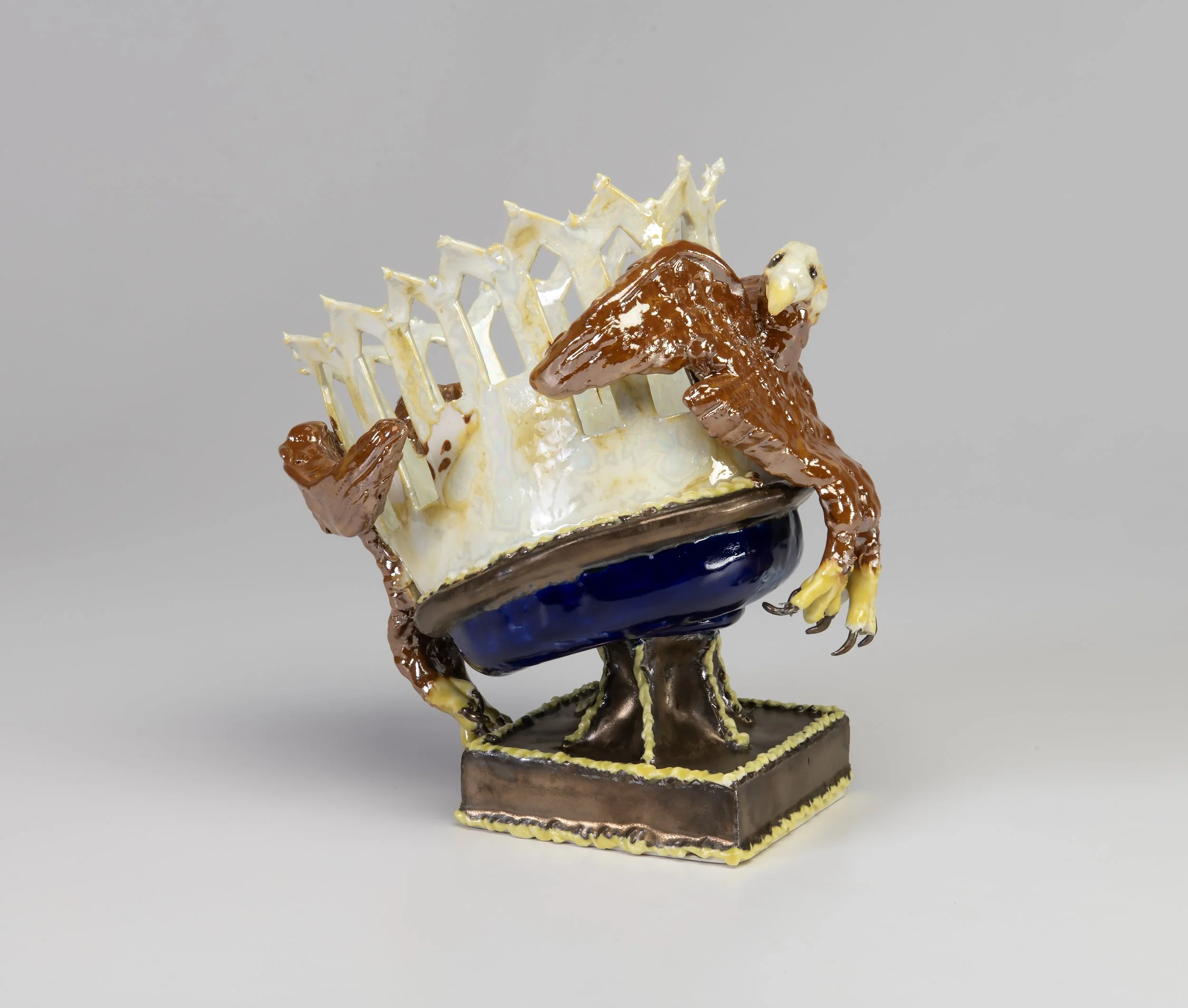
Americana 2026 - State of our Union, NFS, 8hx8x5”
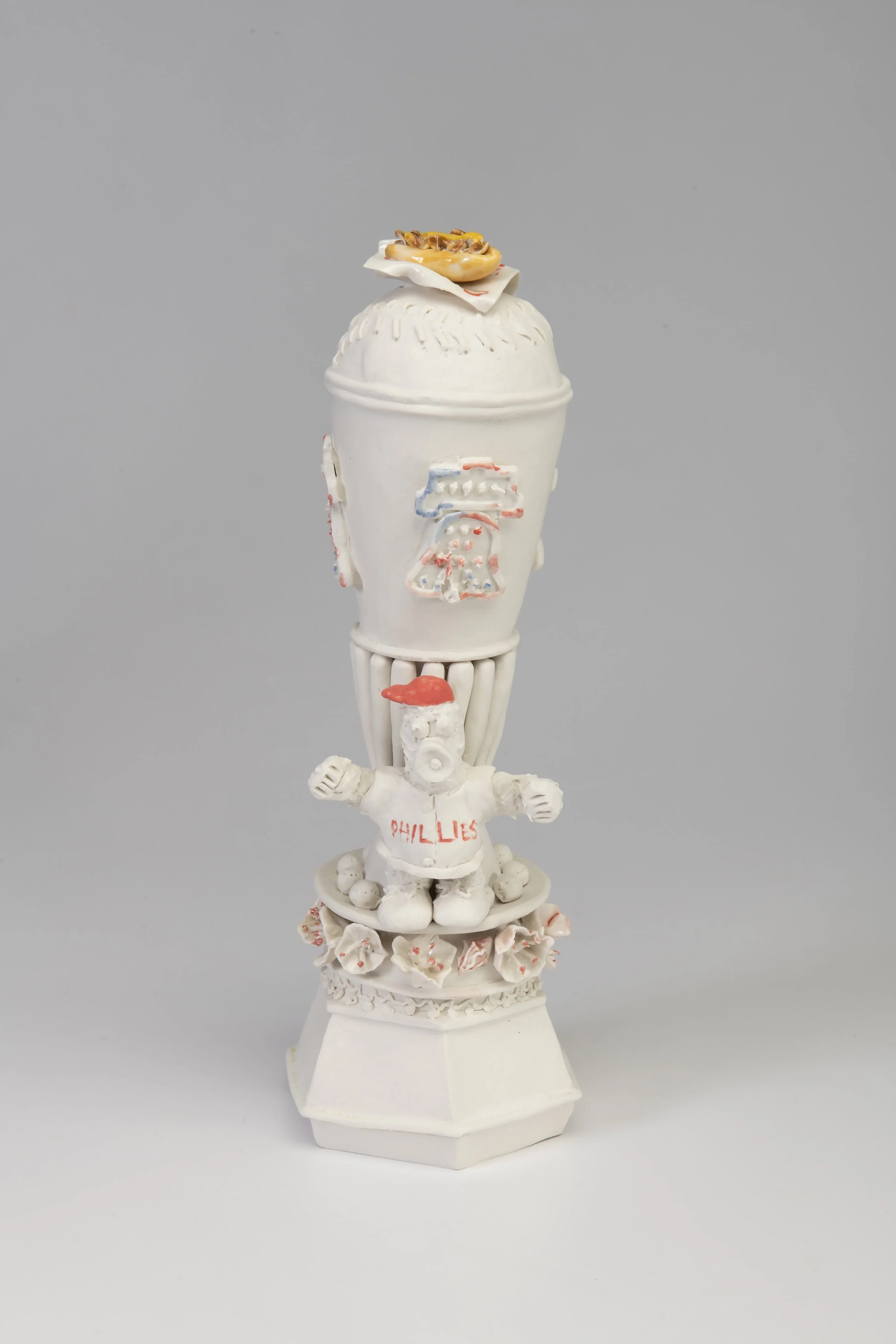
Phillies!!!, $500, 13hx4x4”
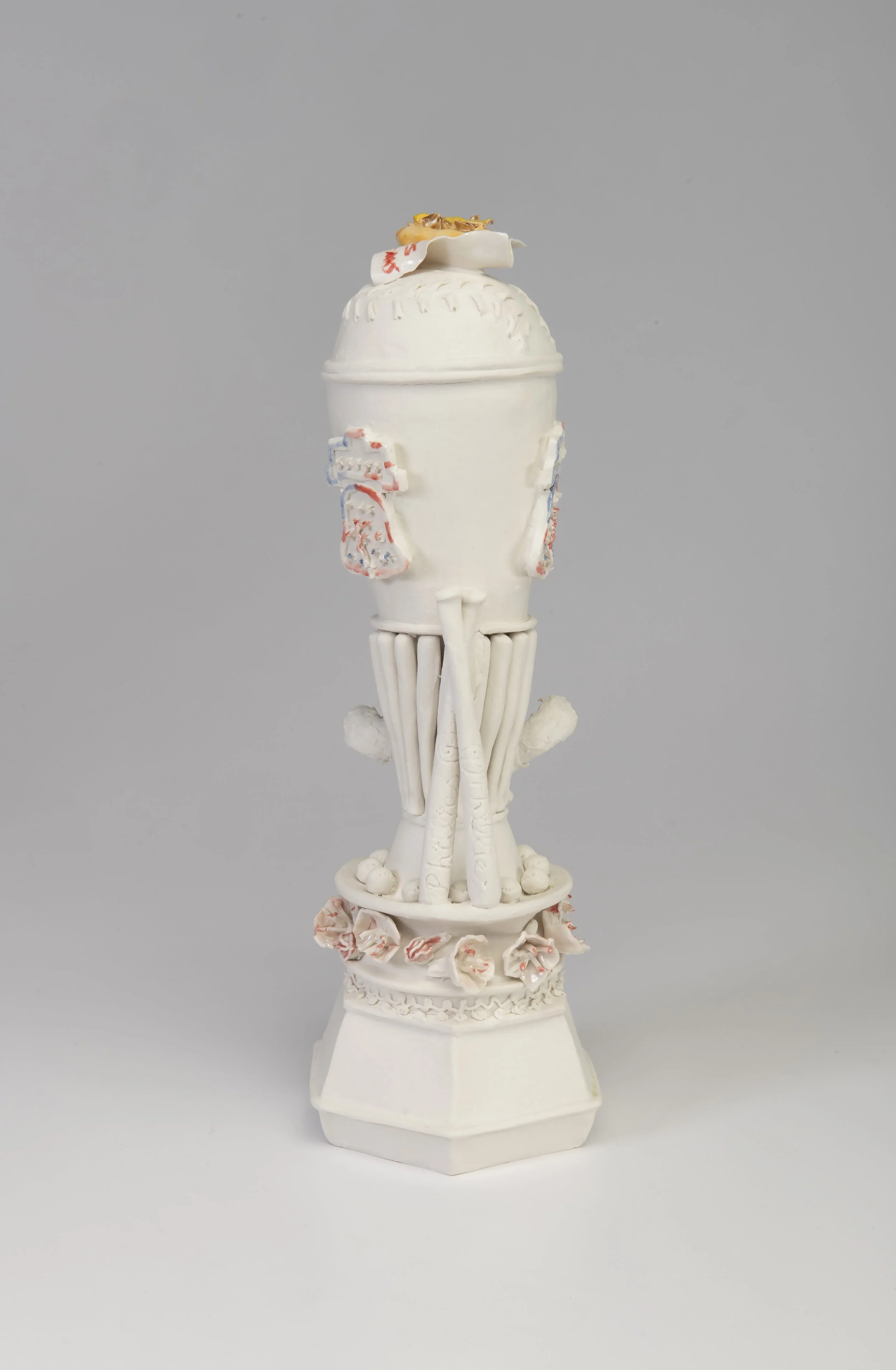
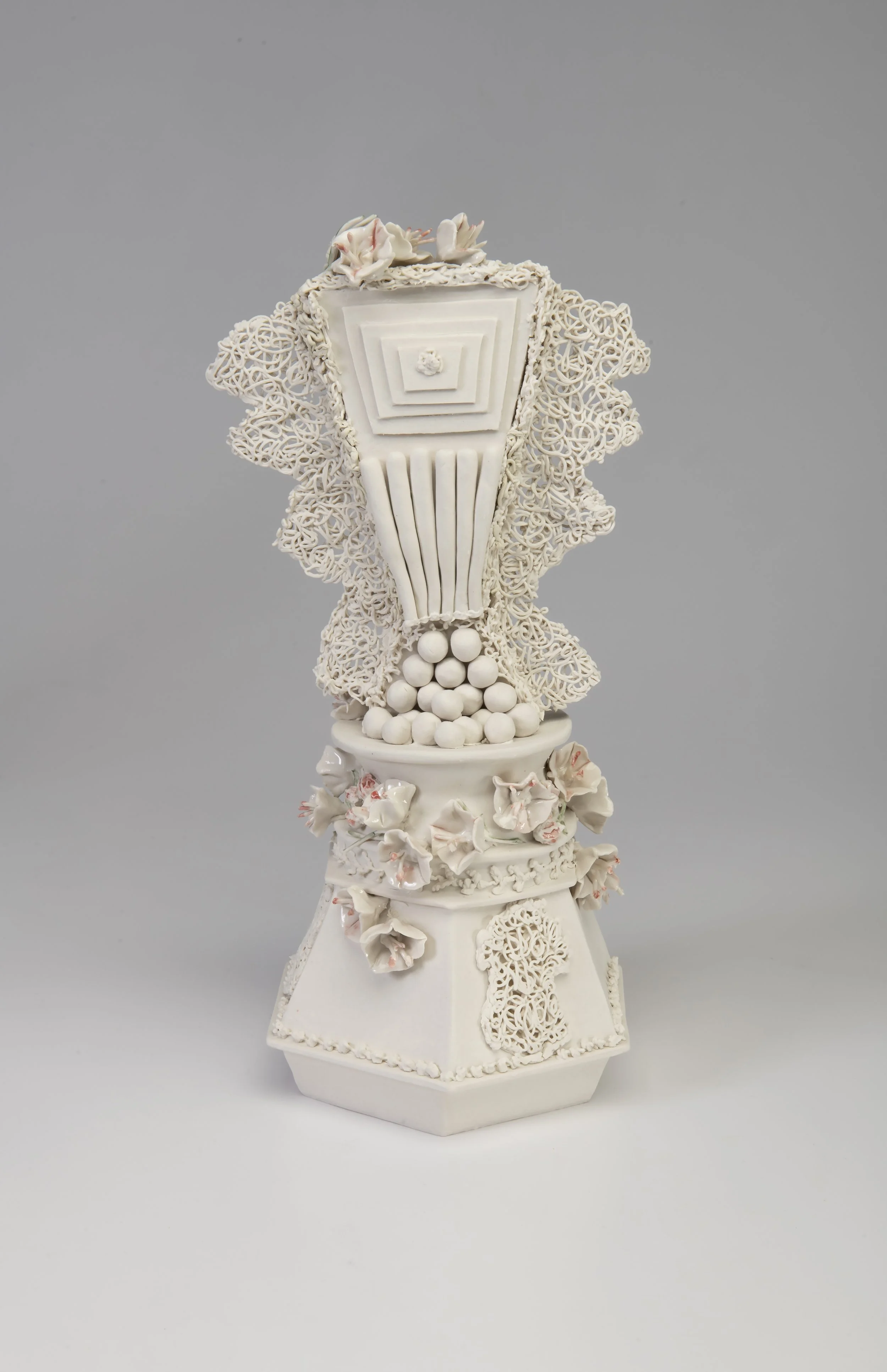
Baroque Baseball, $550, 15hx7x4”
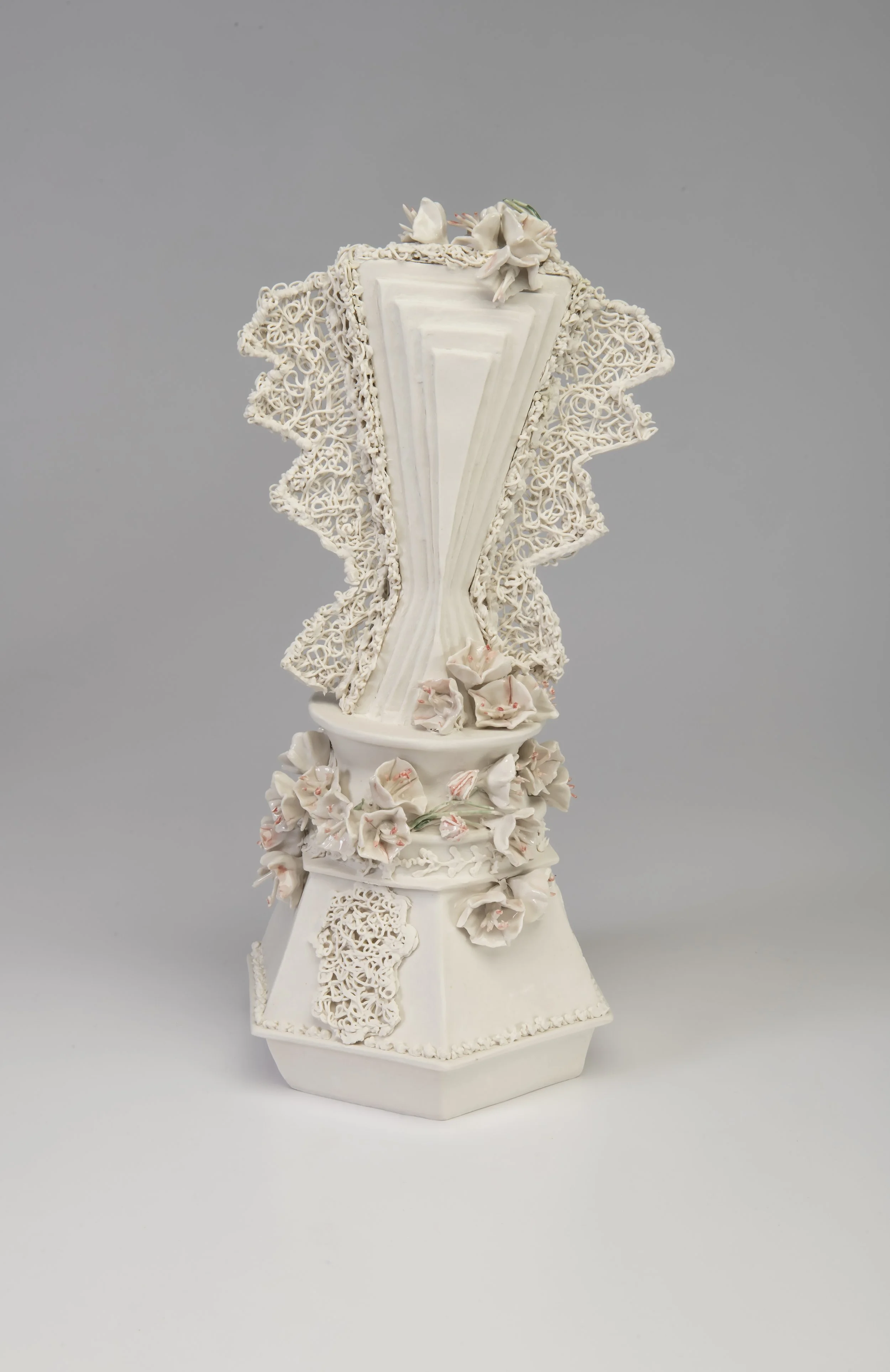
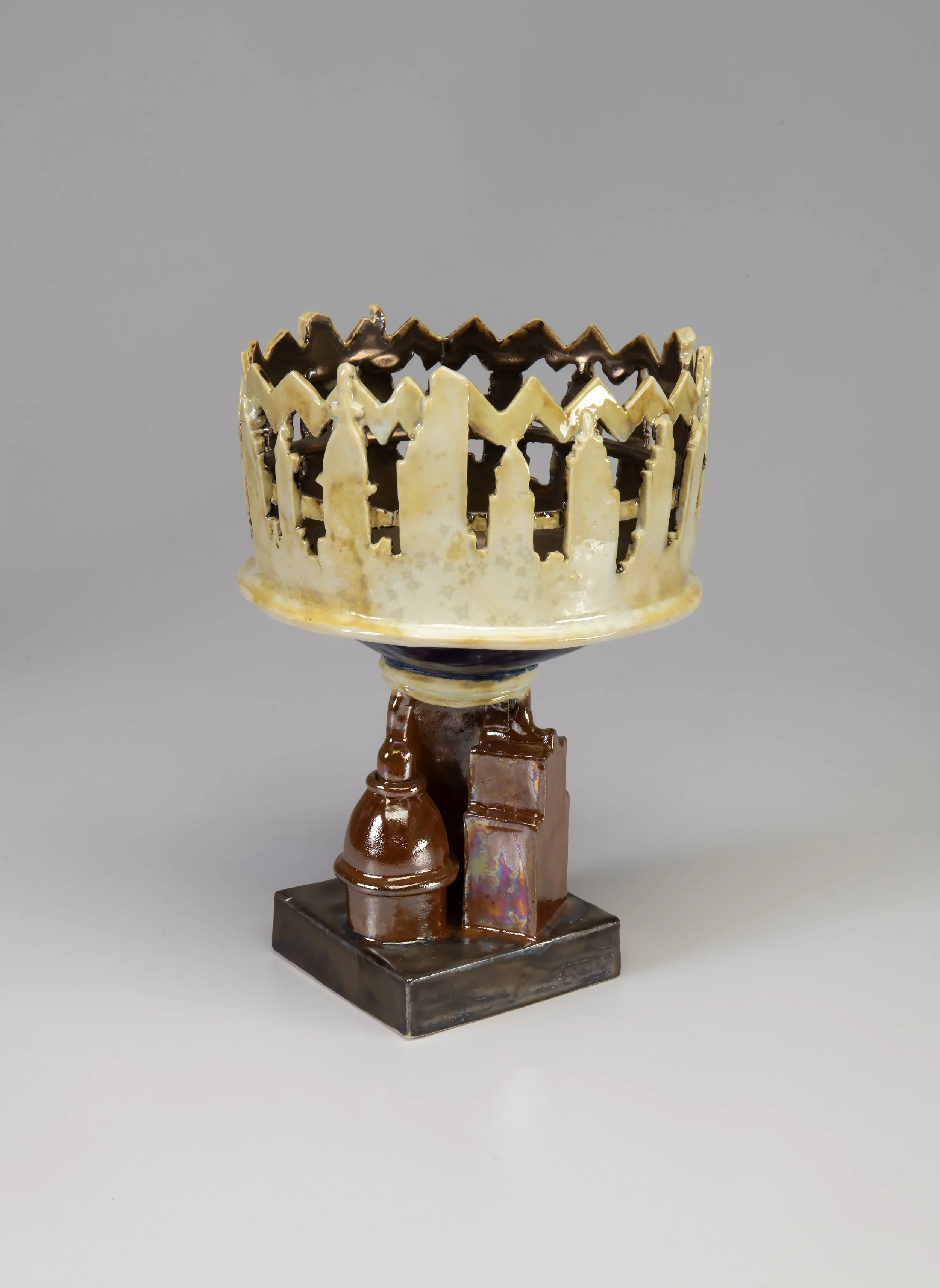
Philly Lights, $520, 10hx7dia”
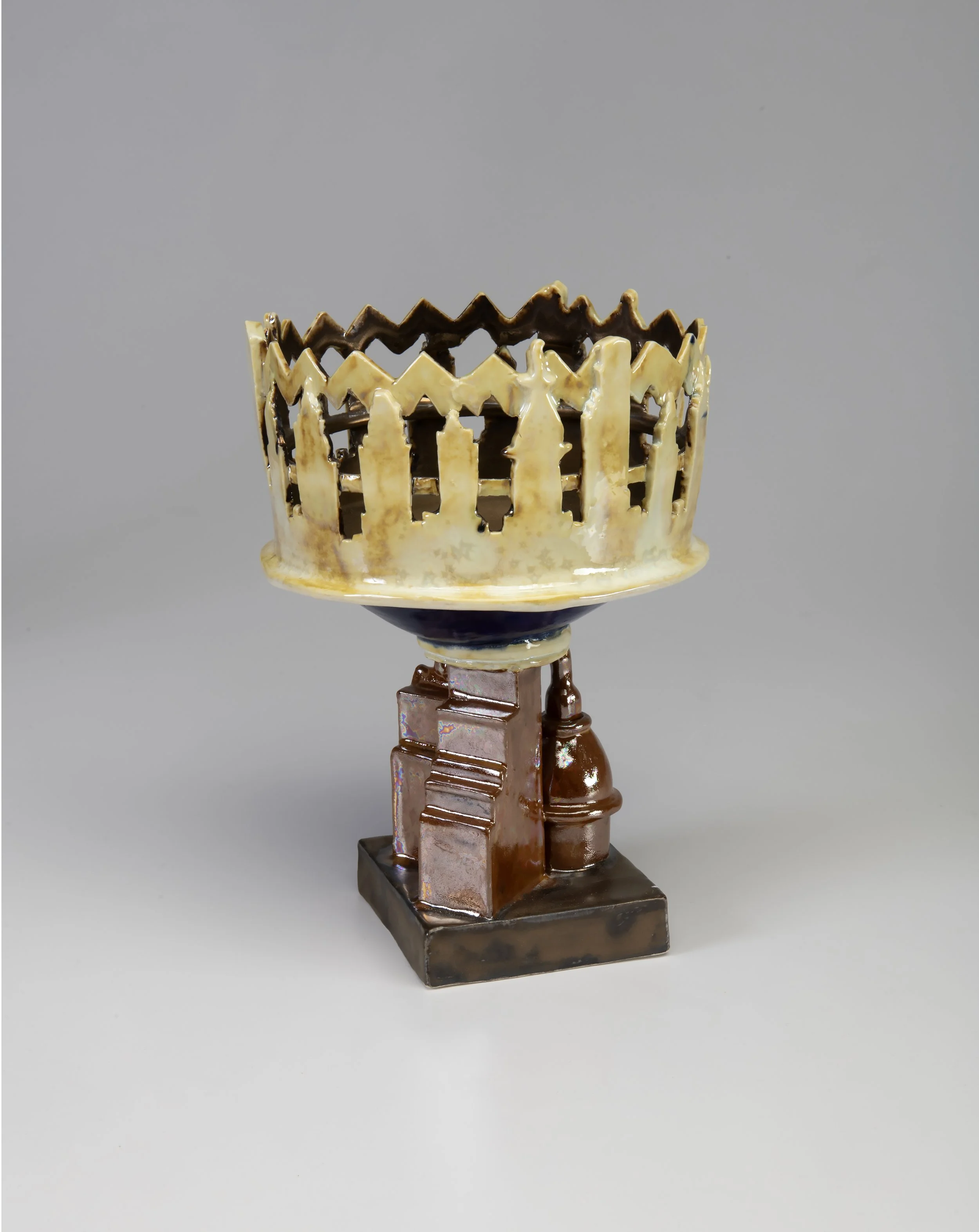
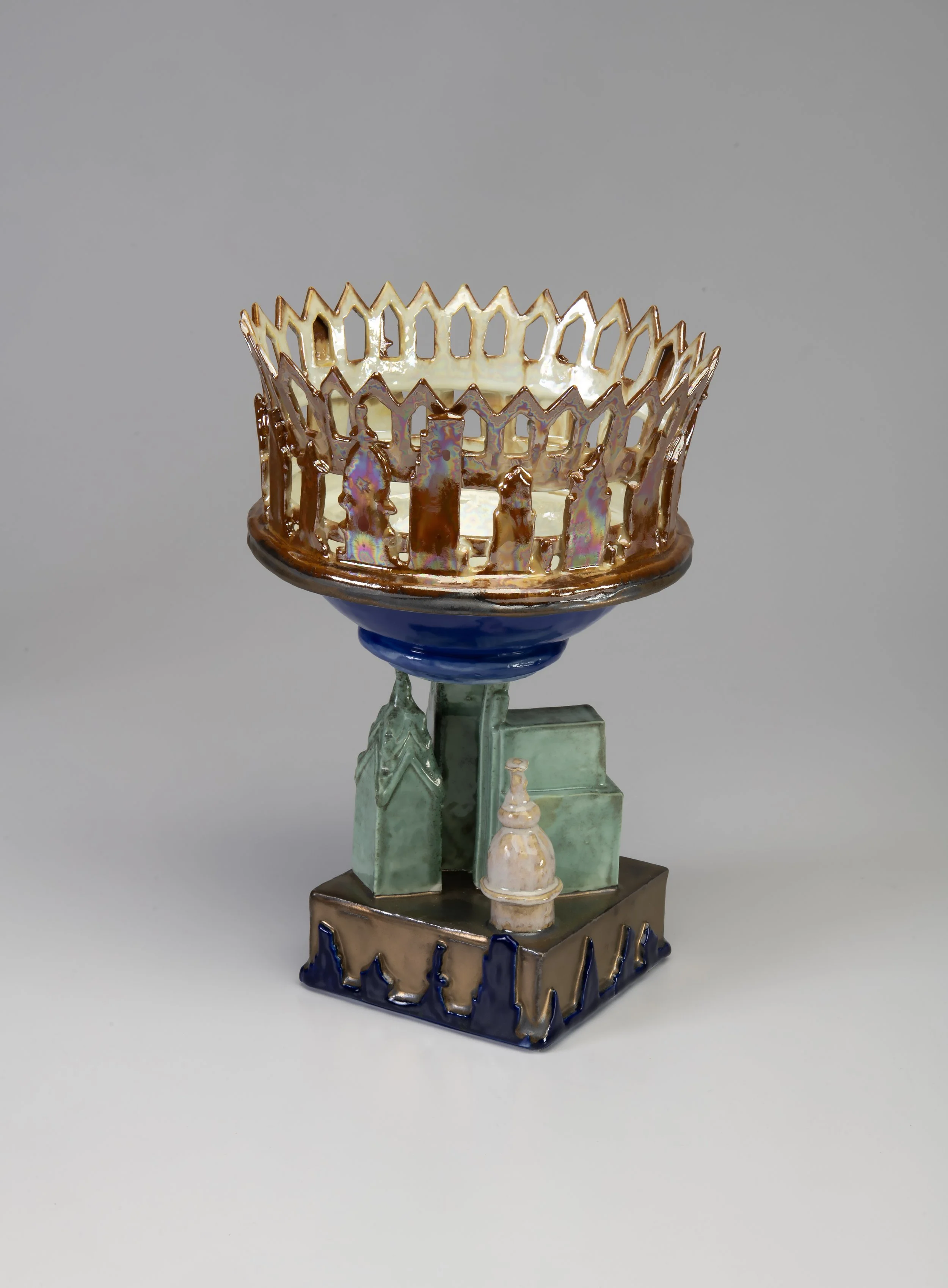
Philly Nights, $520, 11hx7dia”
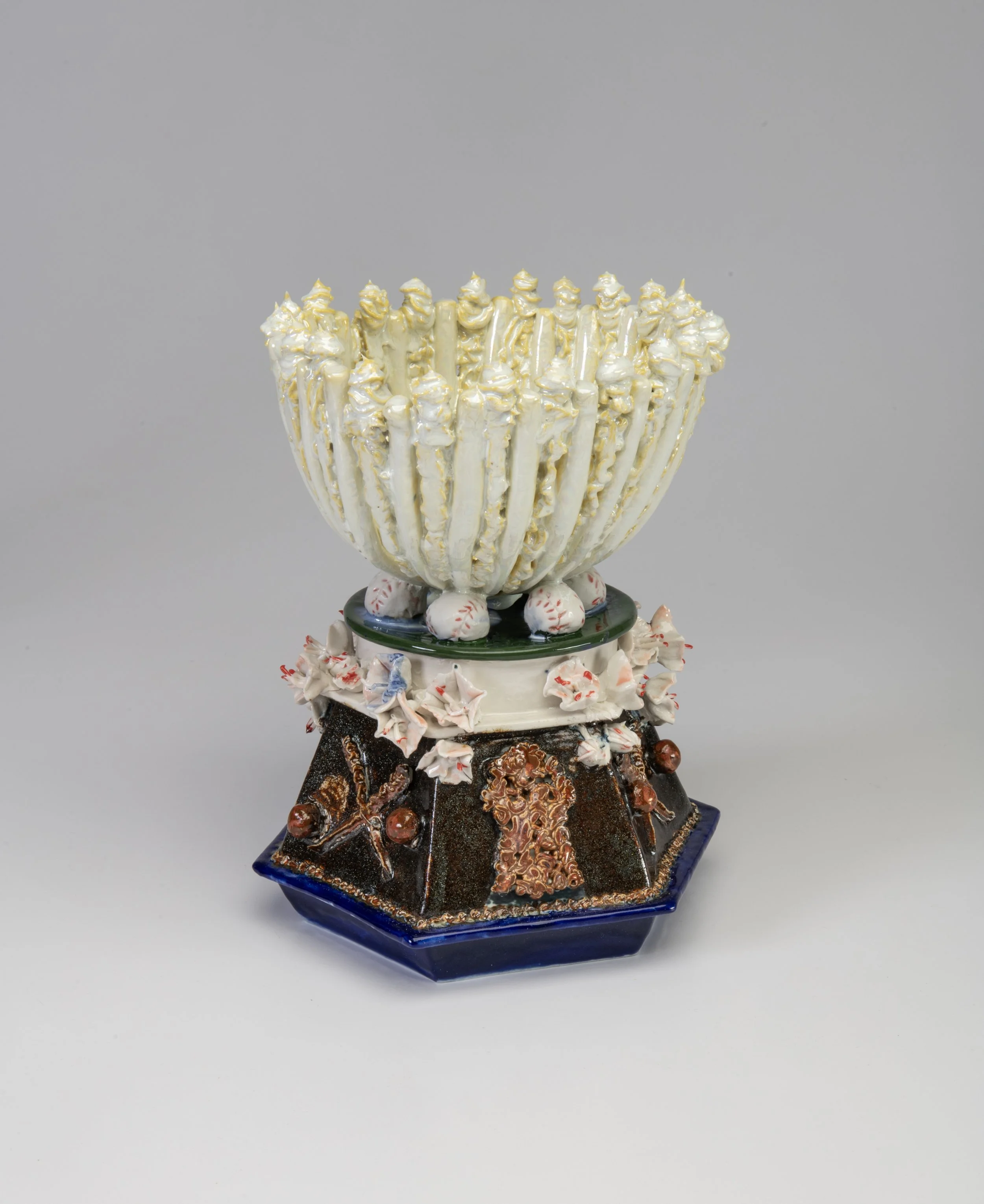
Basebowl, $350, 10hx7x8”
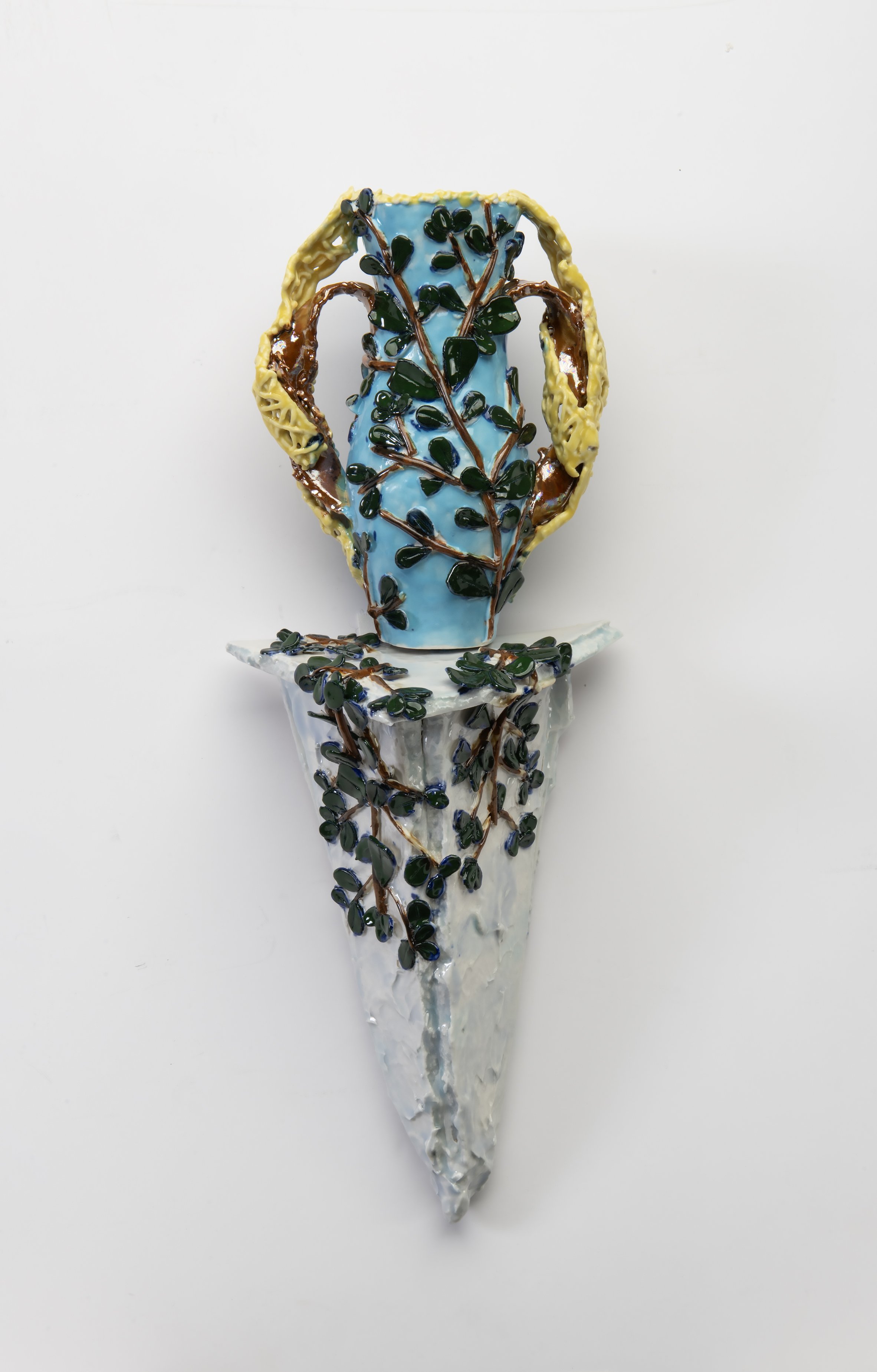
Di-vine Paula, Wild Portulaca from the weed series - ode to Paula Winokur, $450, shelf 8hx4.5x4 Pot 6.5hx4x3”
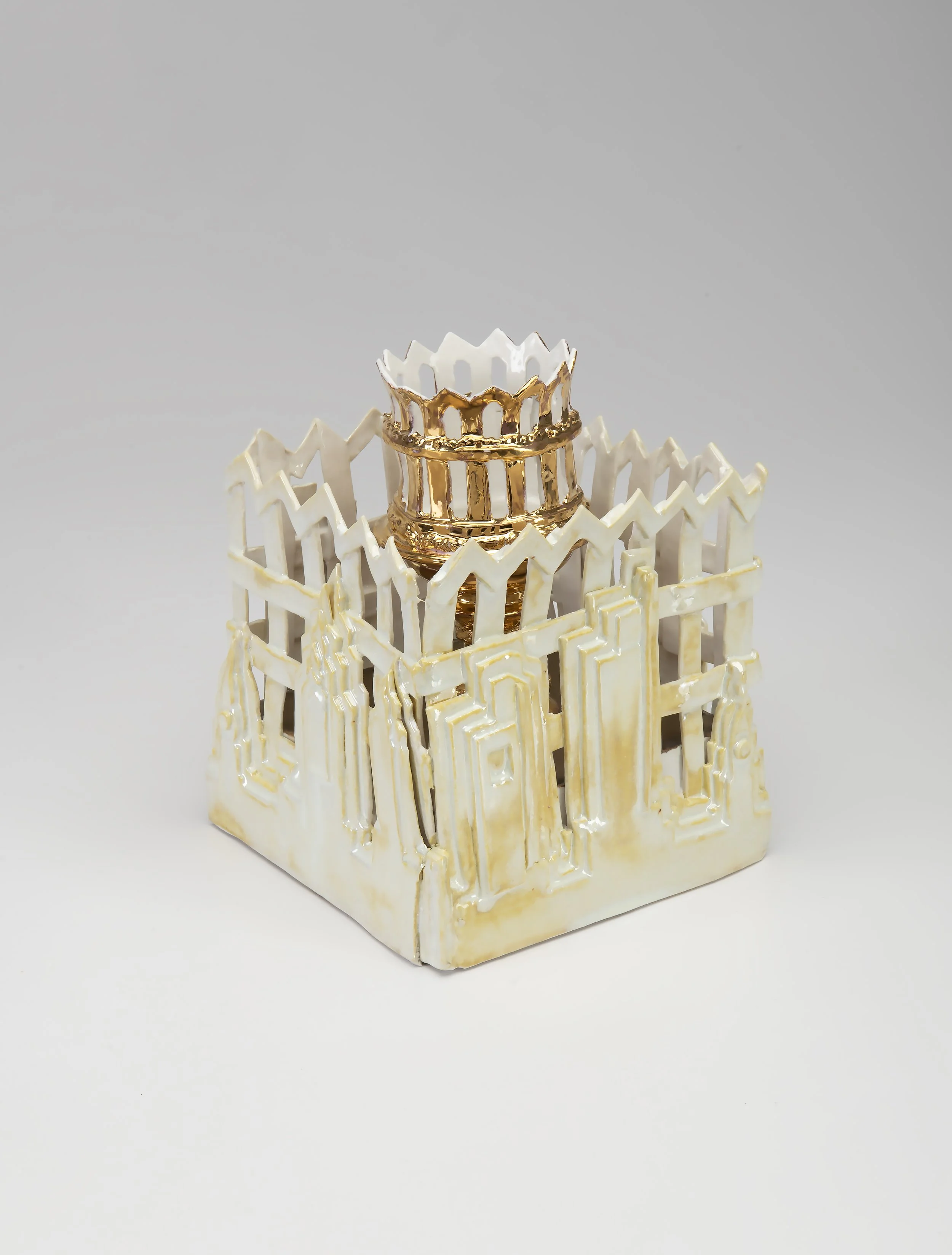
A Basket Full of Skyline, $550, 7hx5.5x5.5”
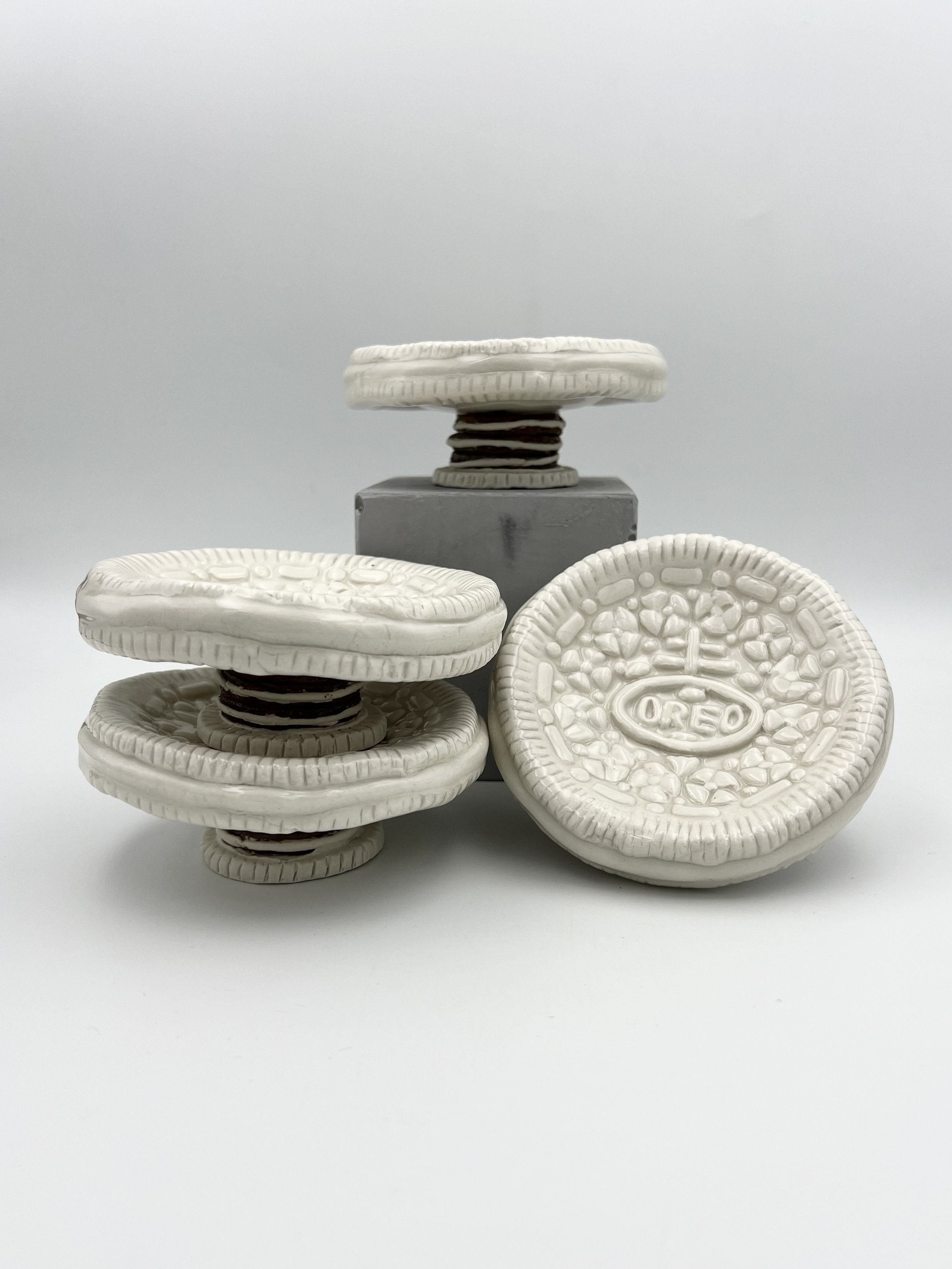
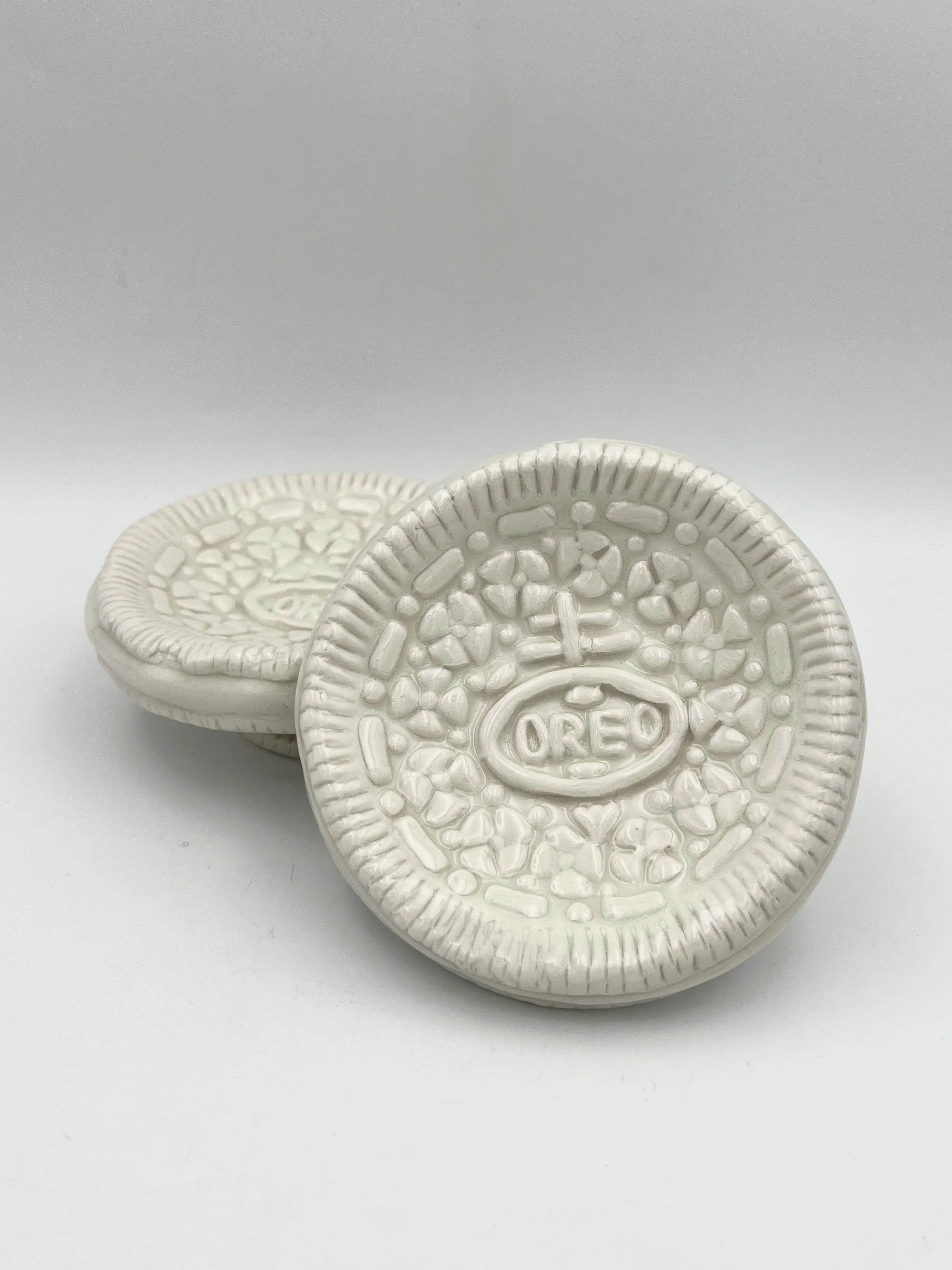
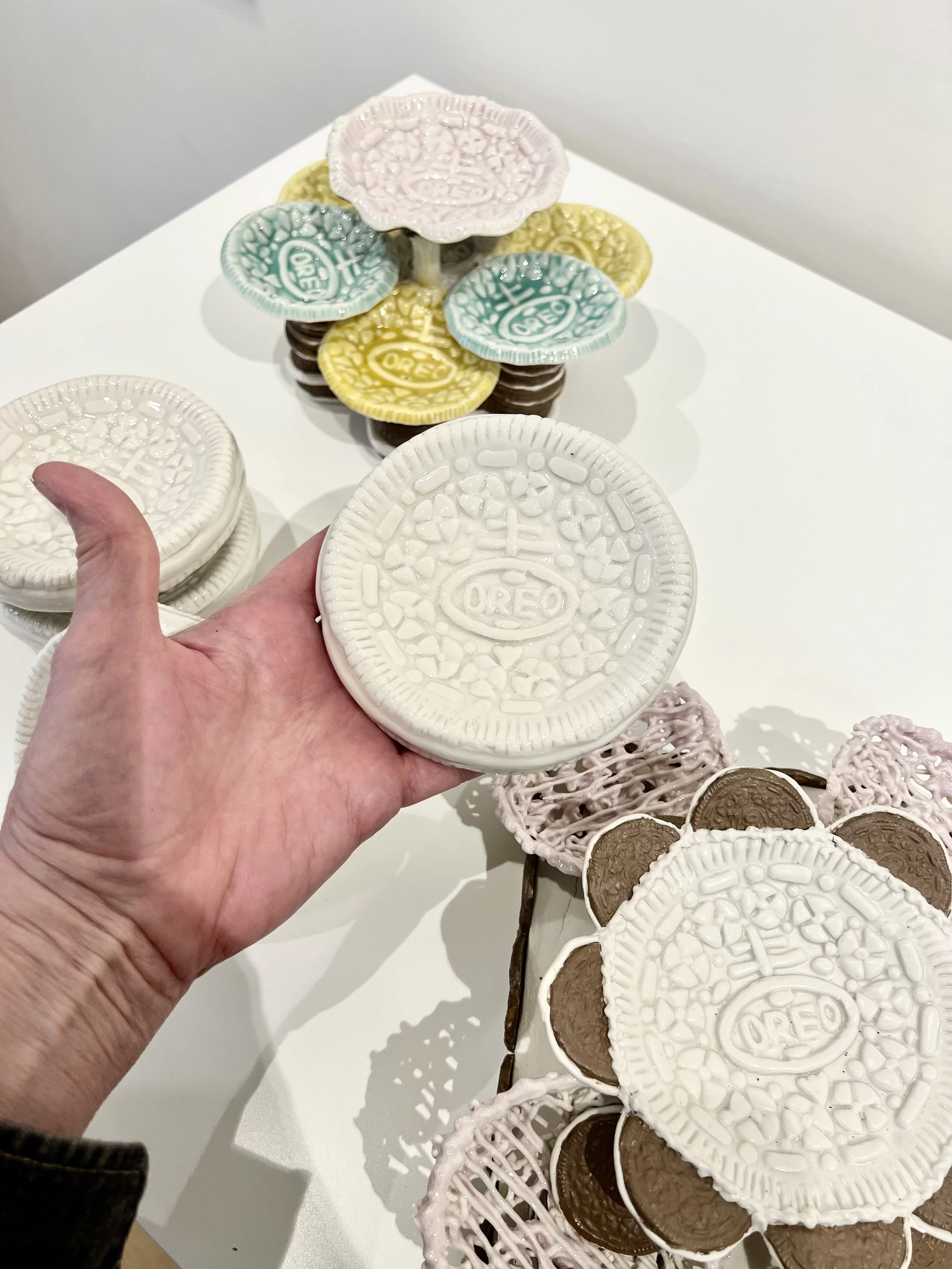
Small Oreo Bowl, $90.00 ea
TERRI SAULIN
MEOTO IWA

Terri Saulin: Meoto Iwa - Cempasúchil - On View at The Clay Studio , “Radical Americana Hub”
Object A - 4 x 4 x 9”, $750 - Object B - 3 x 3 x 7", $375
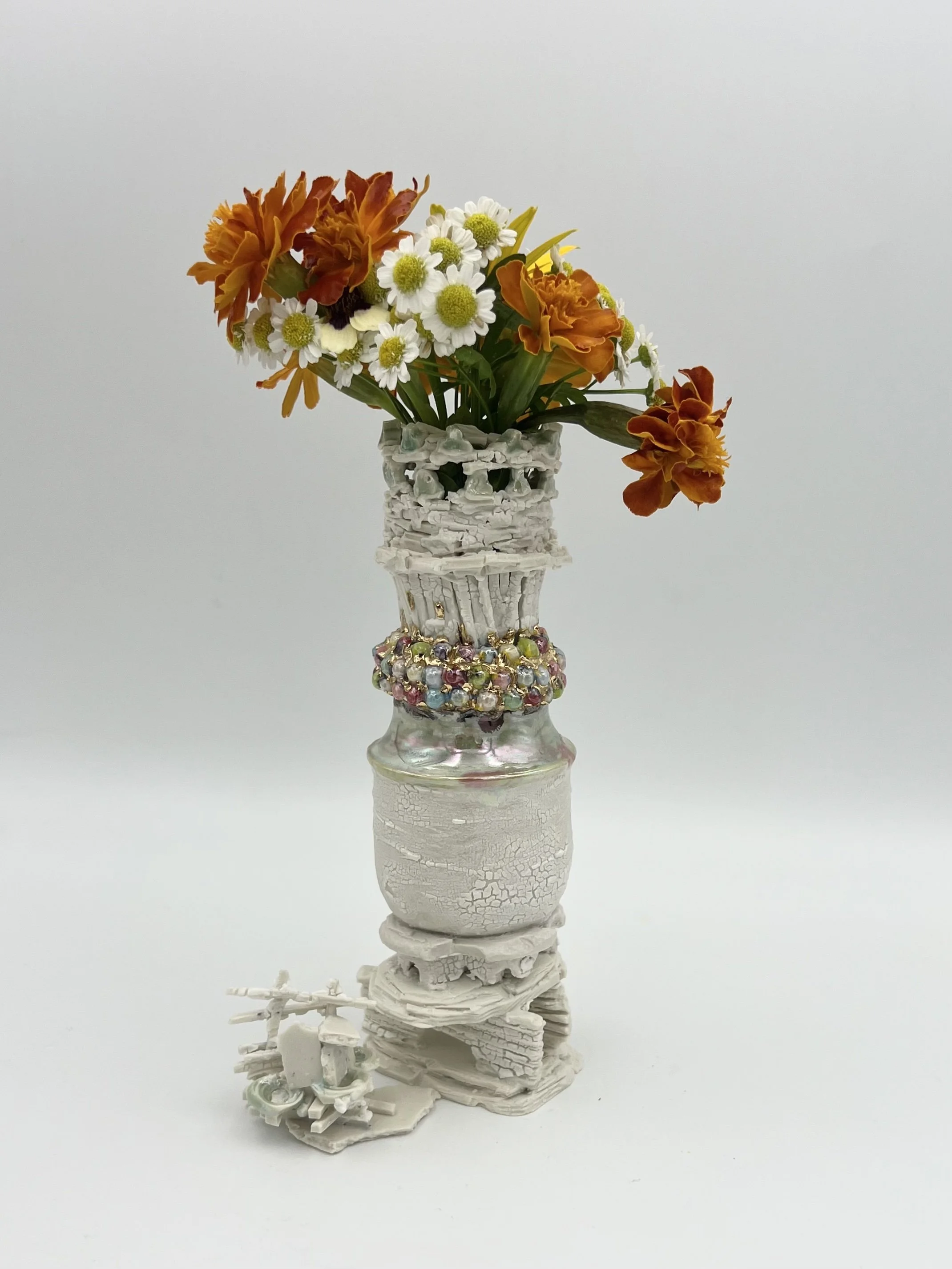
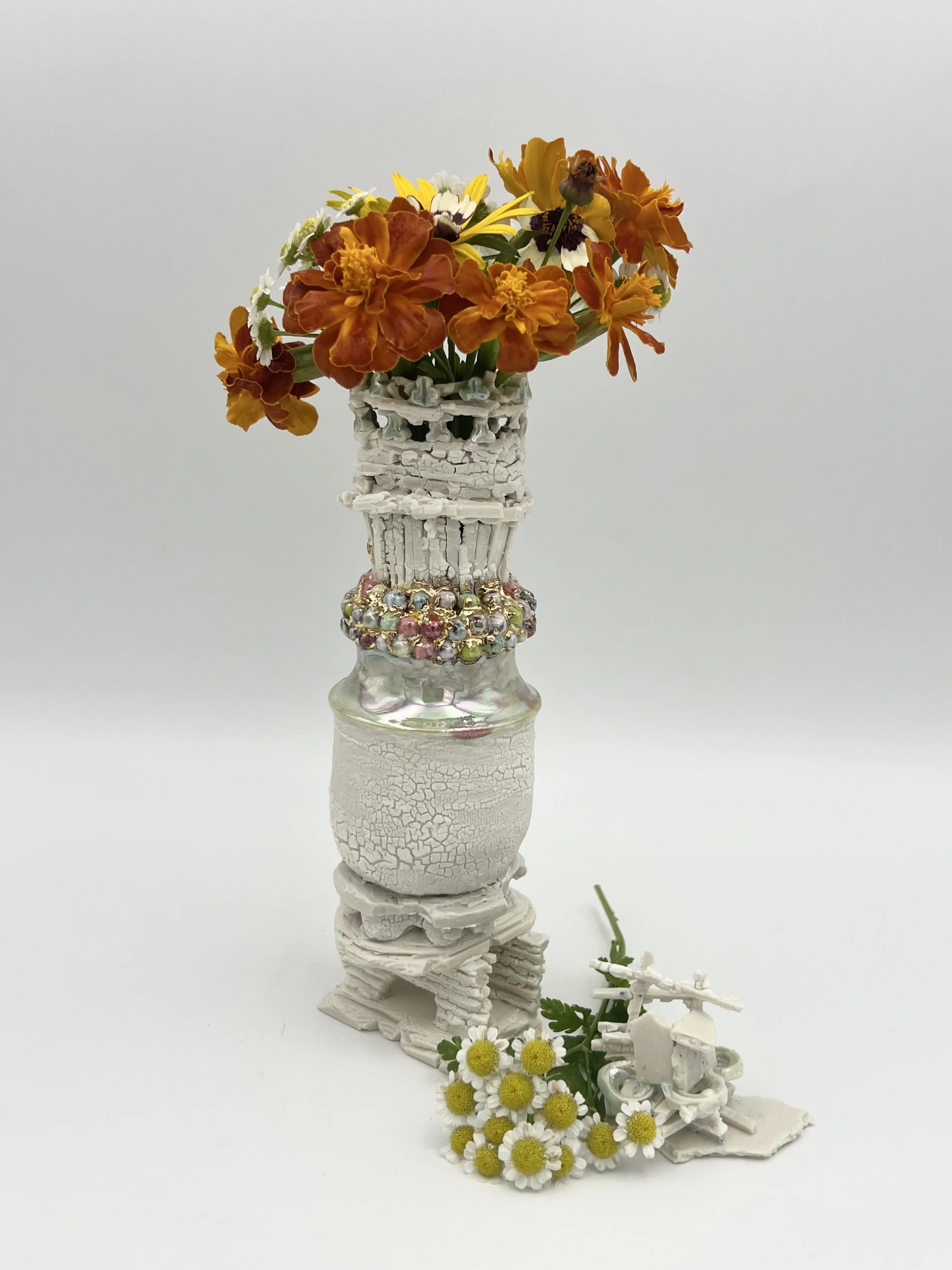
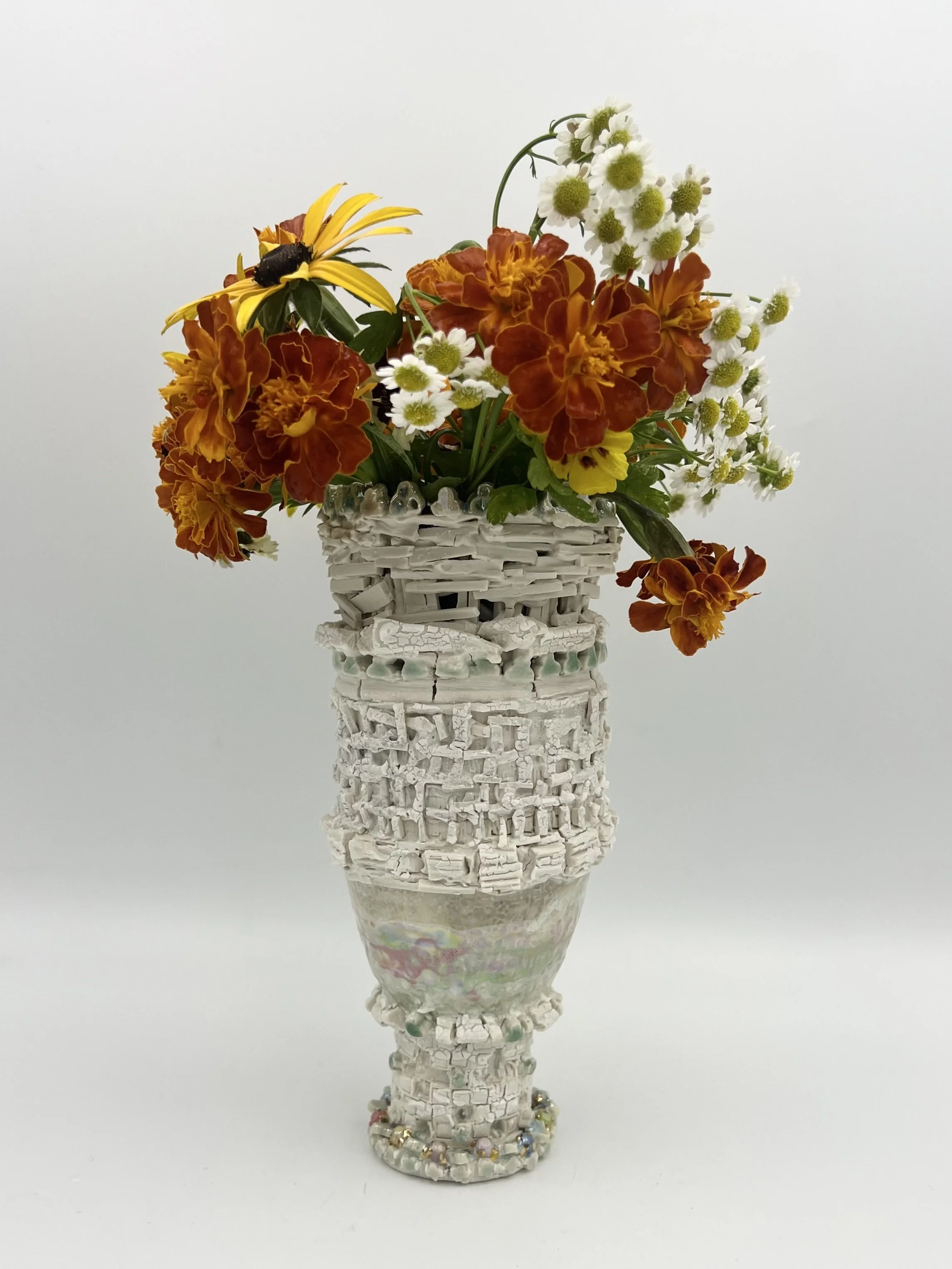
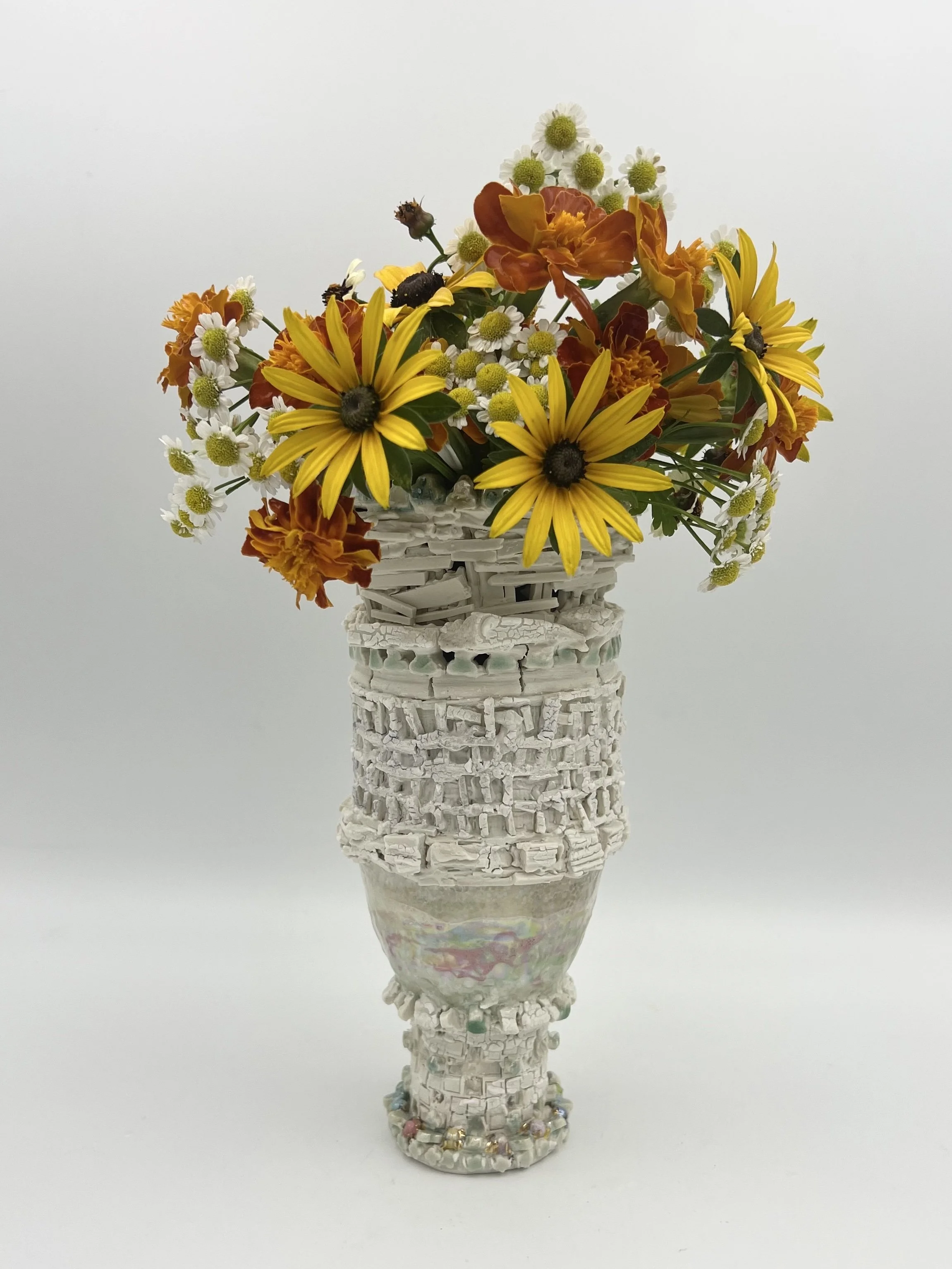
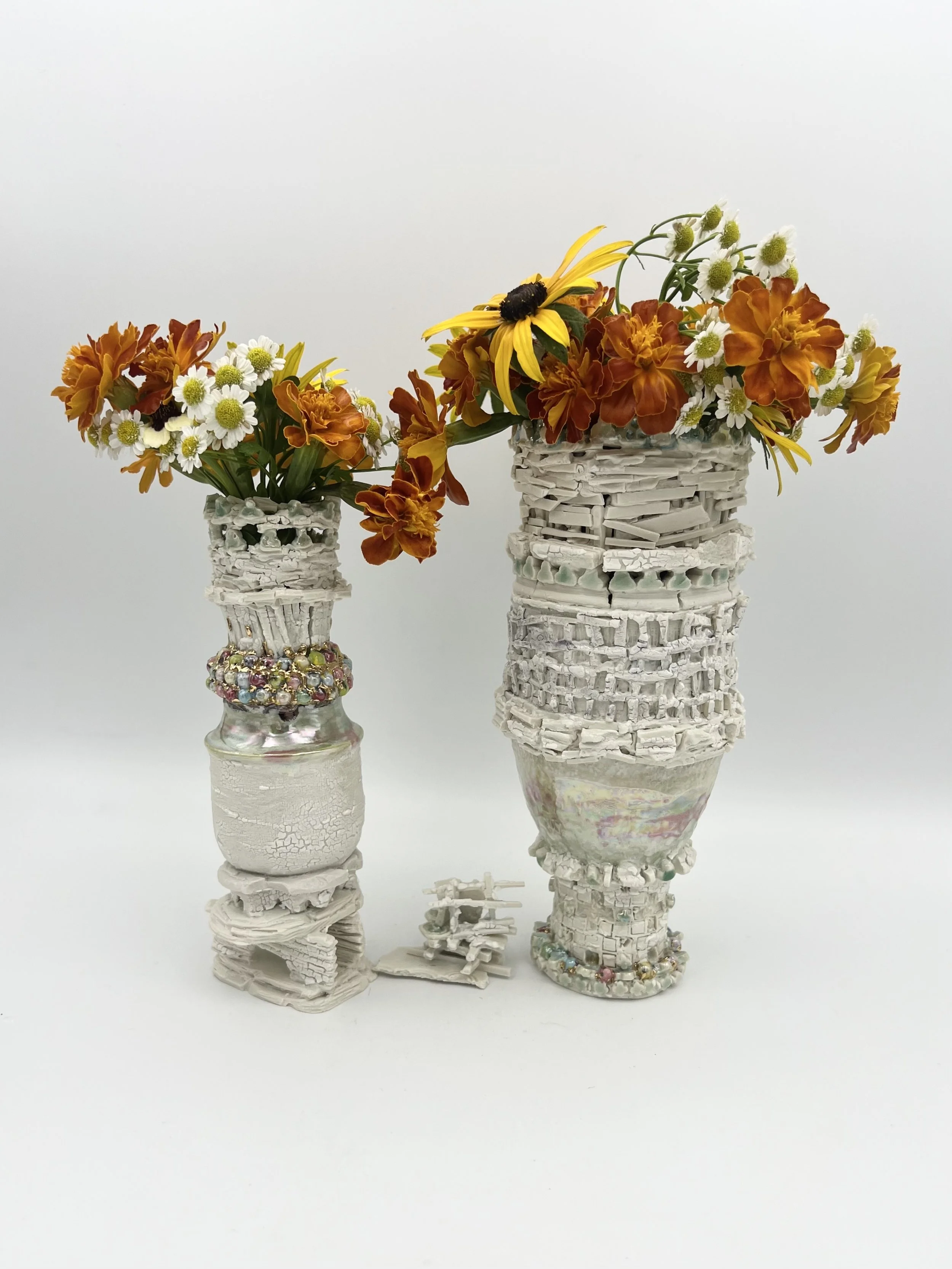
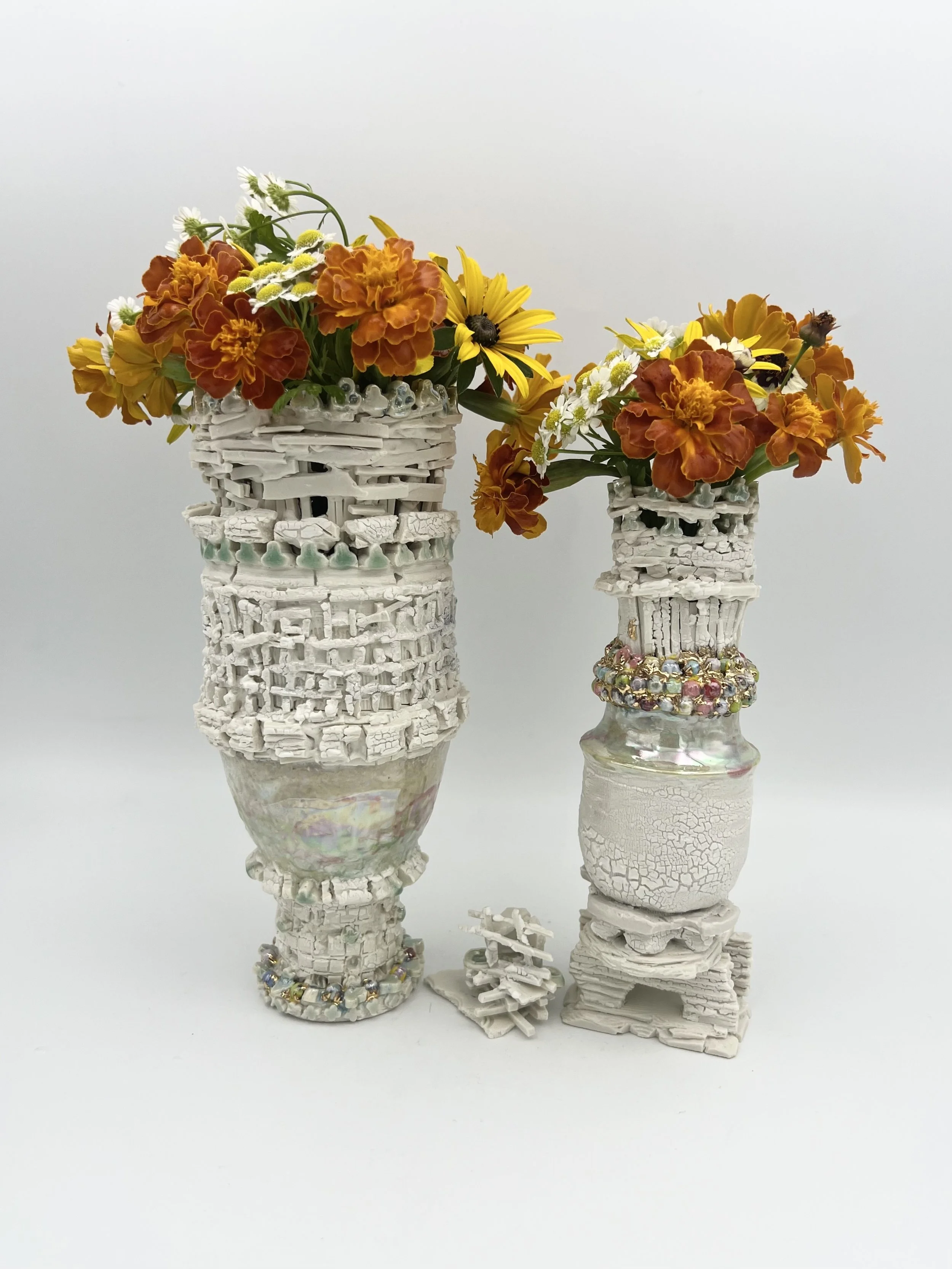
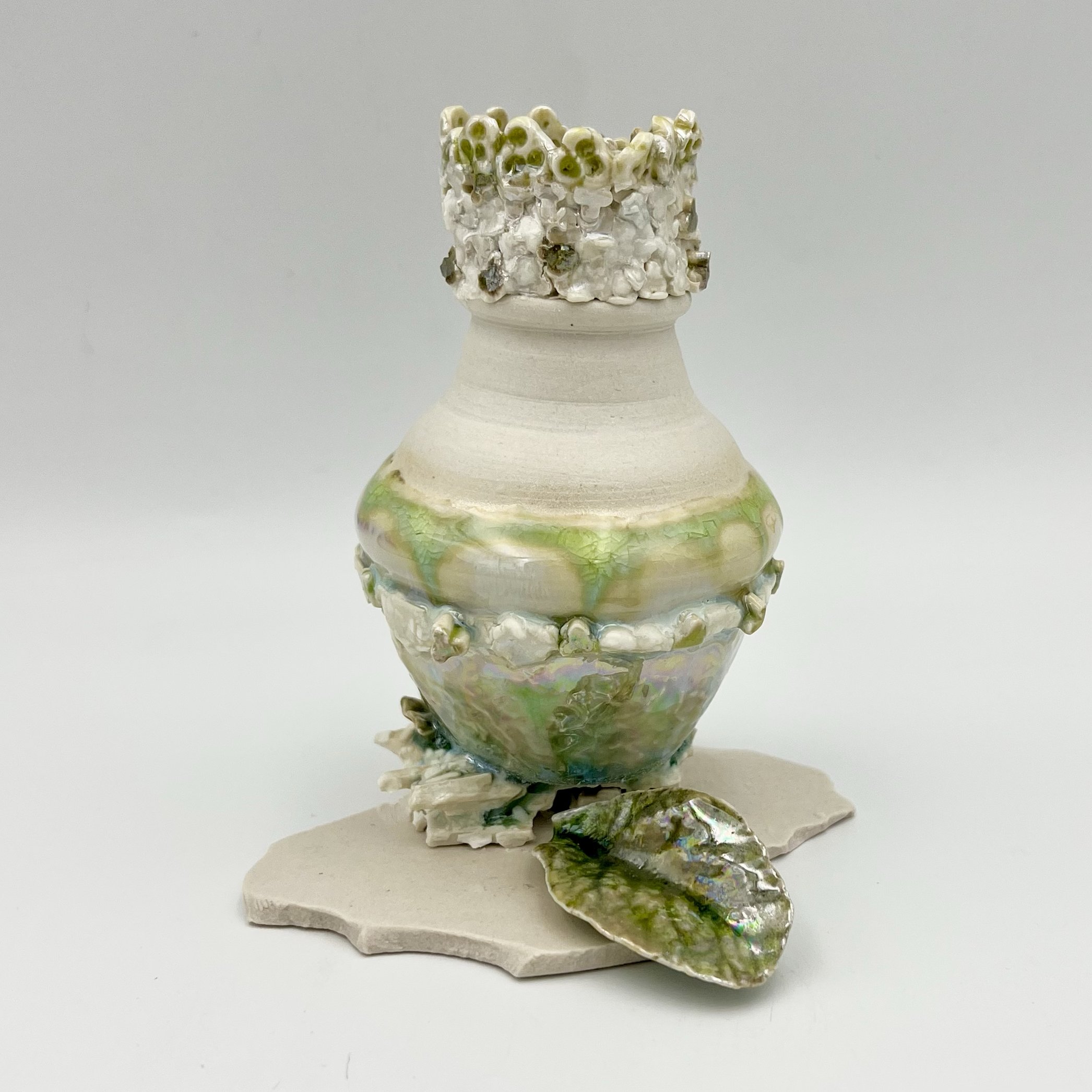
Fallen, porcelain, luster glazes, 6 x 6 x 7”, $350.00
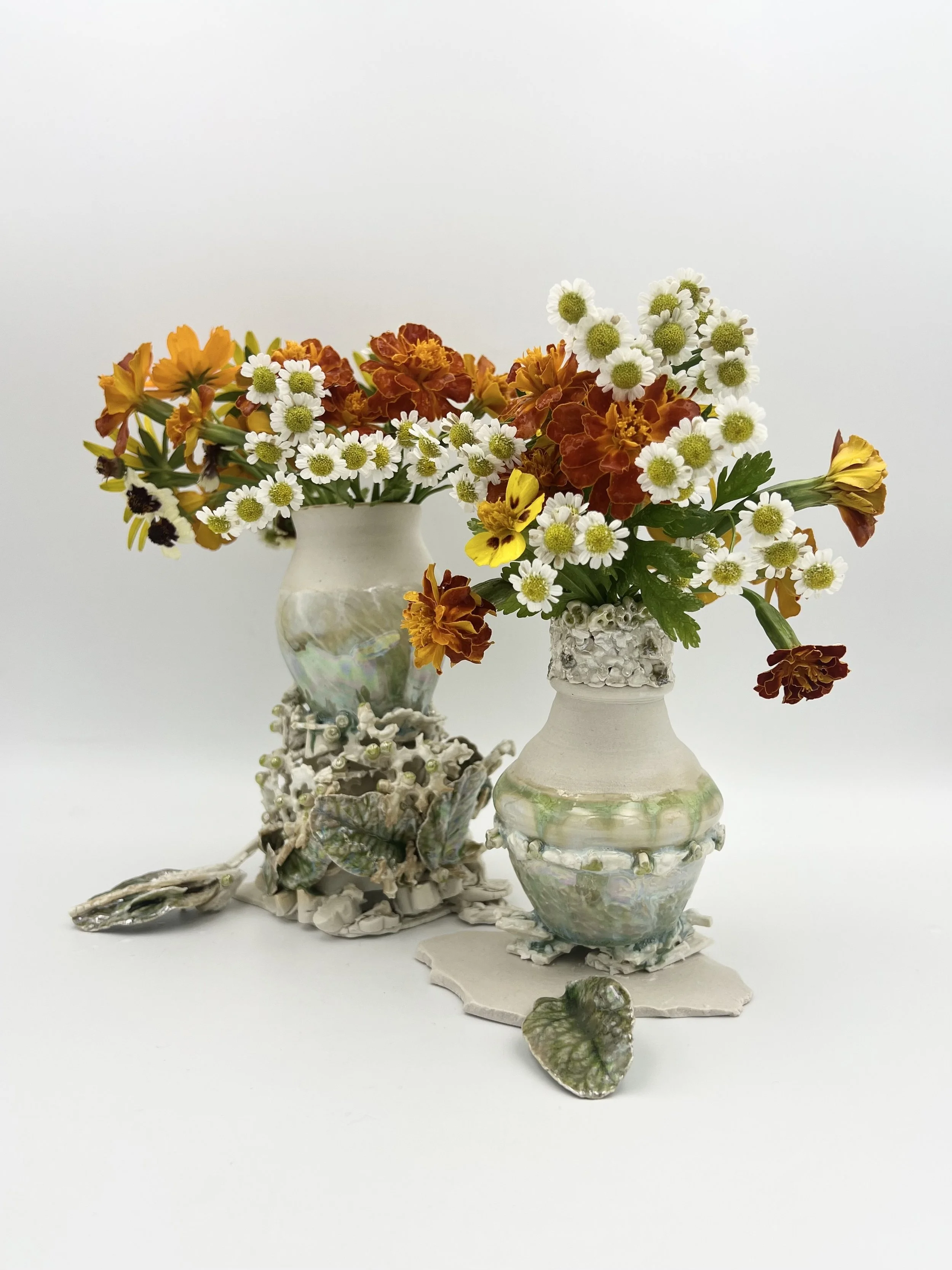
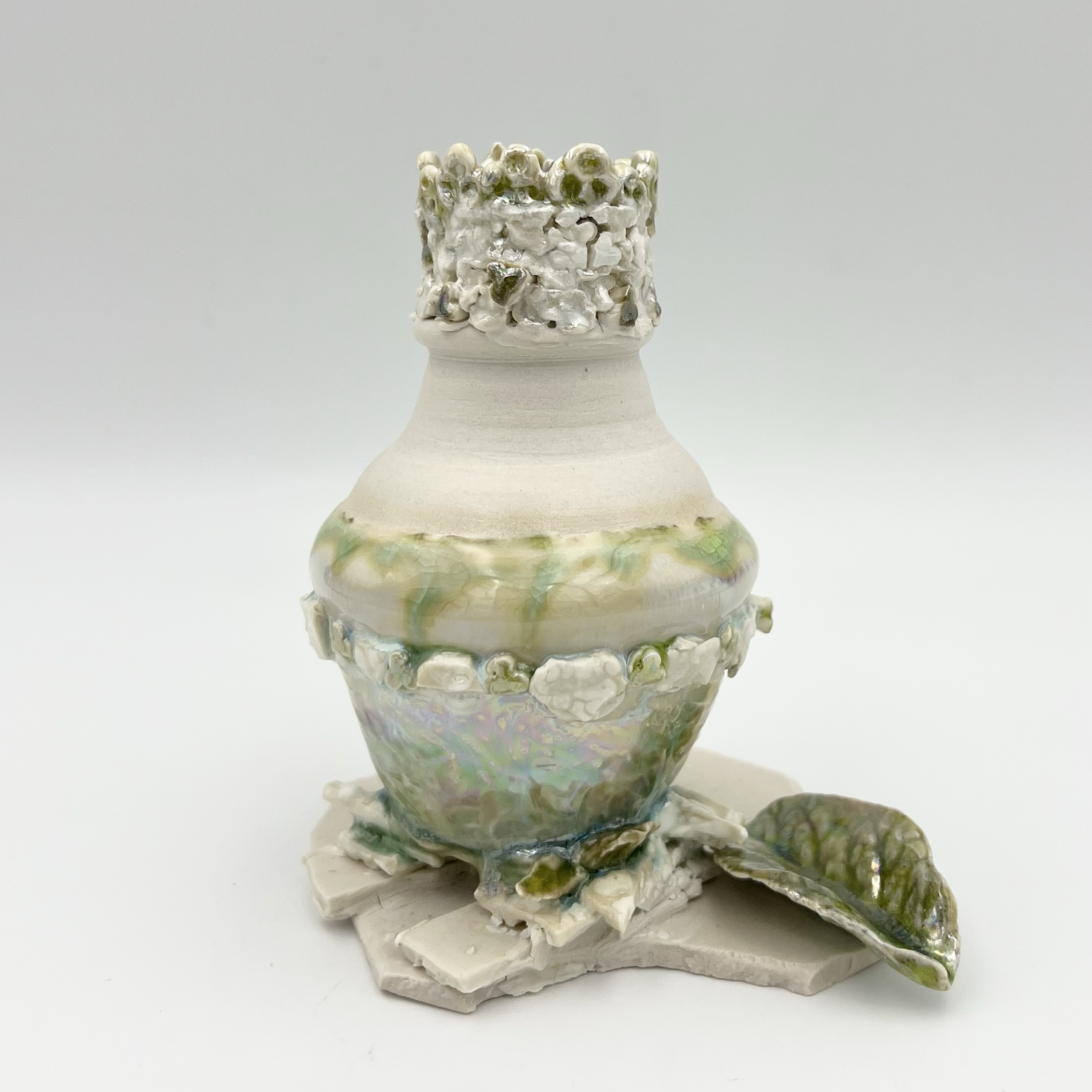
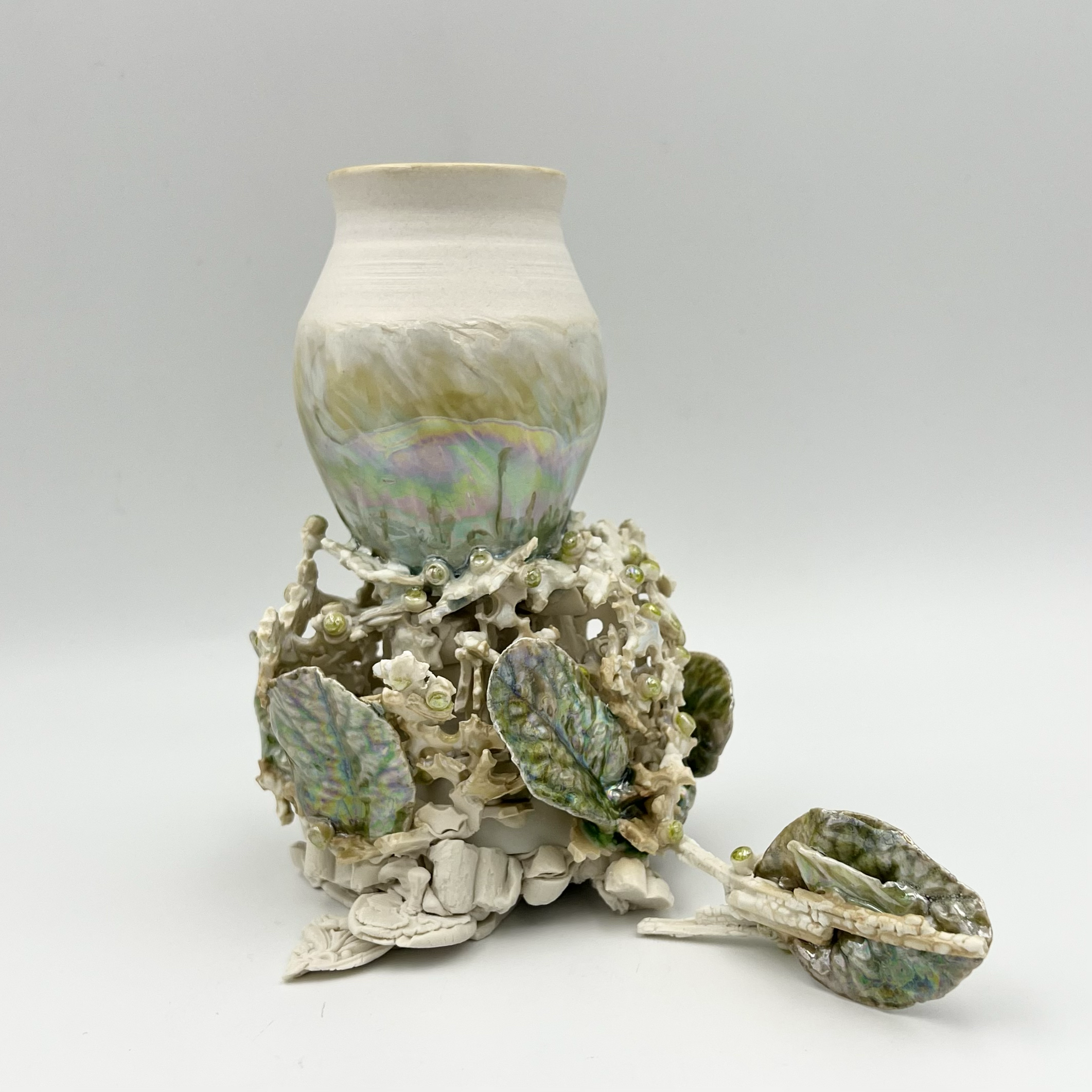
Dear Believer, porcelain, luster glazes, 5 x 5 x 6”, $400.00 (SOLD)
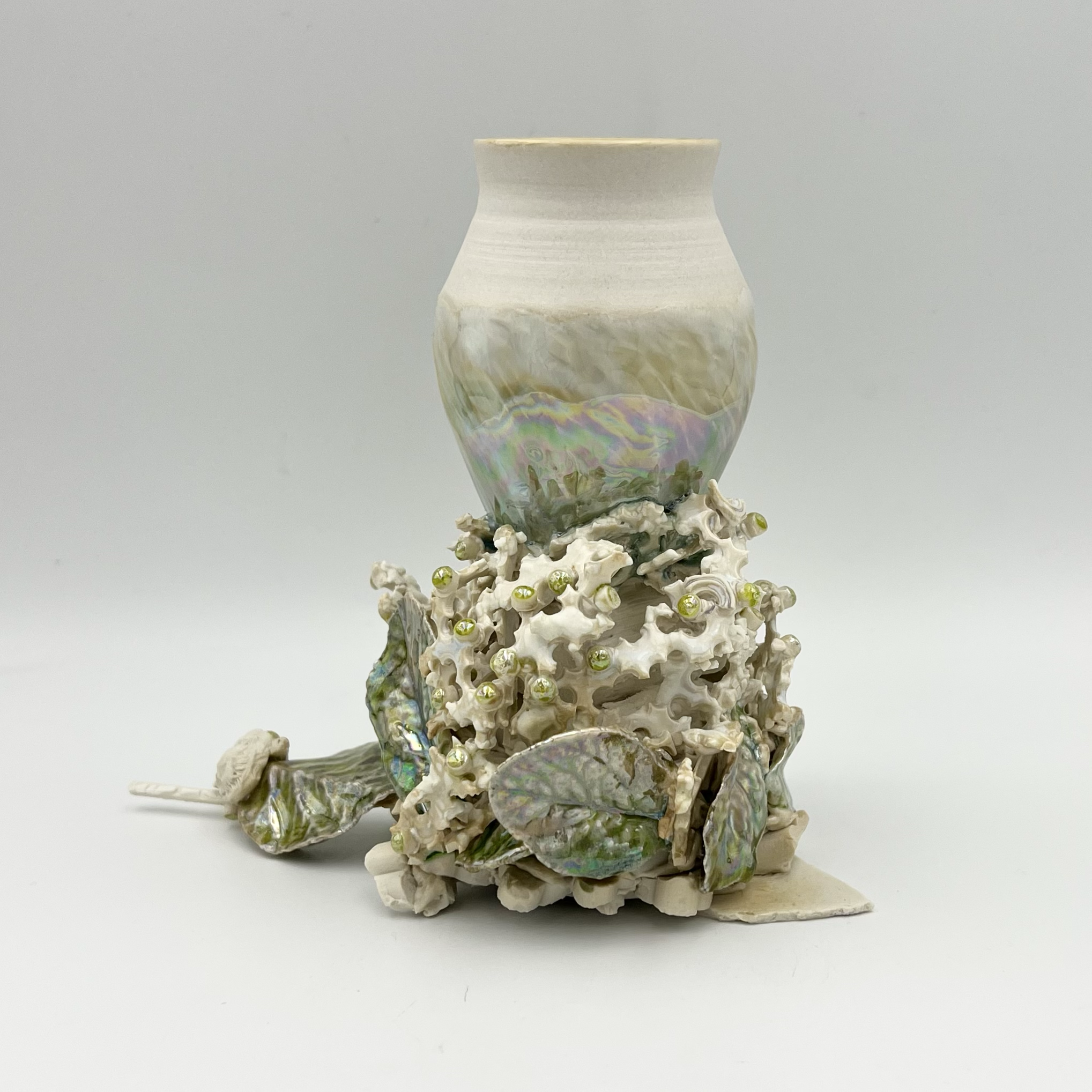
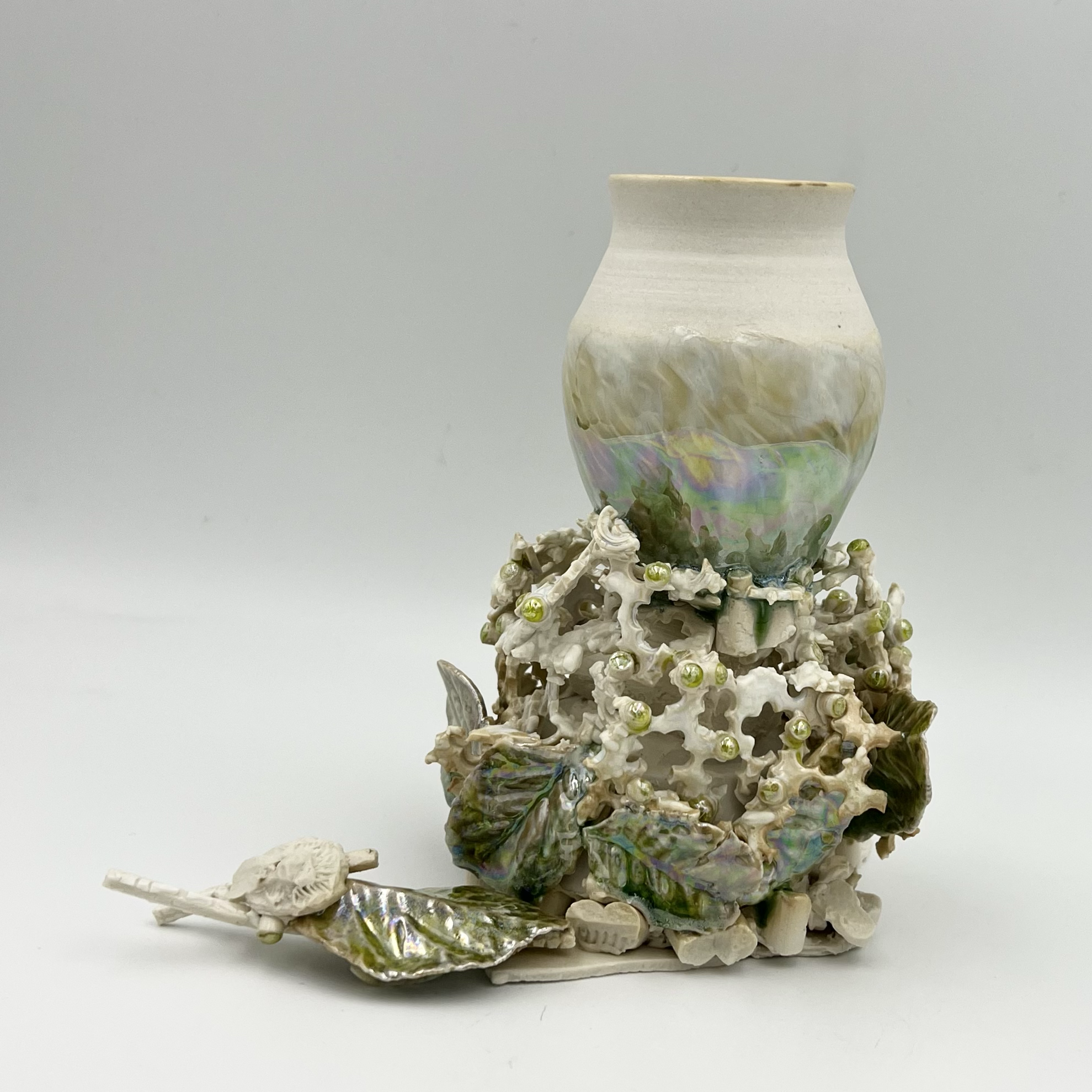
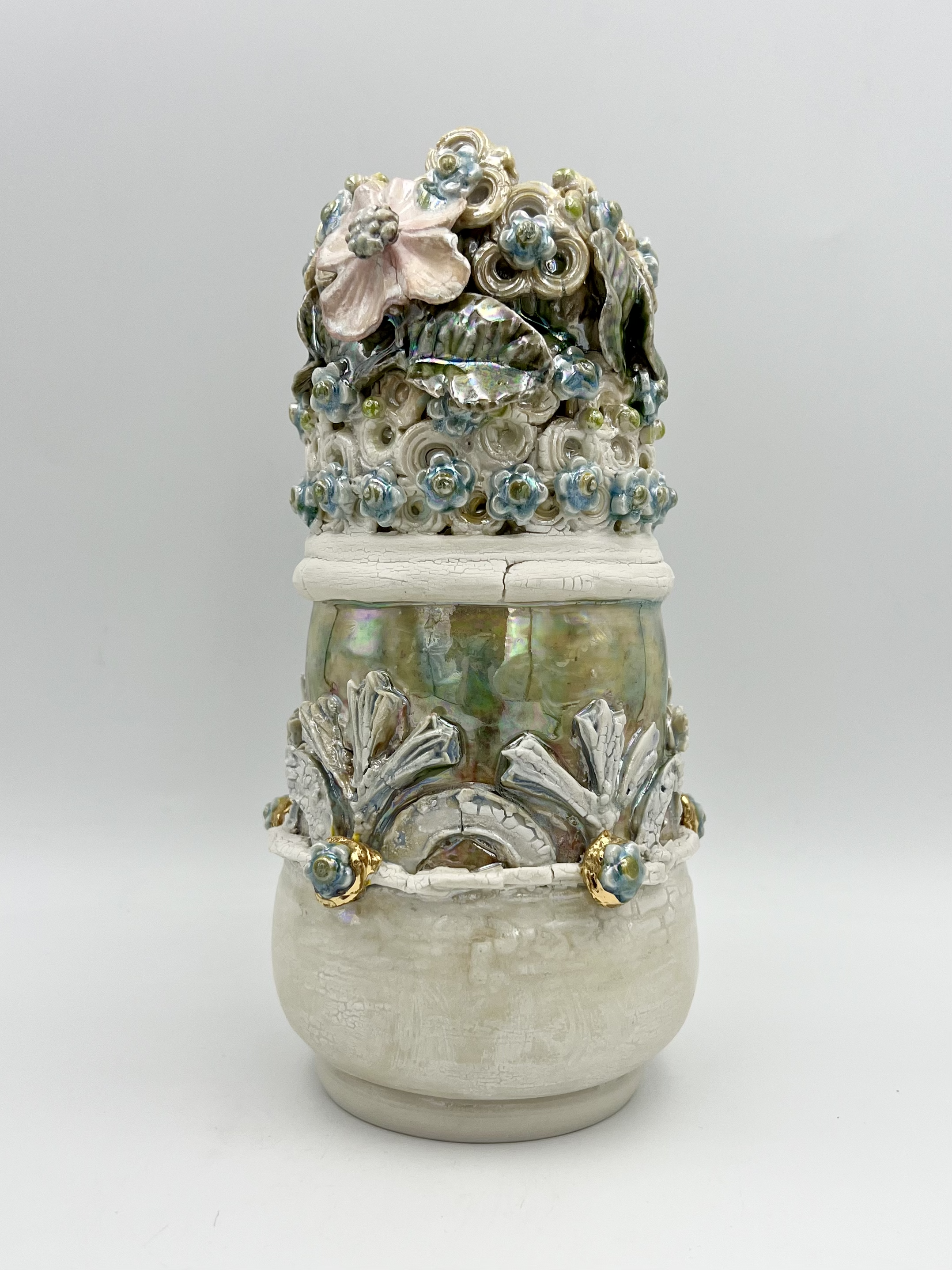
The Dreamers who bring happiness I, 9x5x5”, $500 (SOLD)
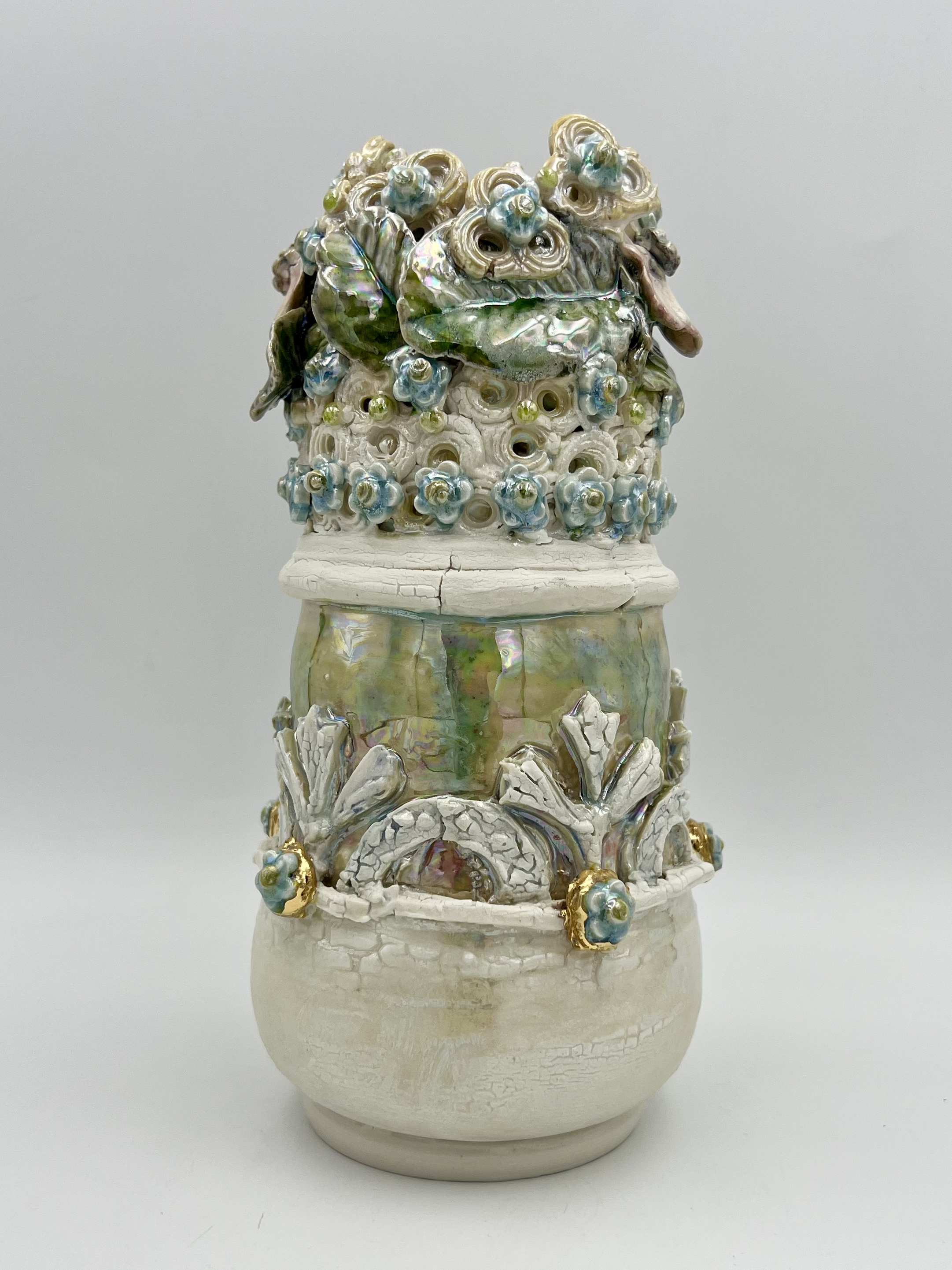
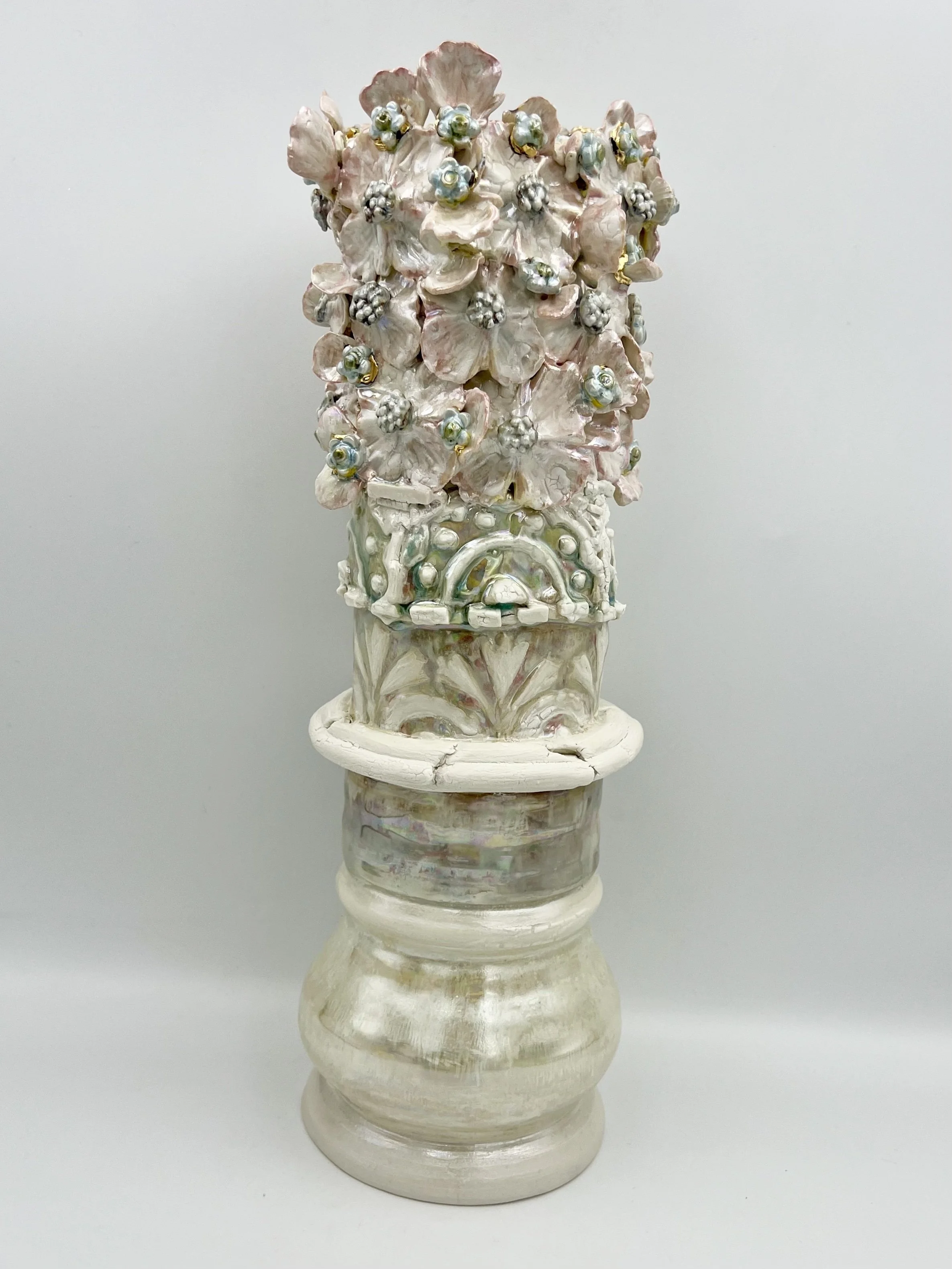
The Dreamers who bring happiness II, 14.5x6x6”, $800
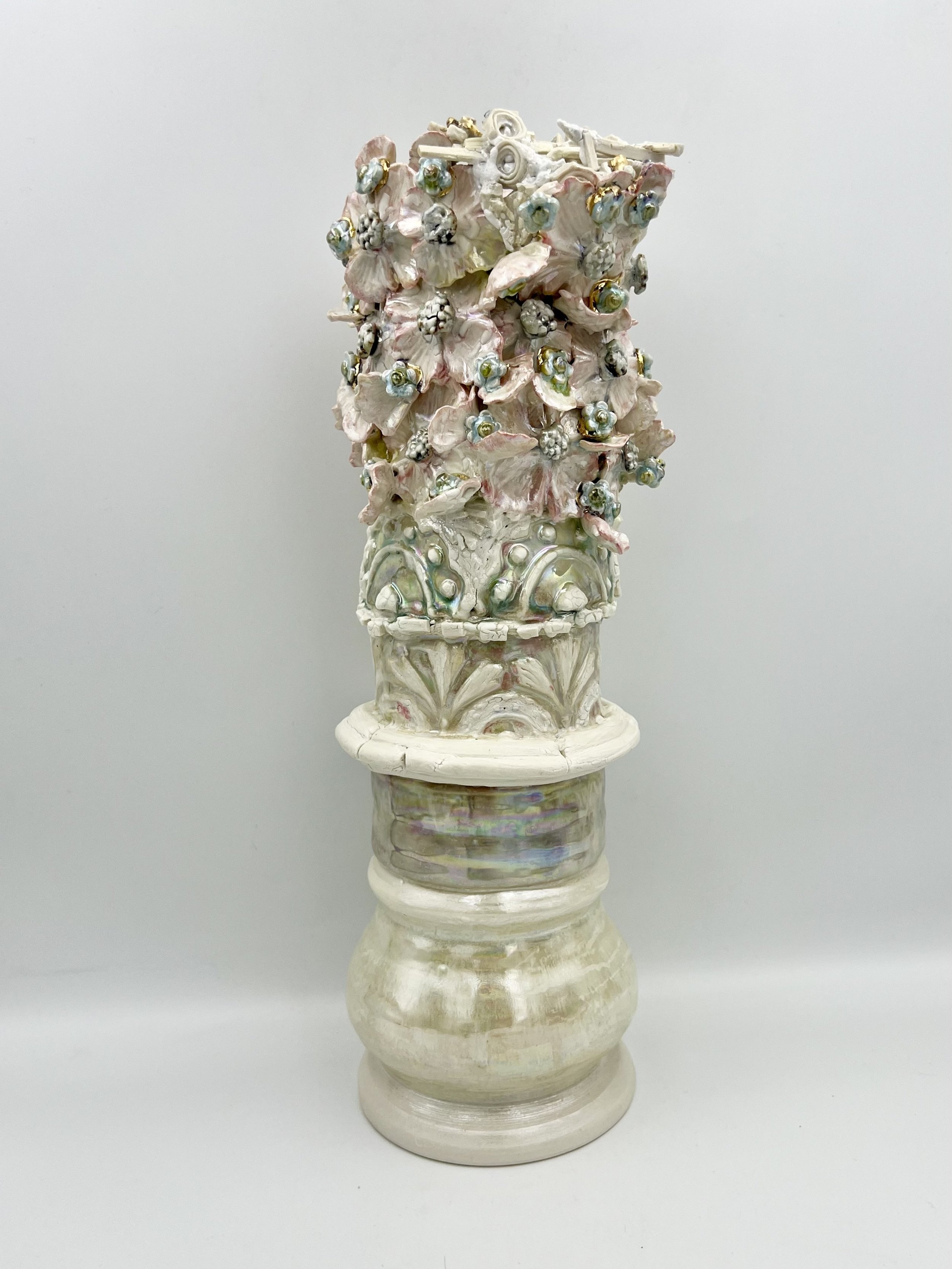
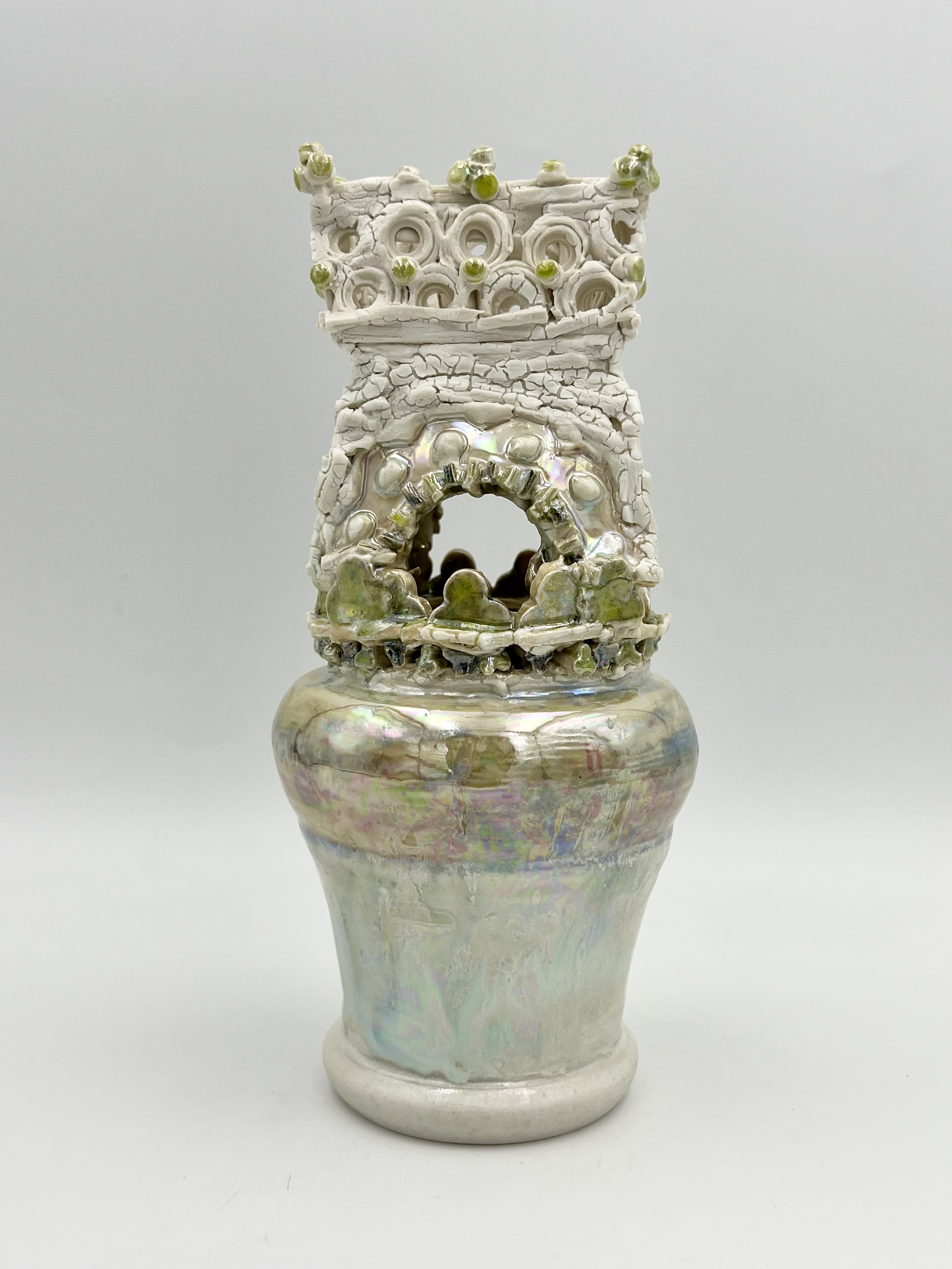
Polyfoil, 8x3.5x3.5”, $425
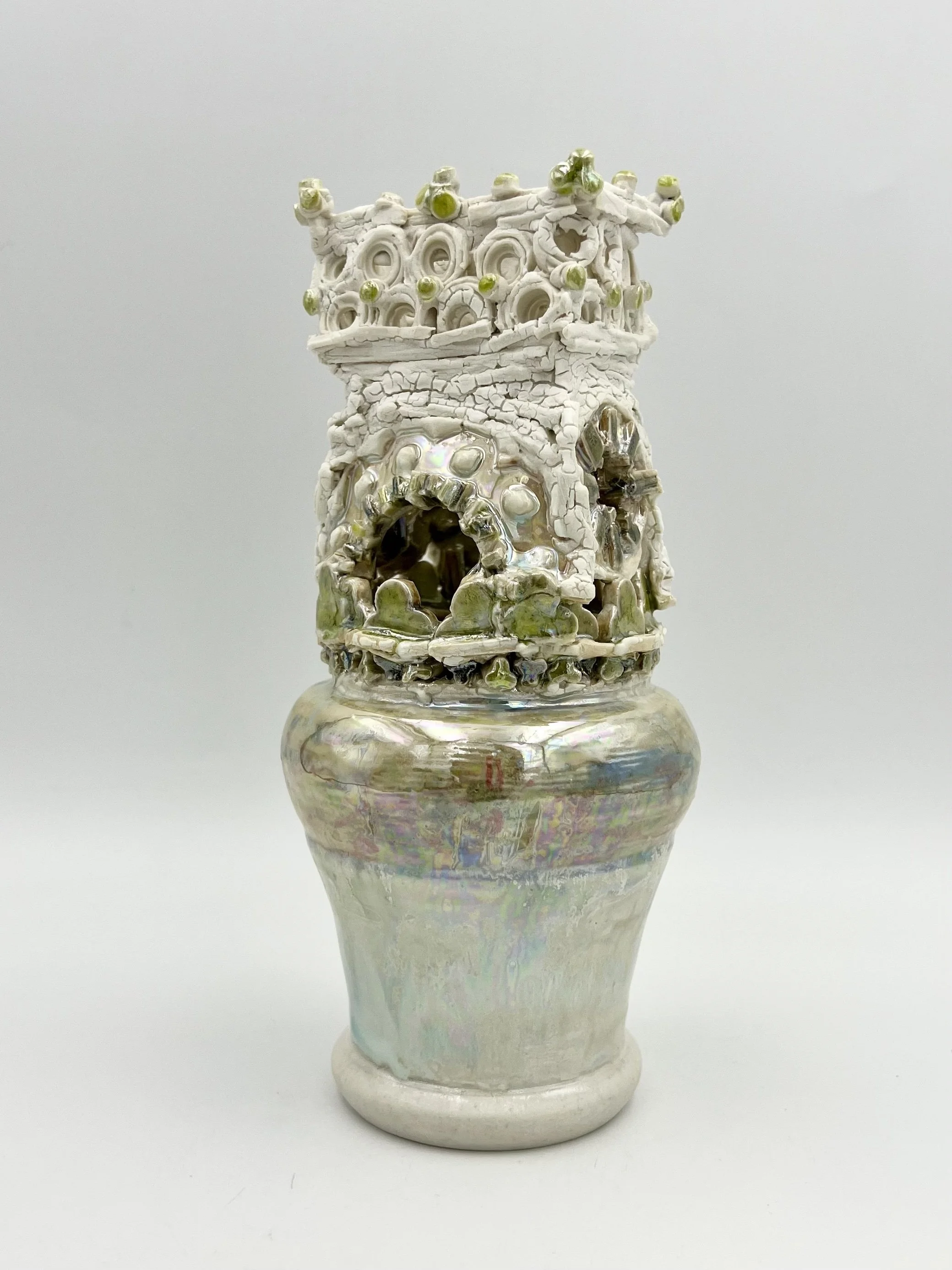
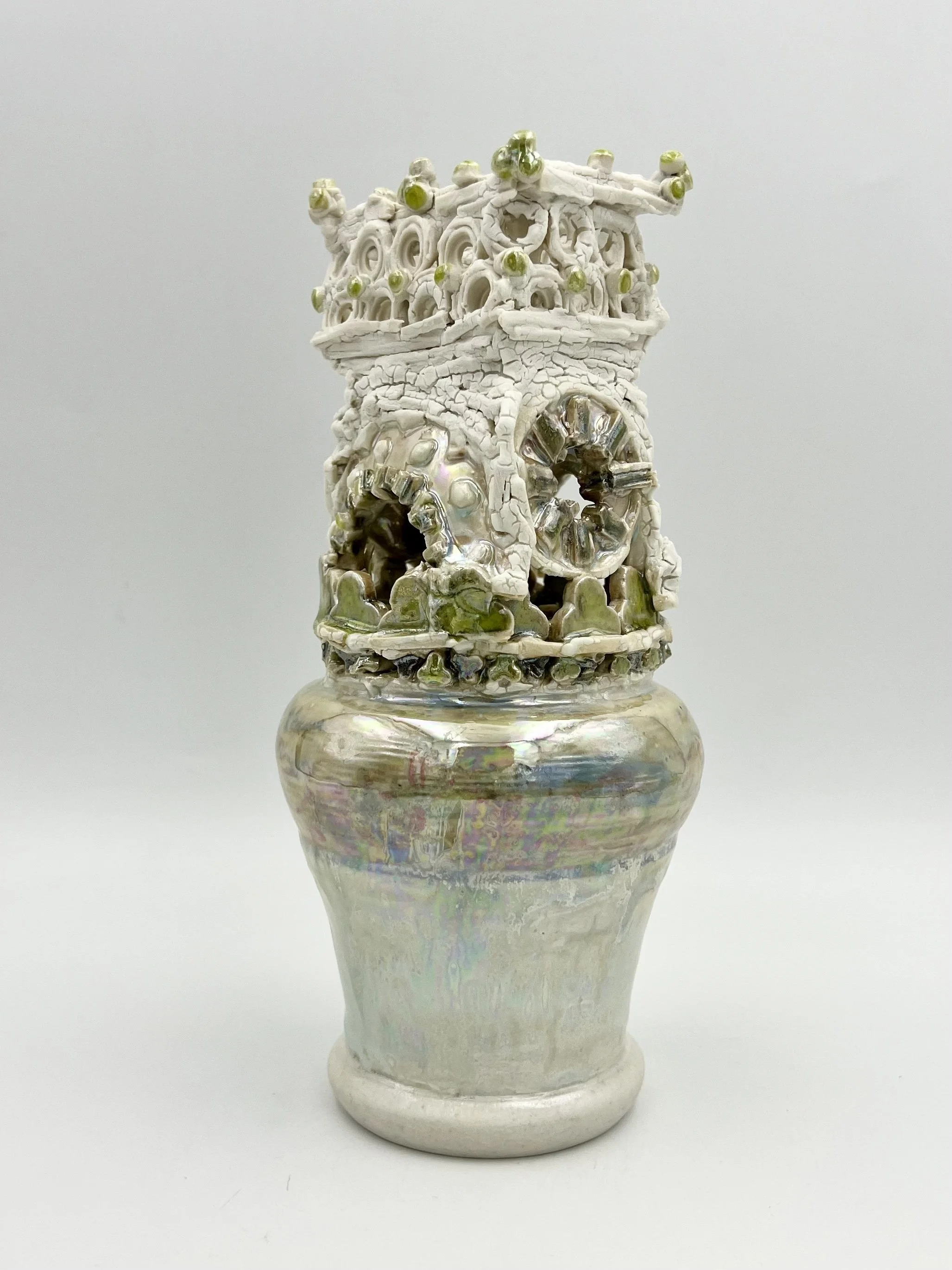
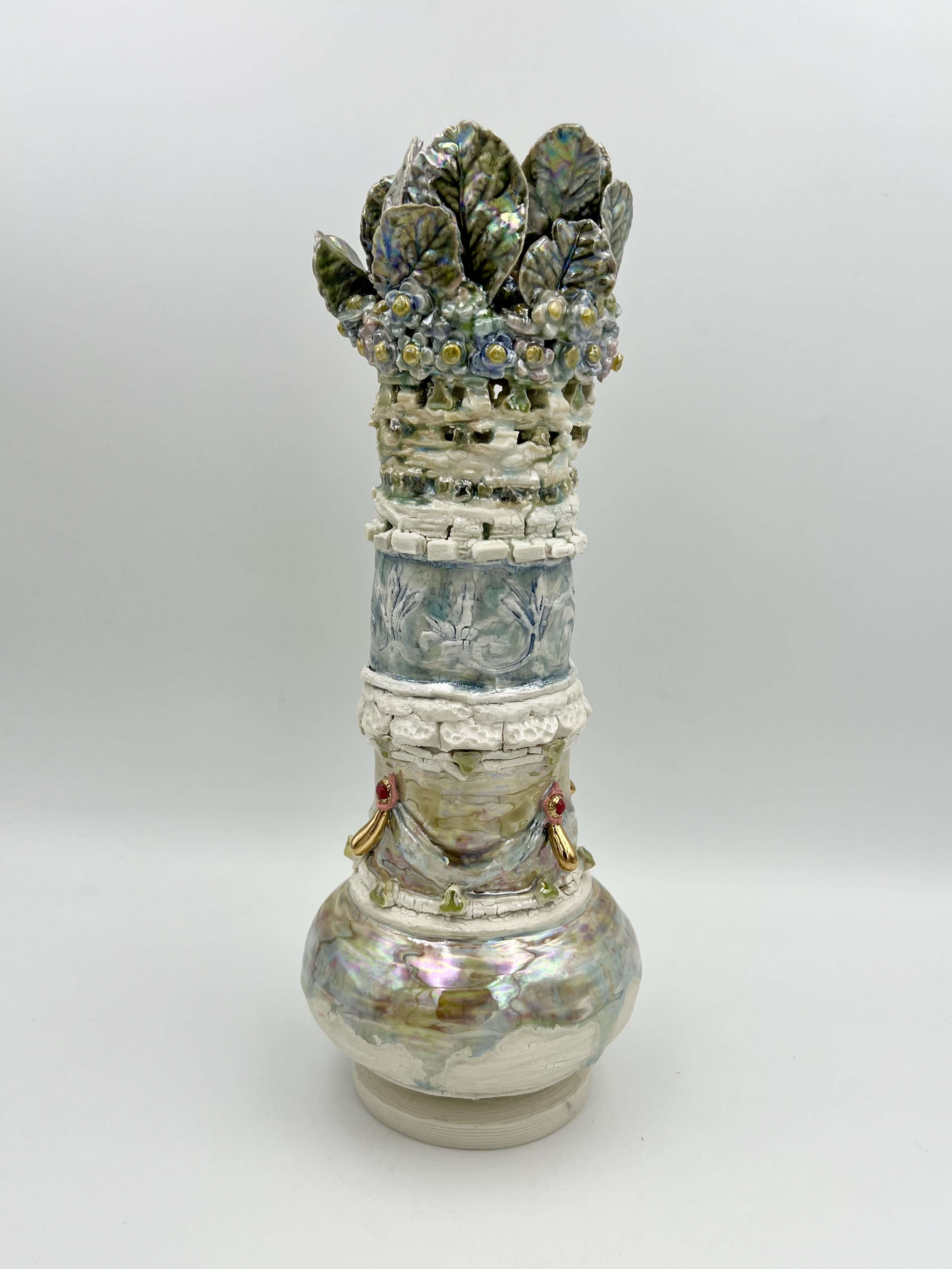
Djinn, 12x5x5”, $600
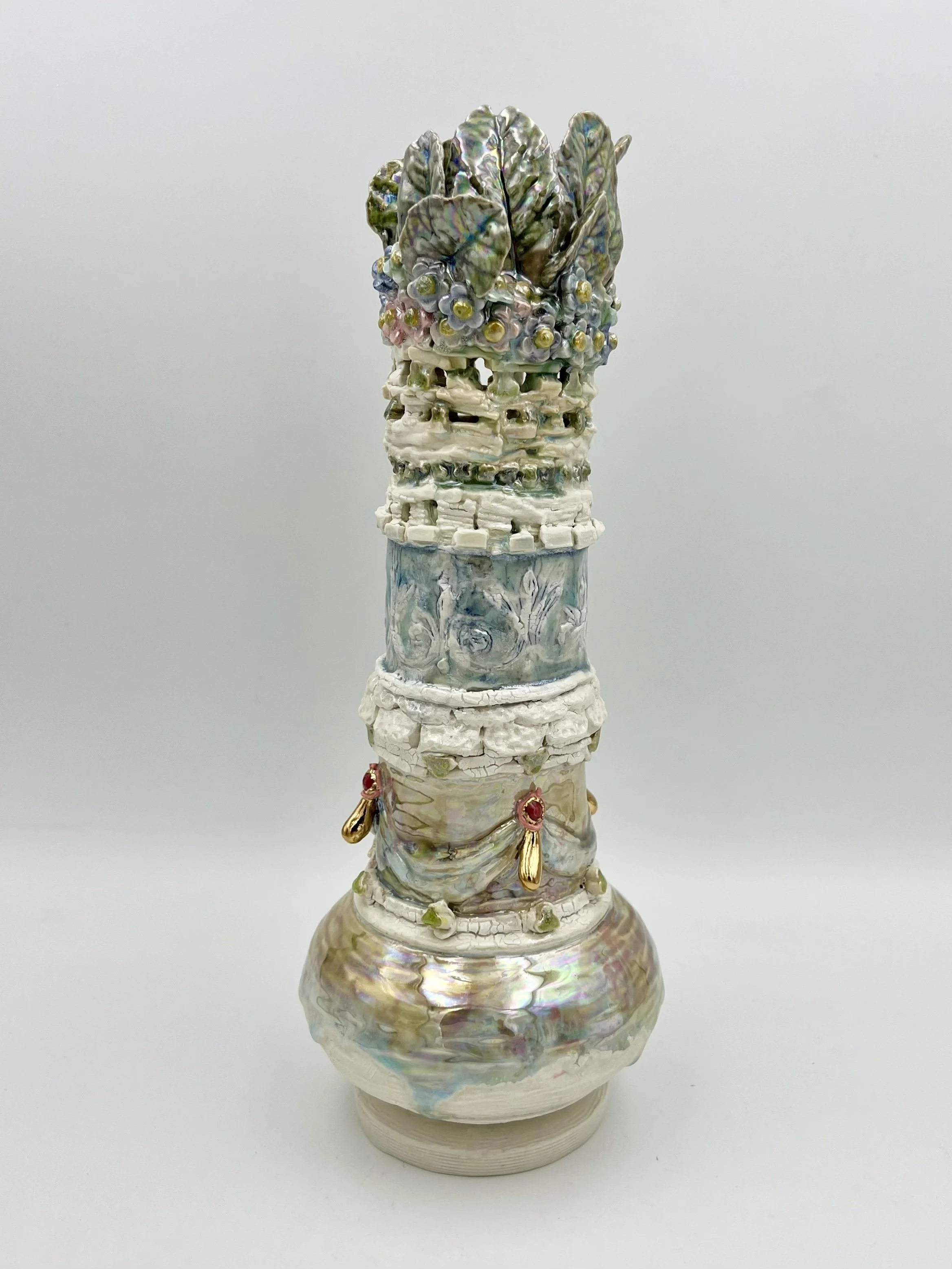
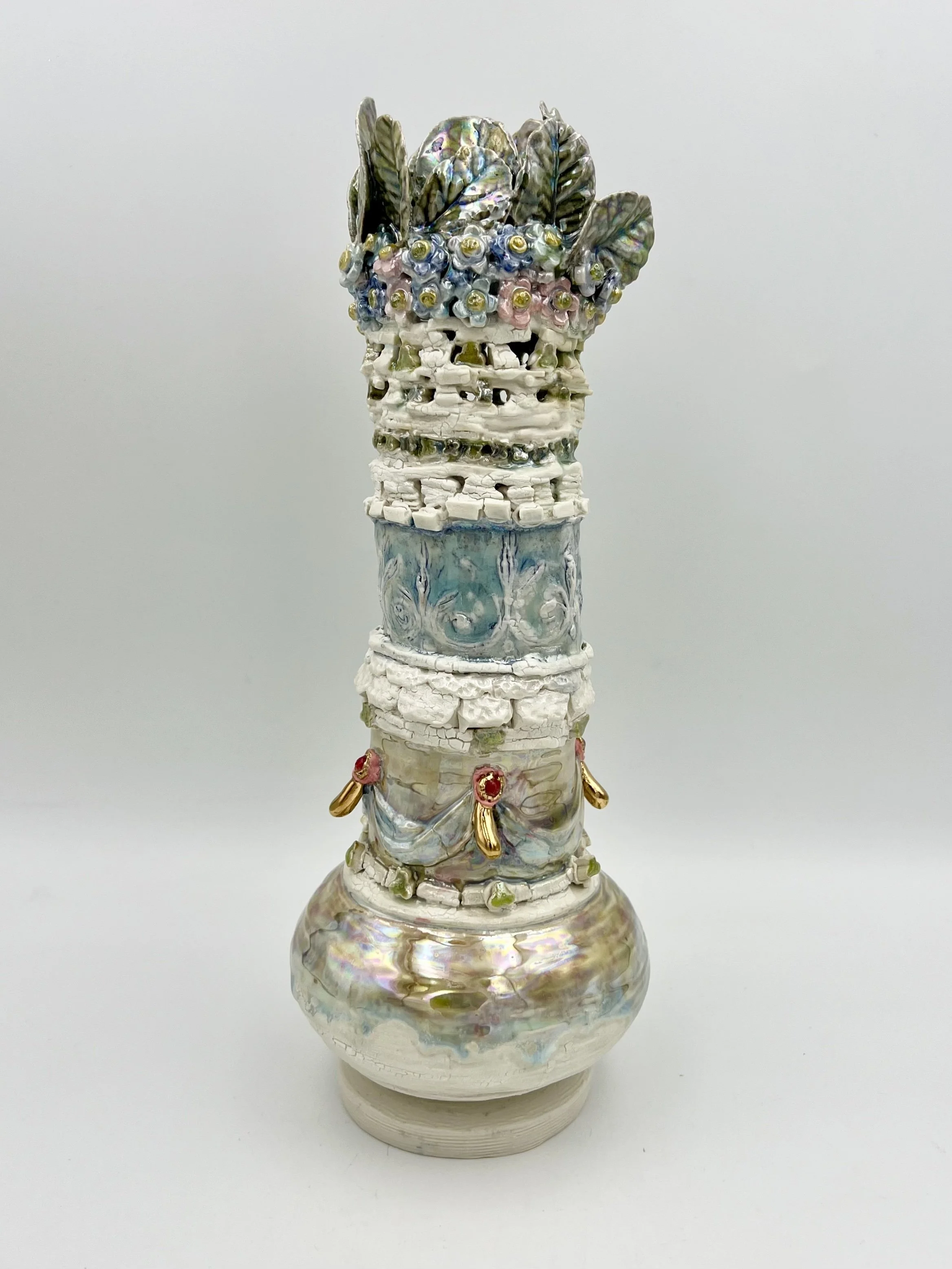
For Elizabeth Duane Gillespie, 8x5.5x5.5”, $500 (SOLD)
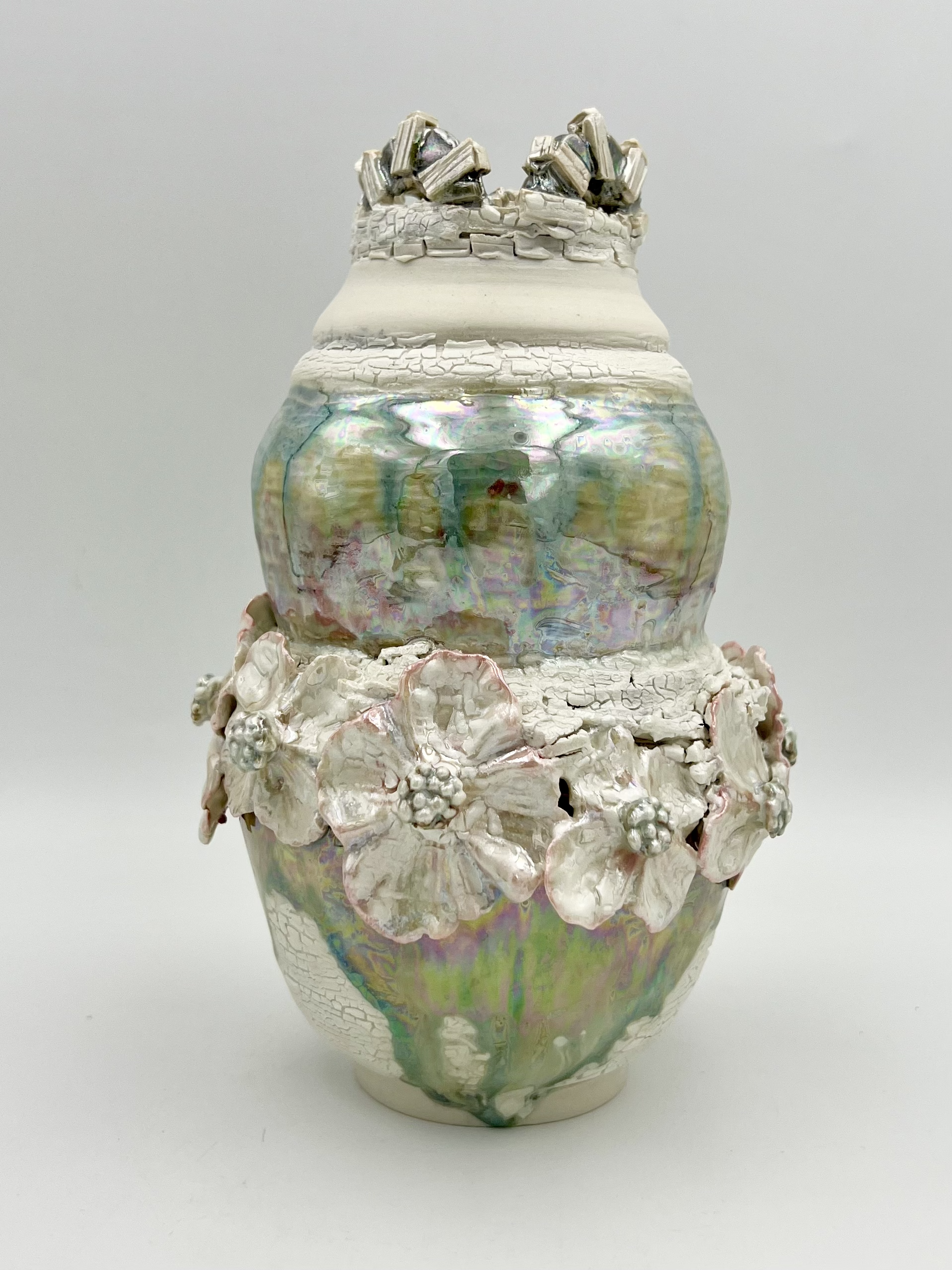
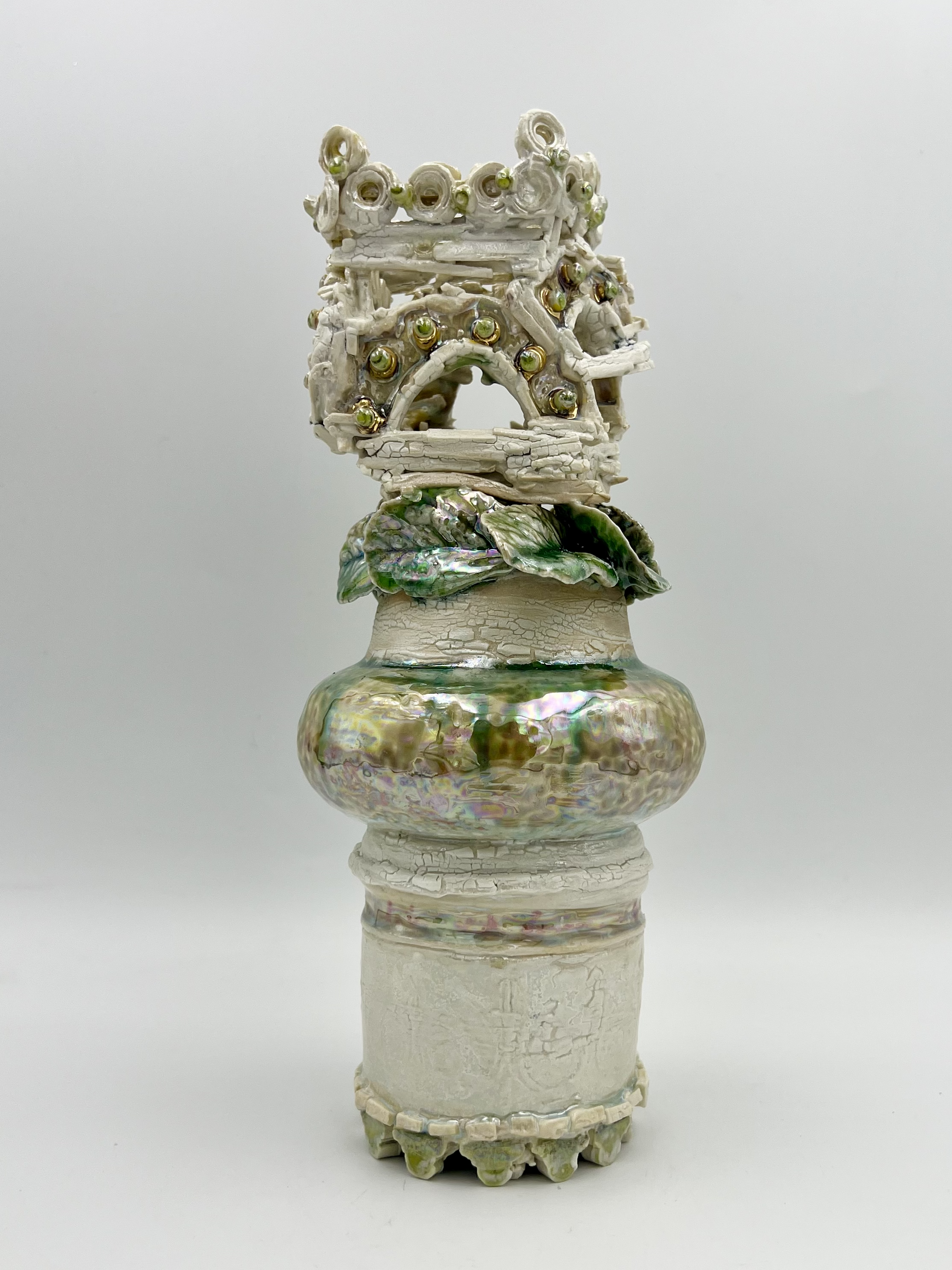
After Hazel, 10.5x 5x5, $475
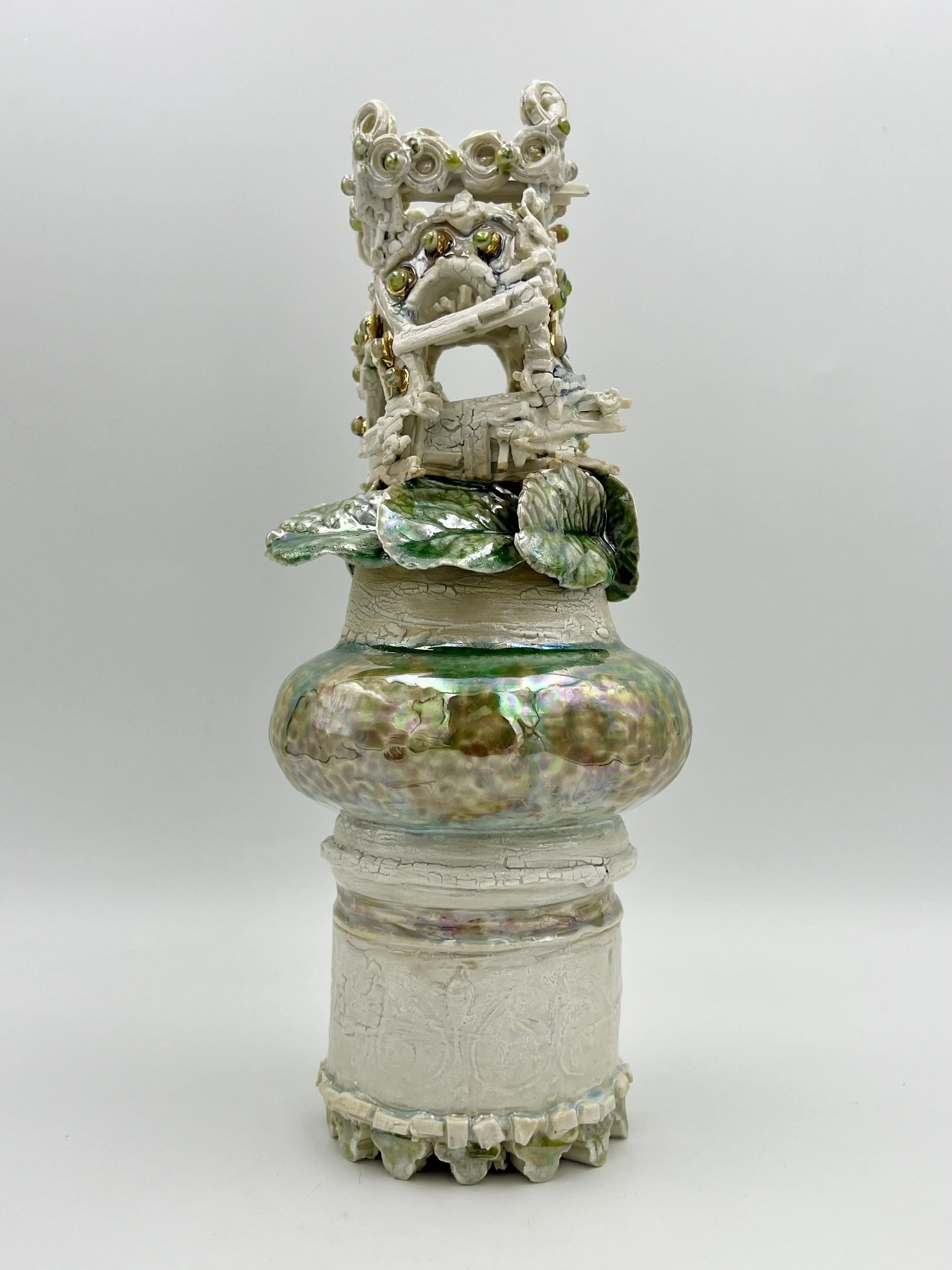
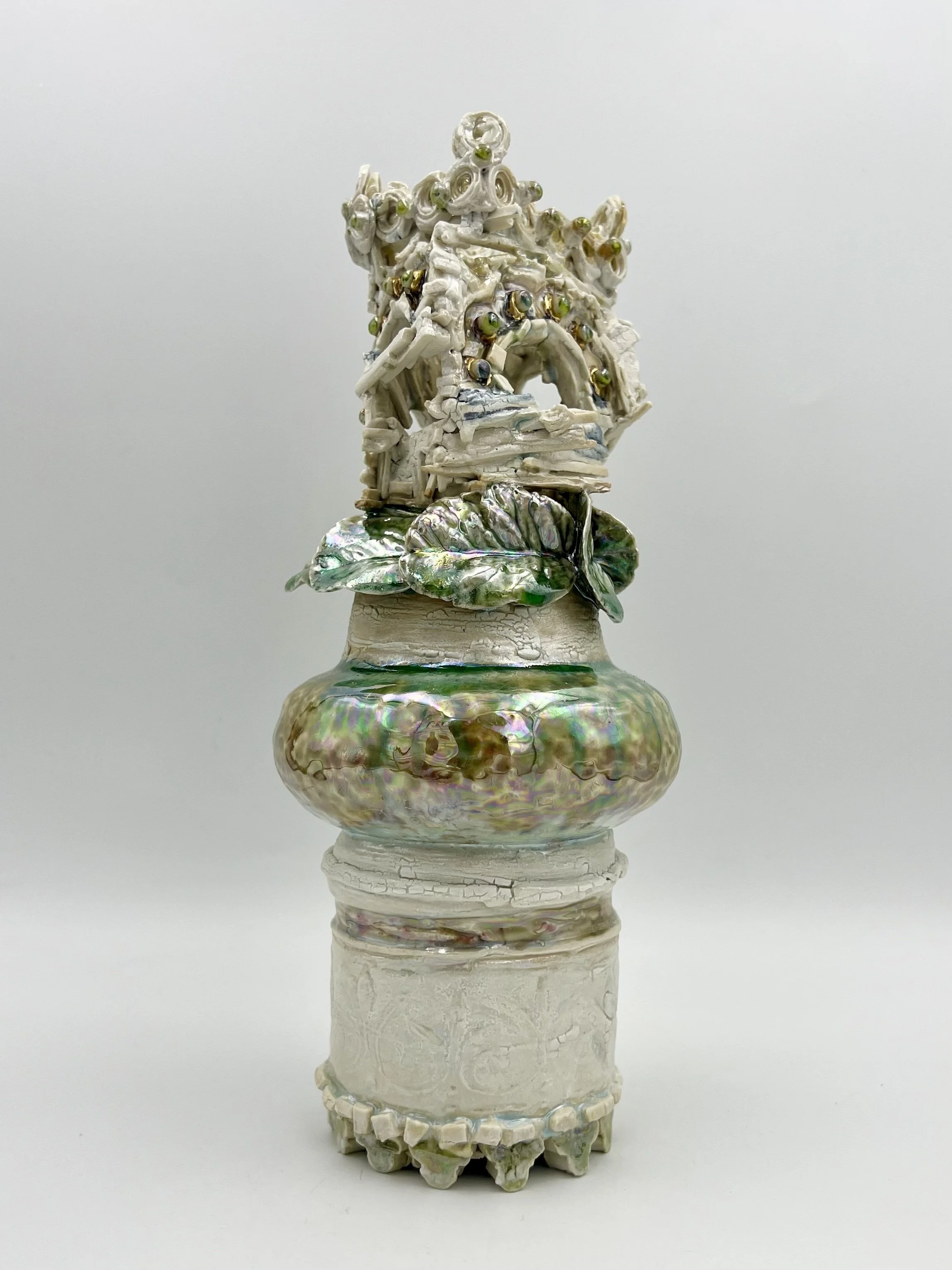
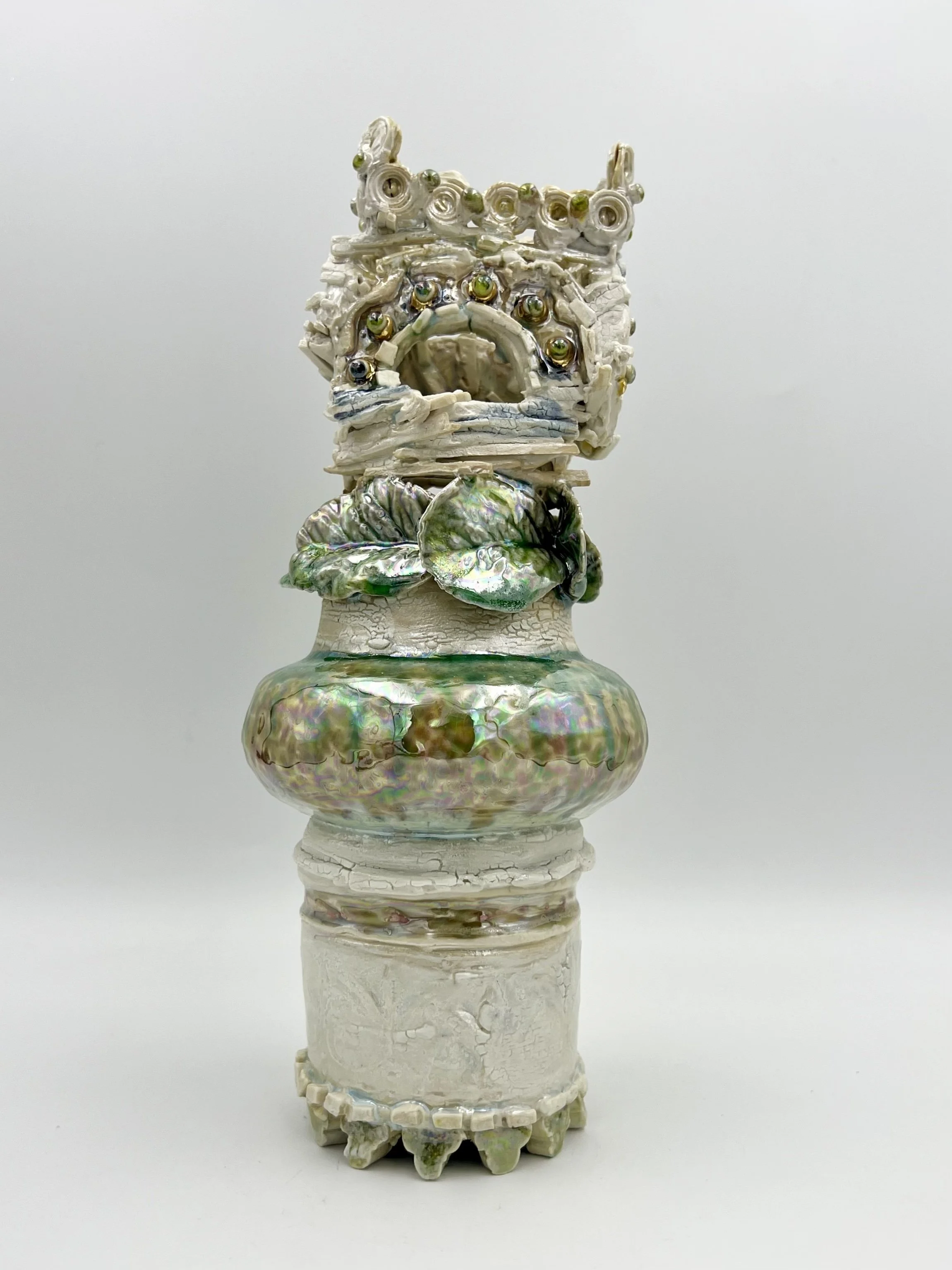
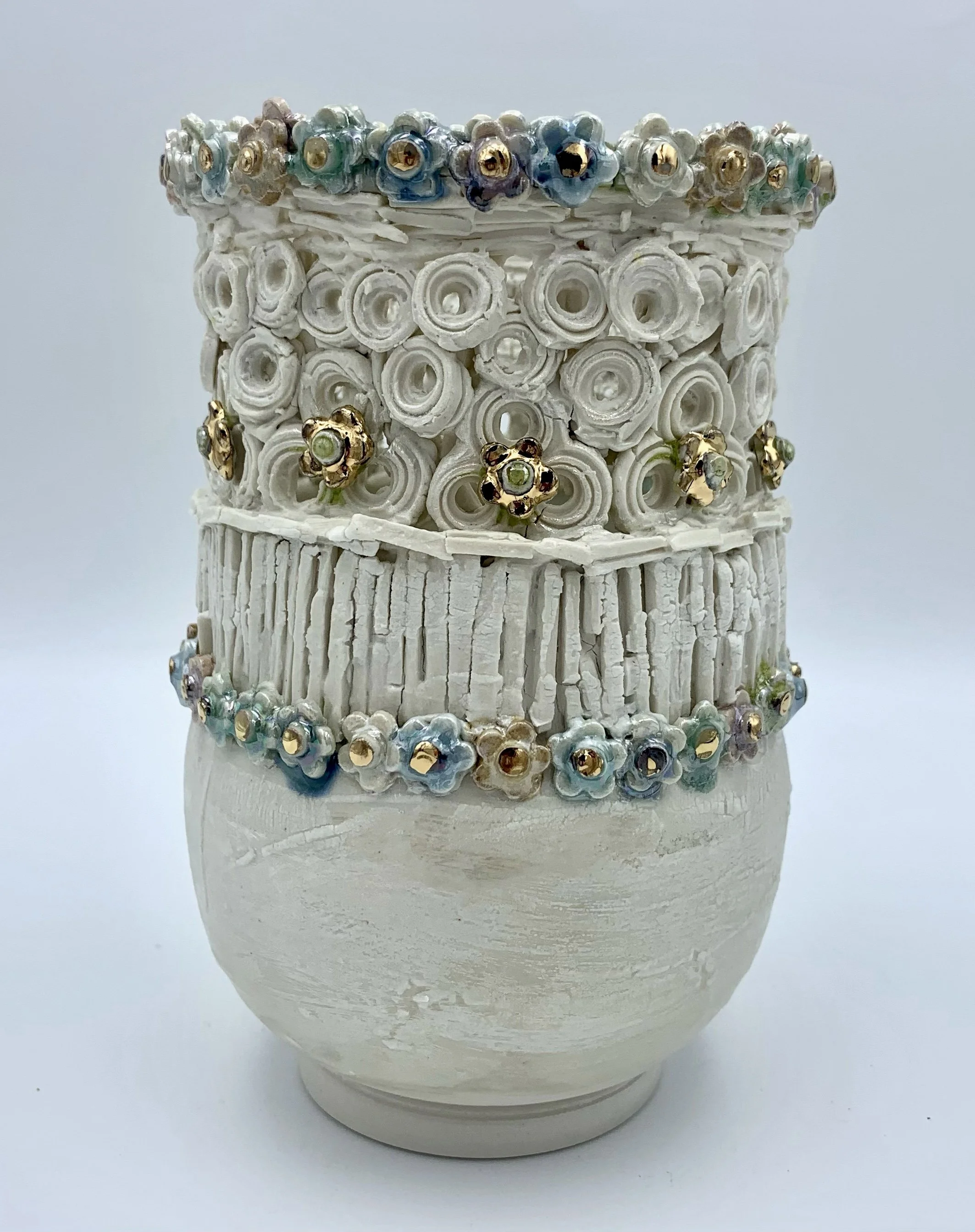
Olinda, 6.5x4.5x4.5”, $200 (SOLD)
MEOTO YUNOMI
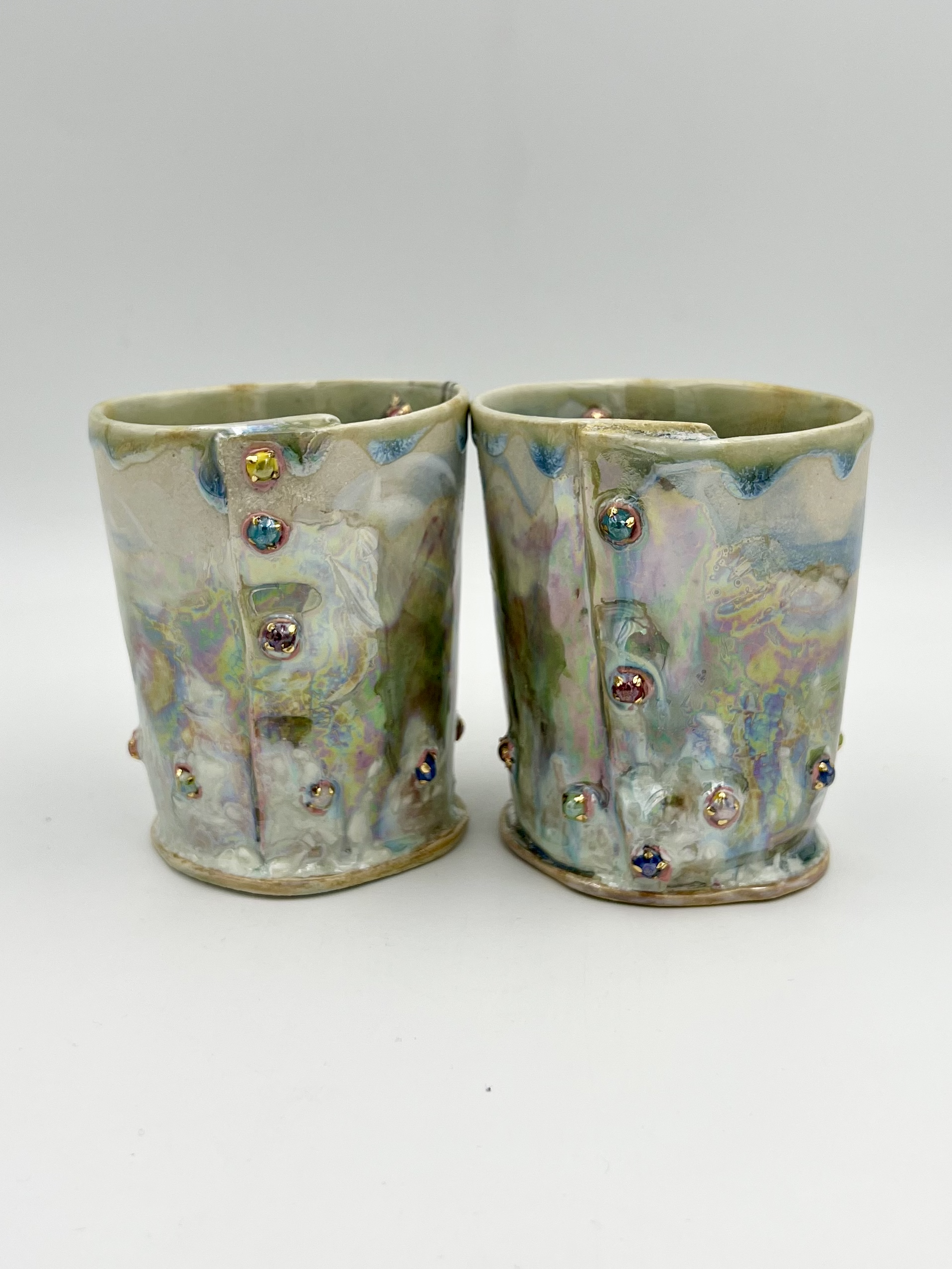
Tender Buttons 1 and 2, 3.5x3x3” $75.00 ea.
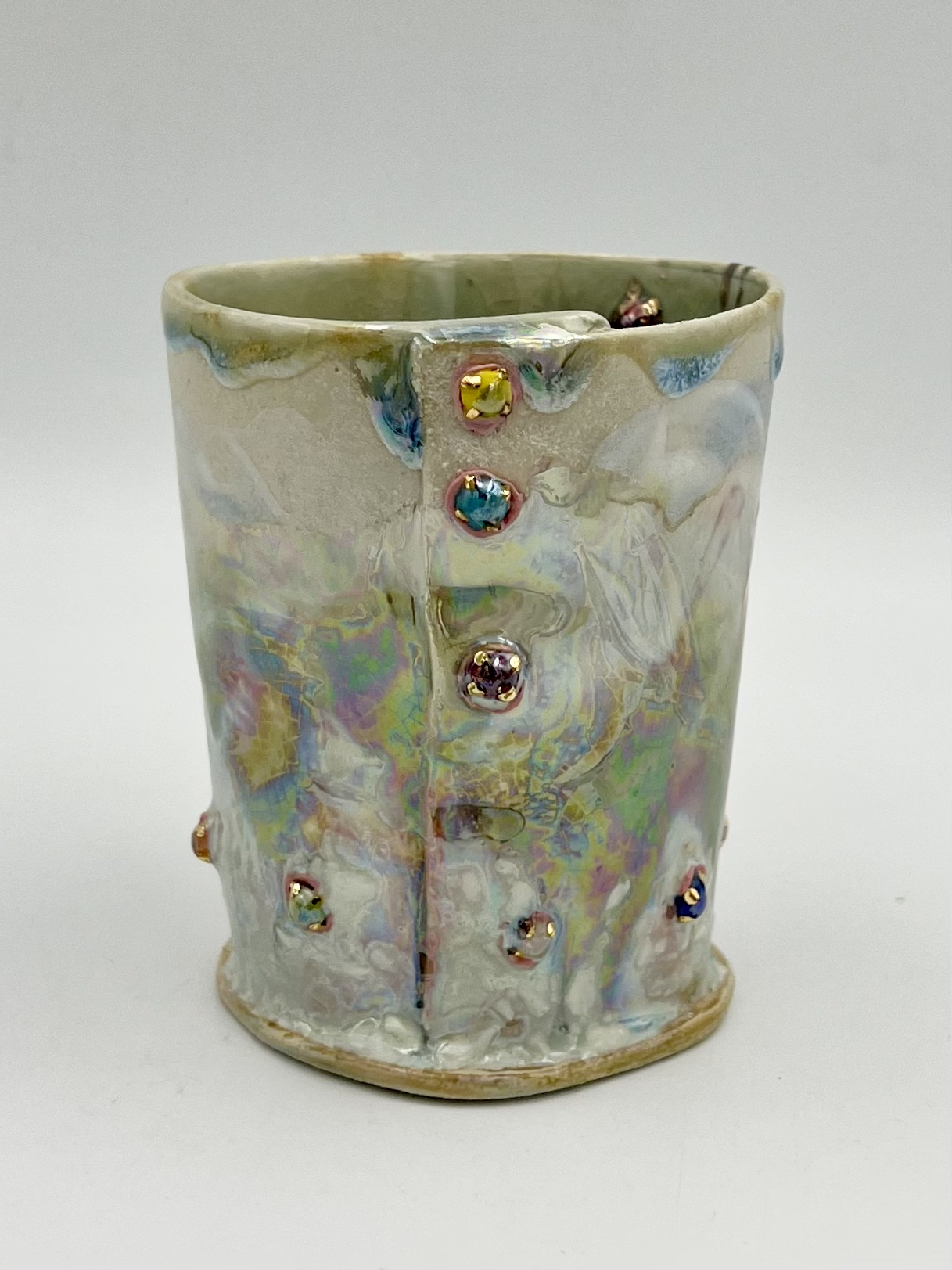
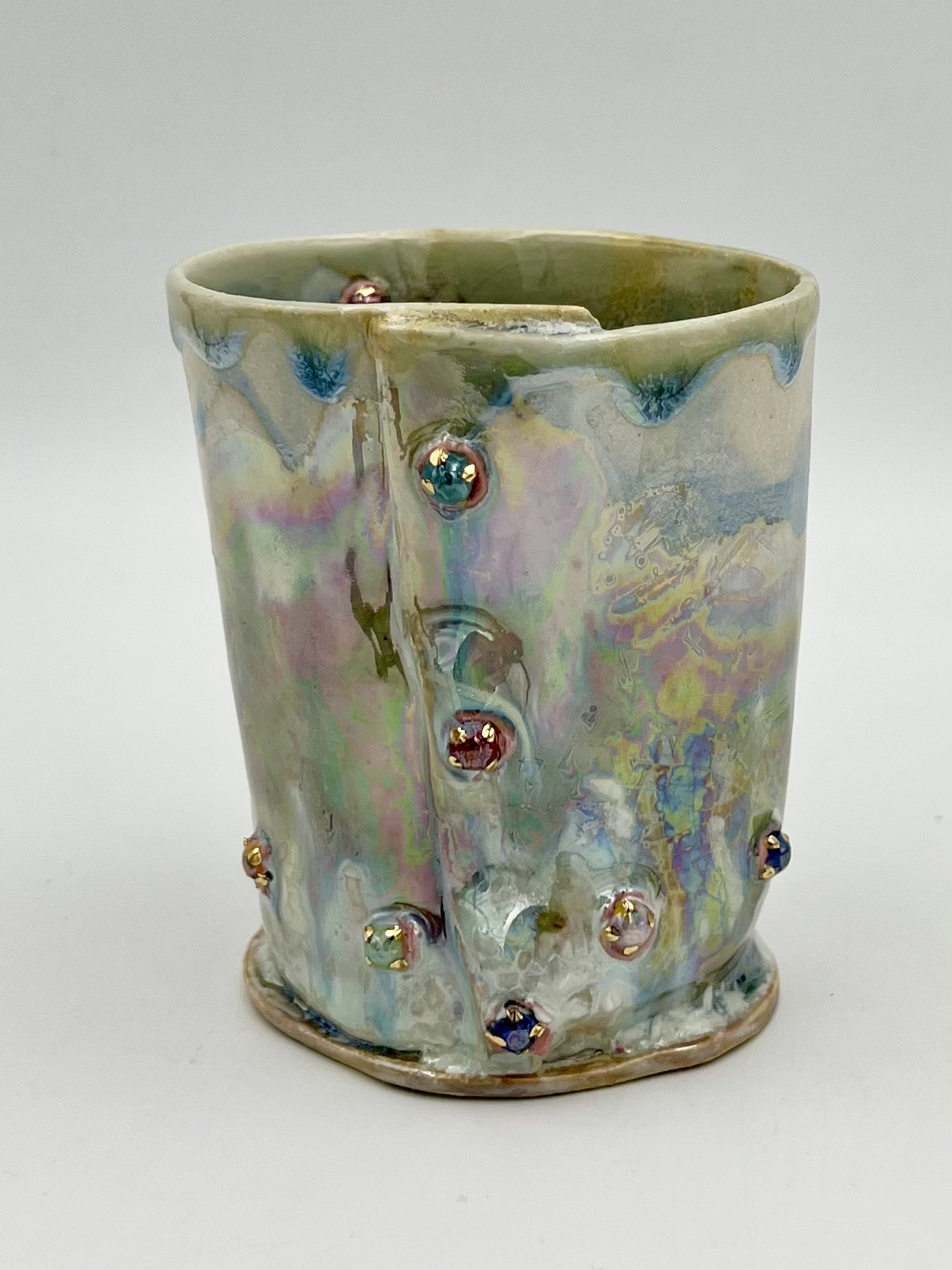
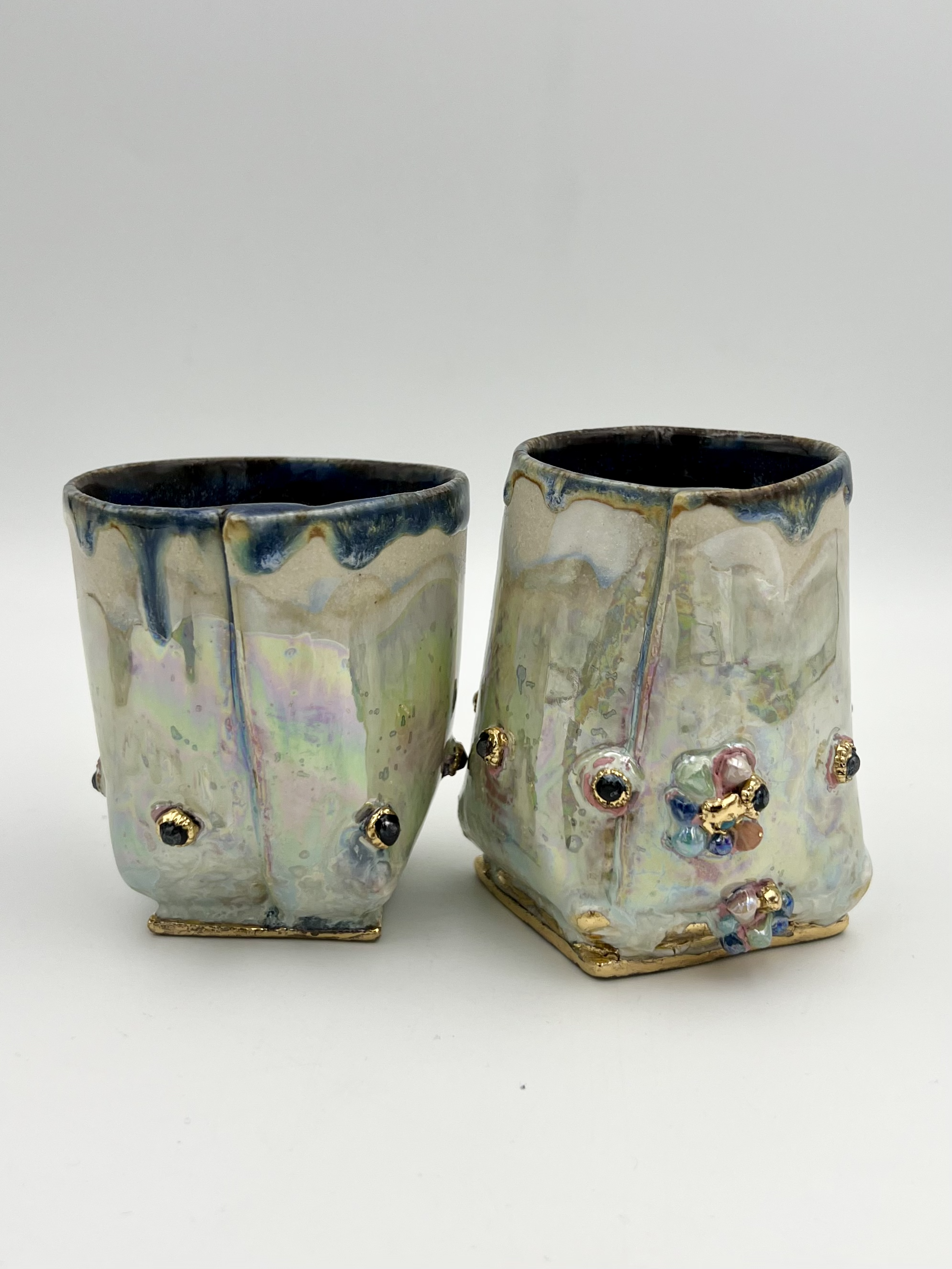
Black Onyx, Black Onyx Plvs Vltra, 3.5x3x3” $75.00 ea. (SOLD BOTH)
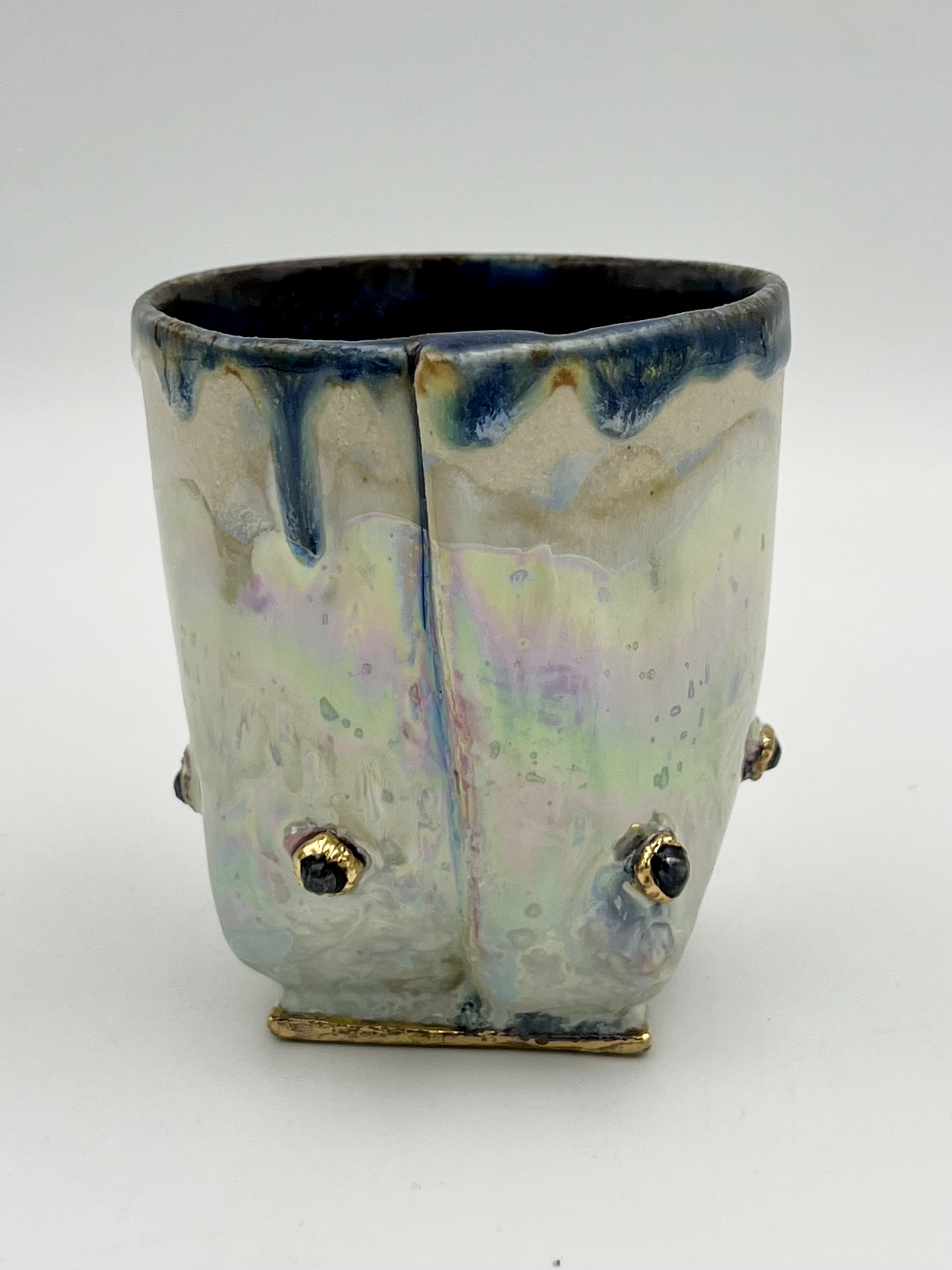
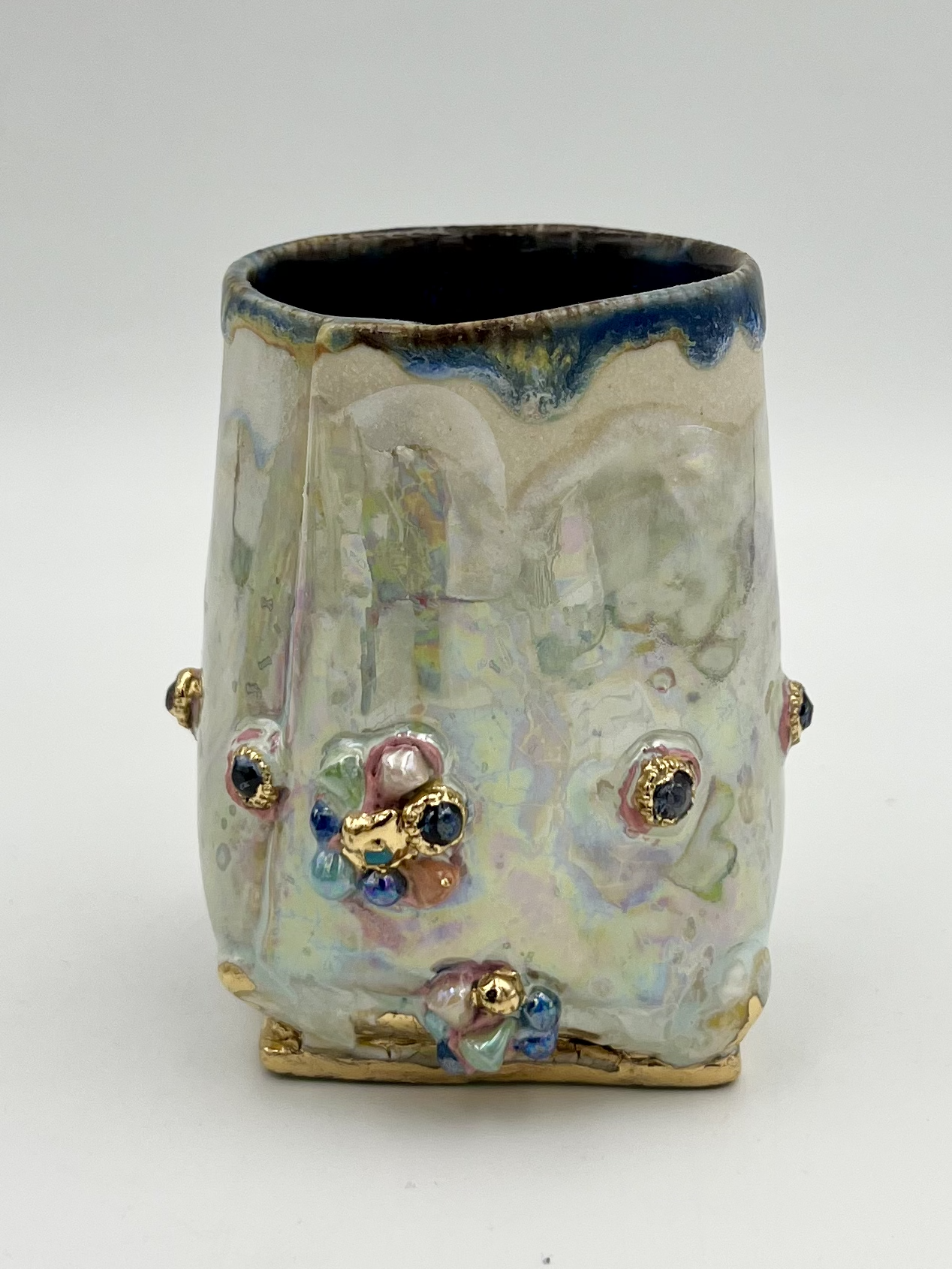
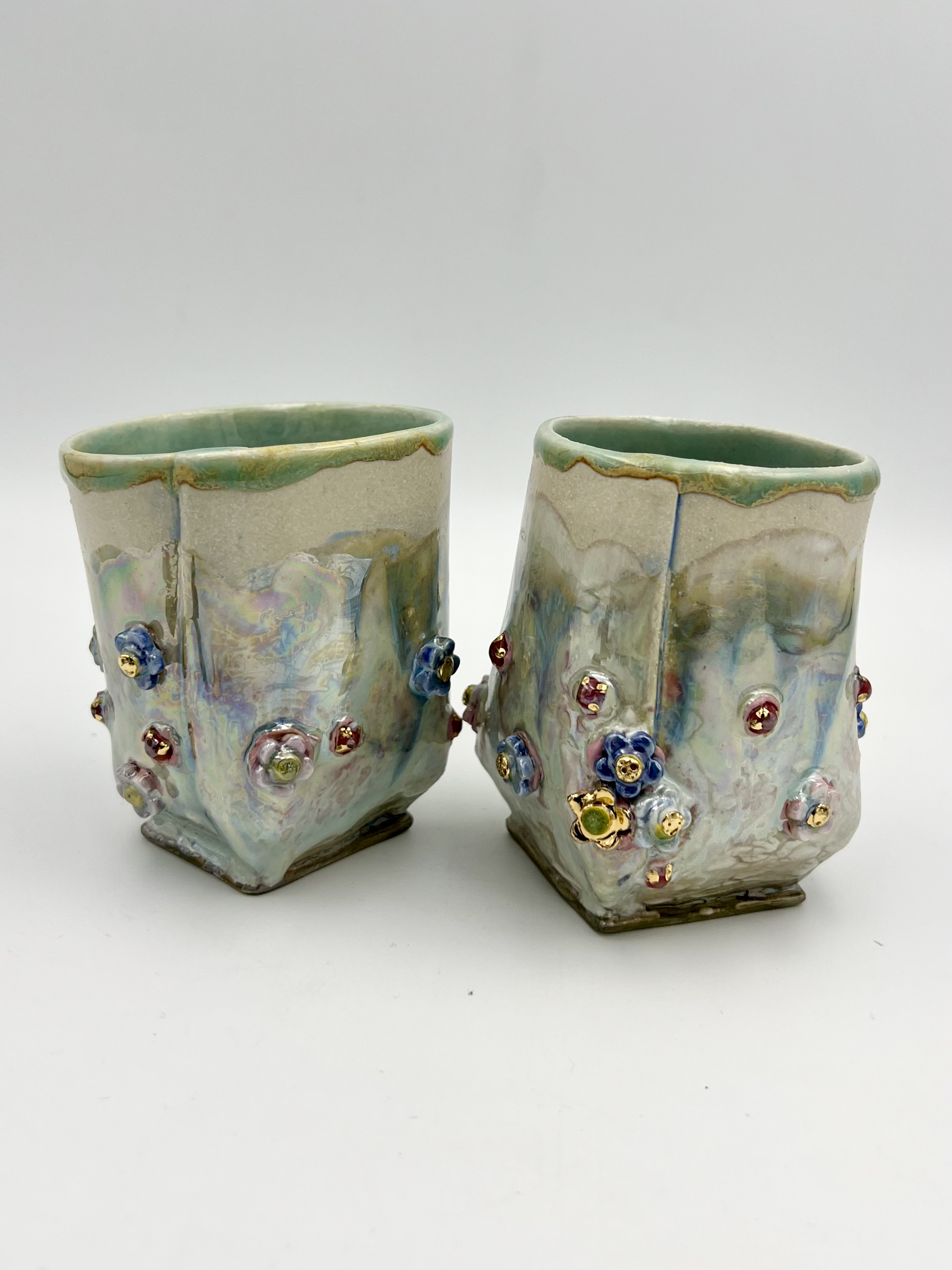
Ruby/Flower 1 and 2, 3.5x3x3” $75.00 ea. (SOLD Both)
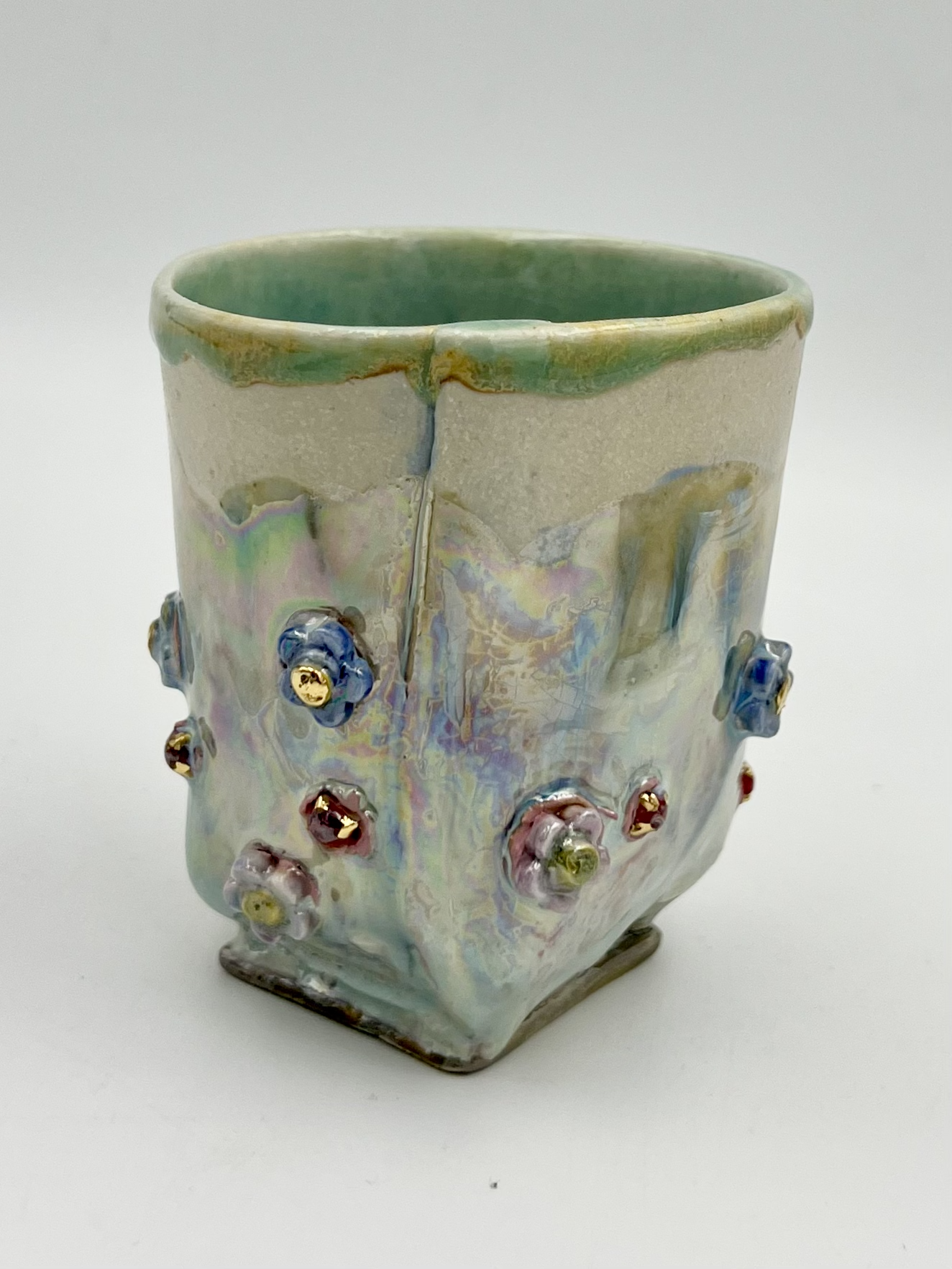
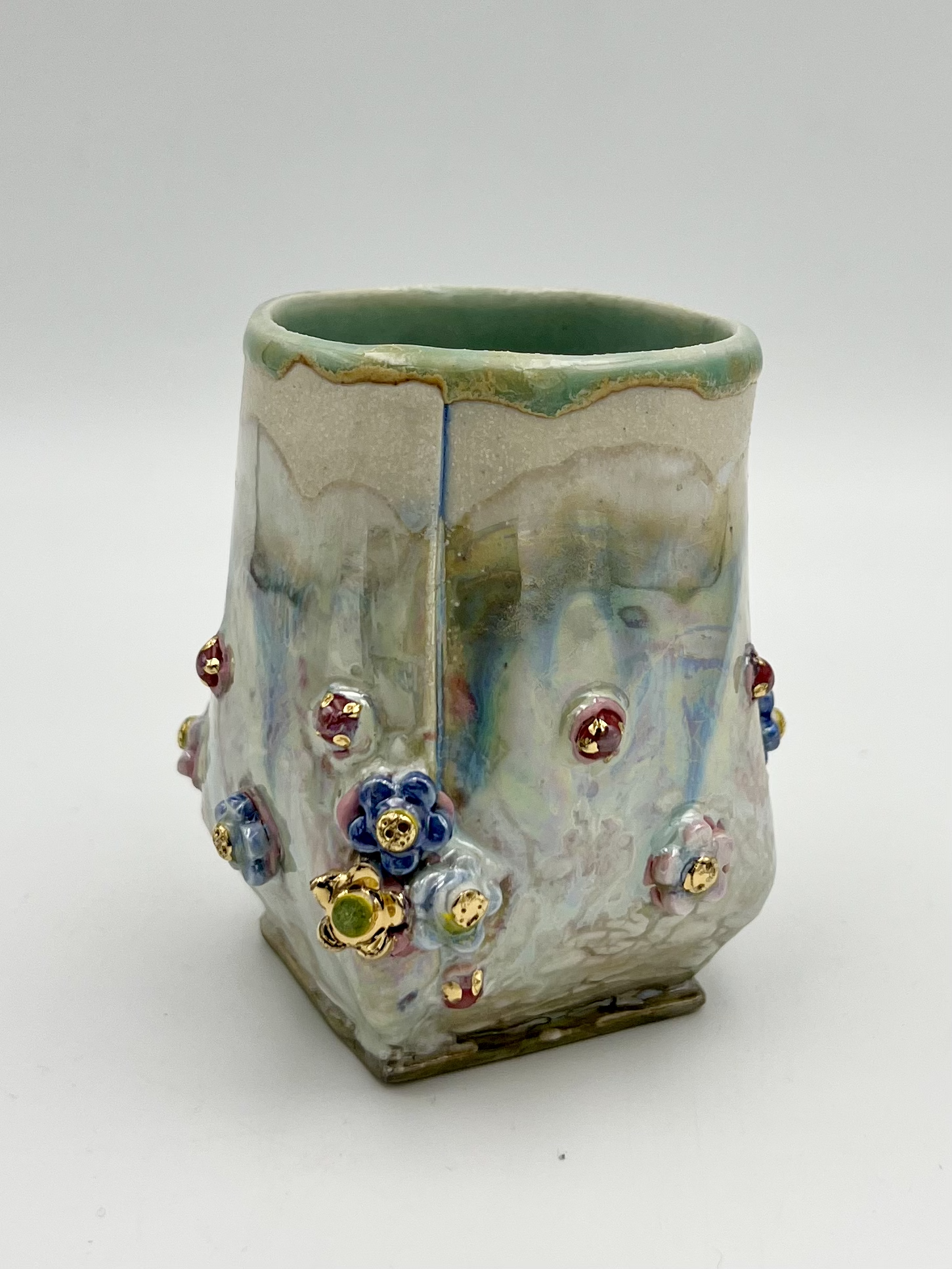
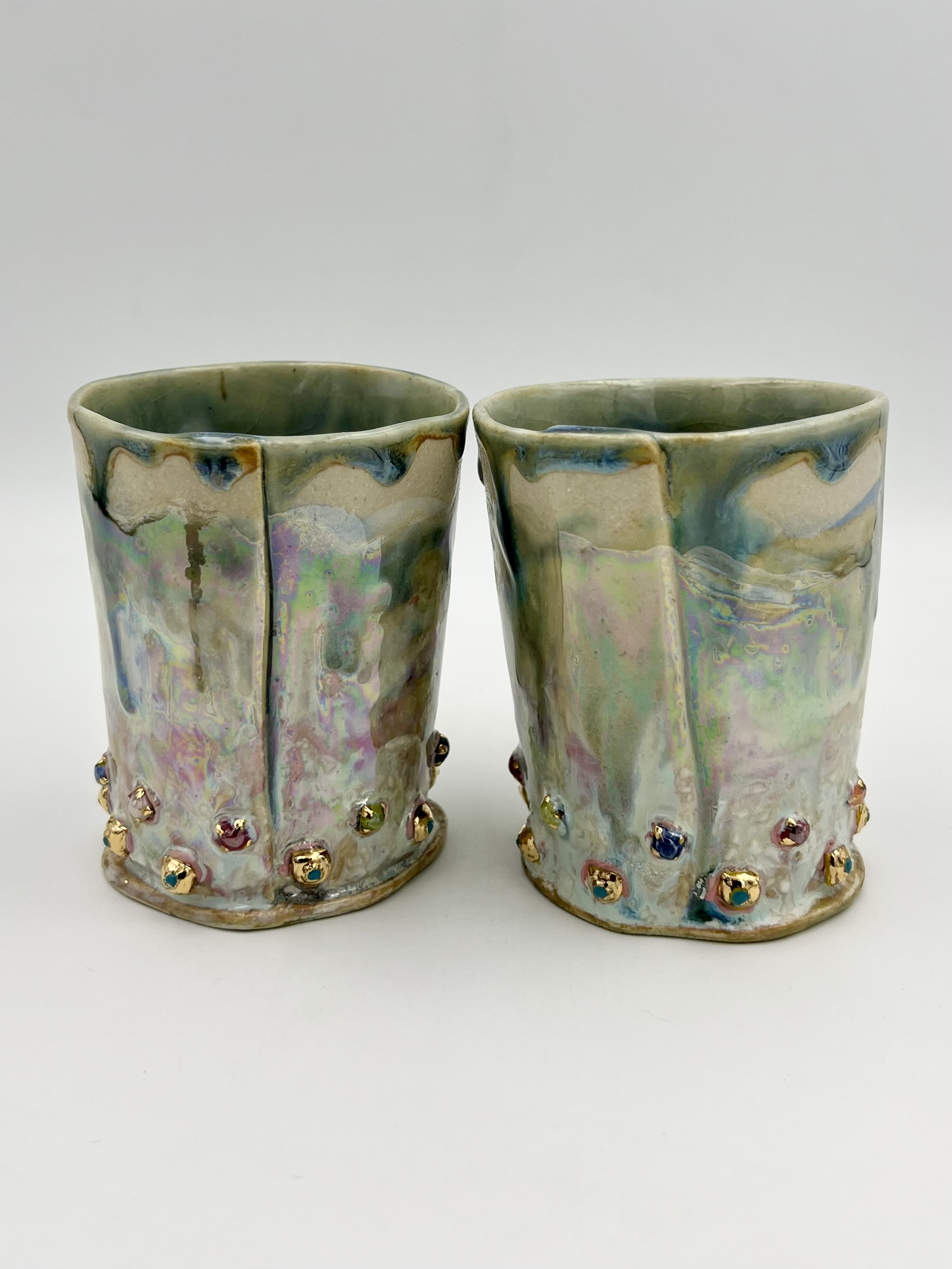
Tender Turquoise in Gold, 3.5x3x3” $75.00 ea.
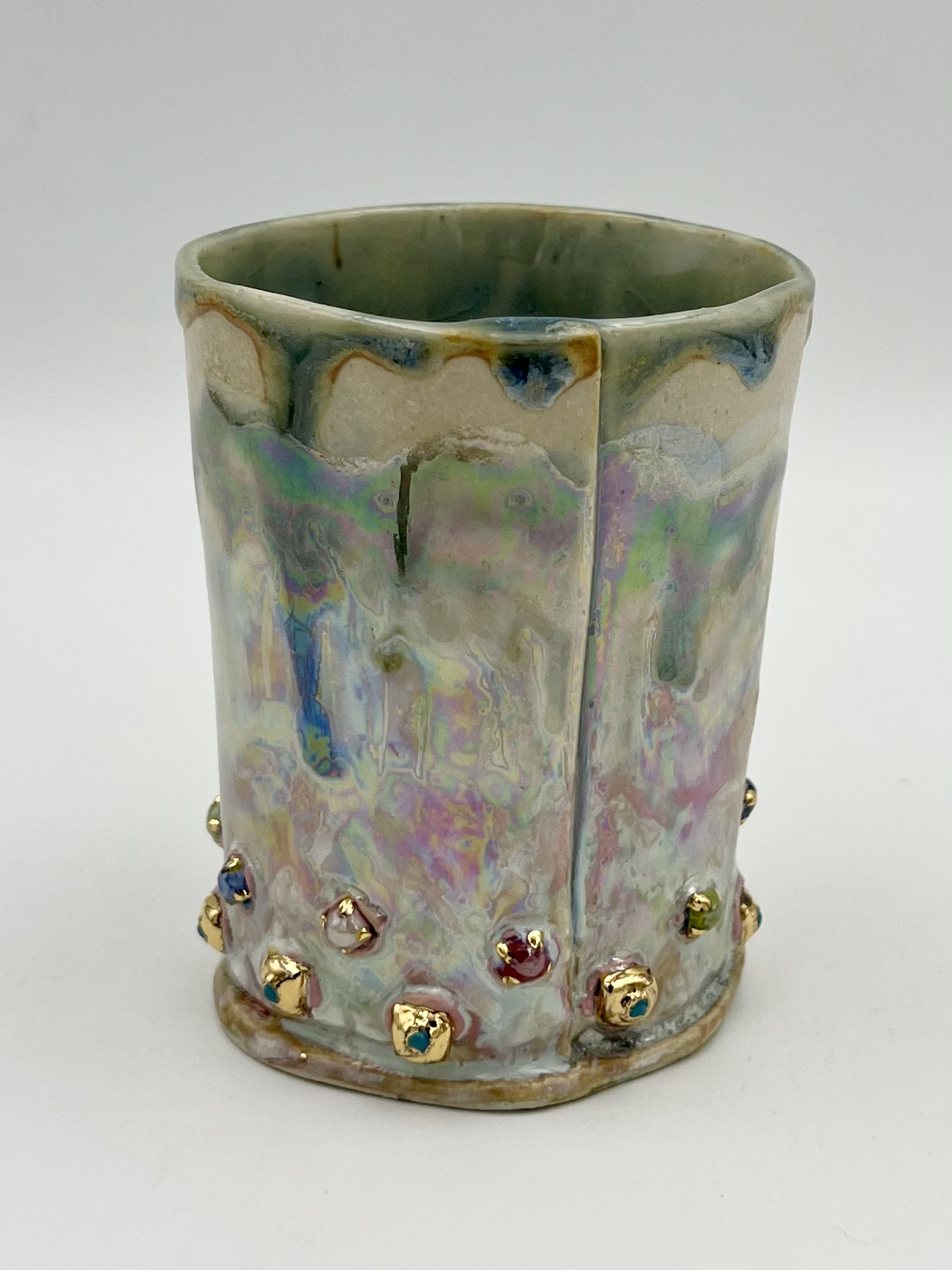
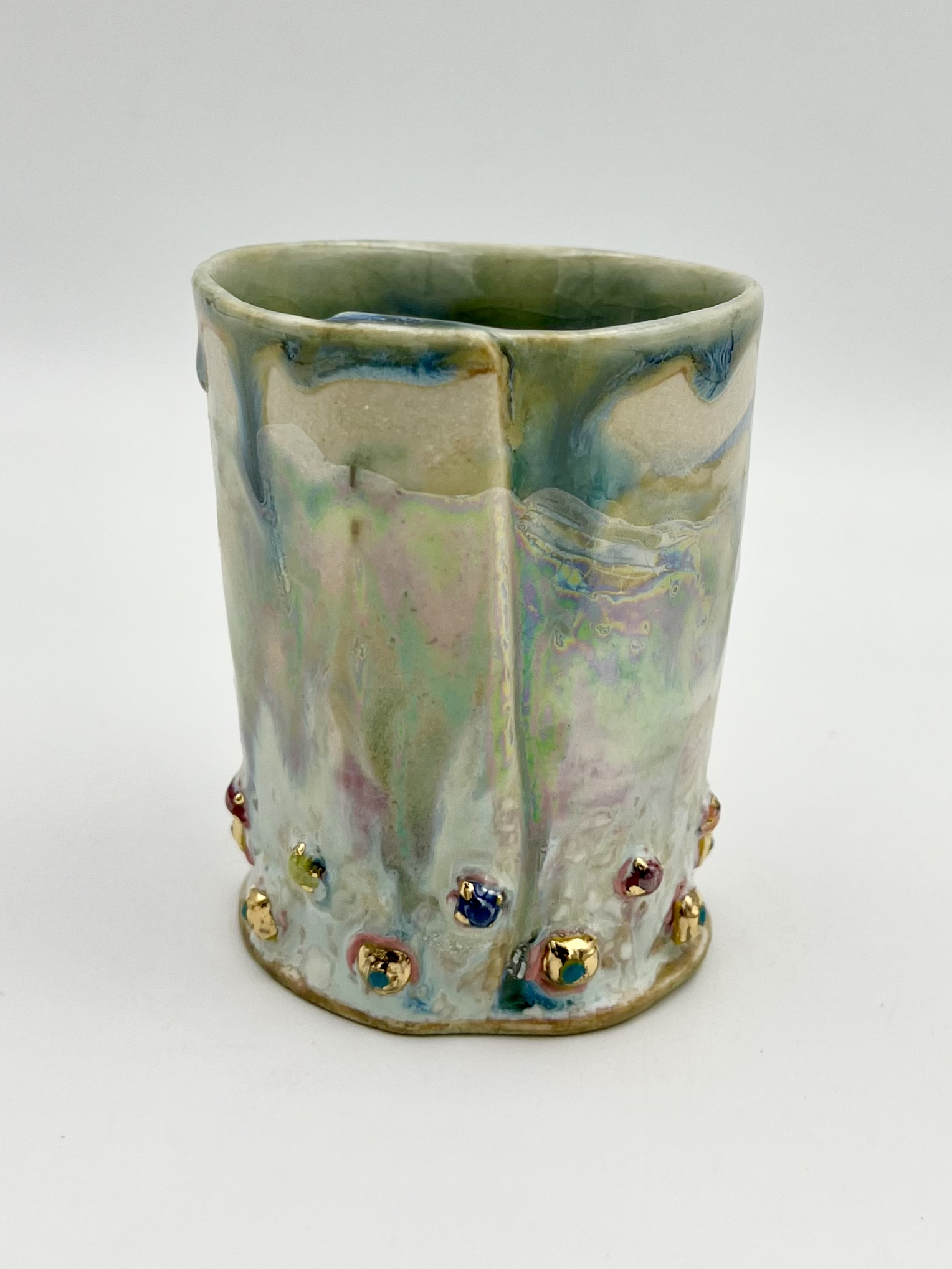
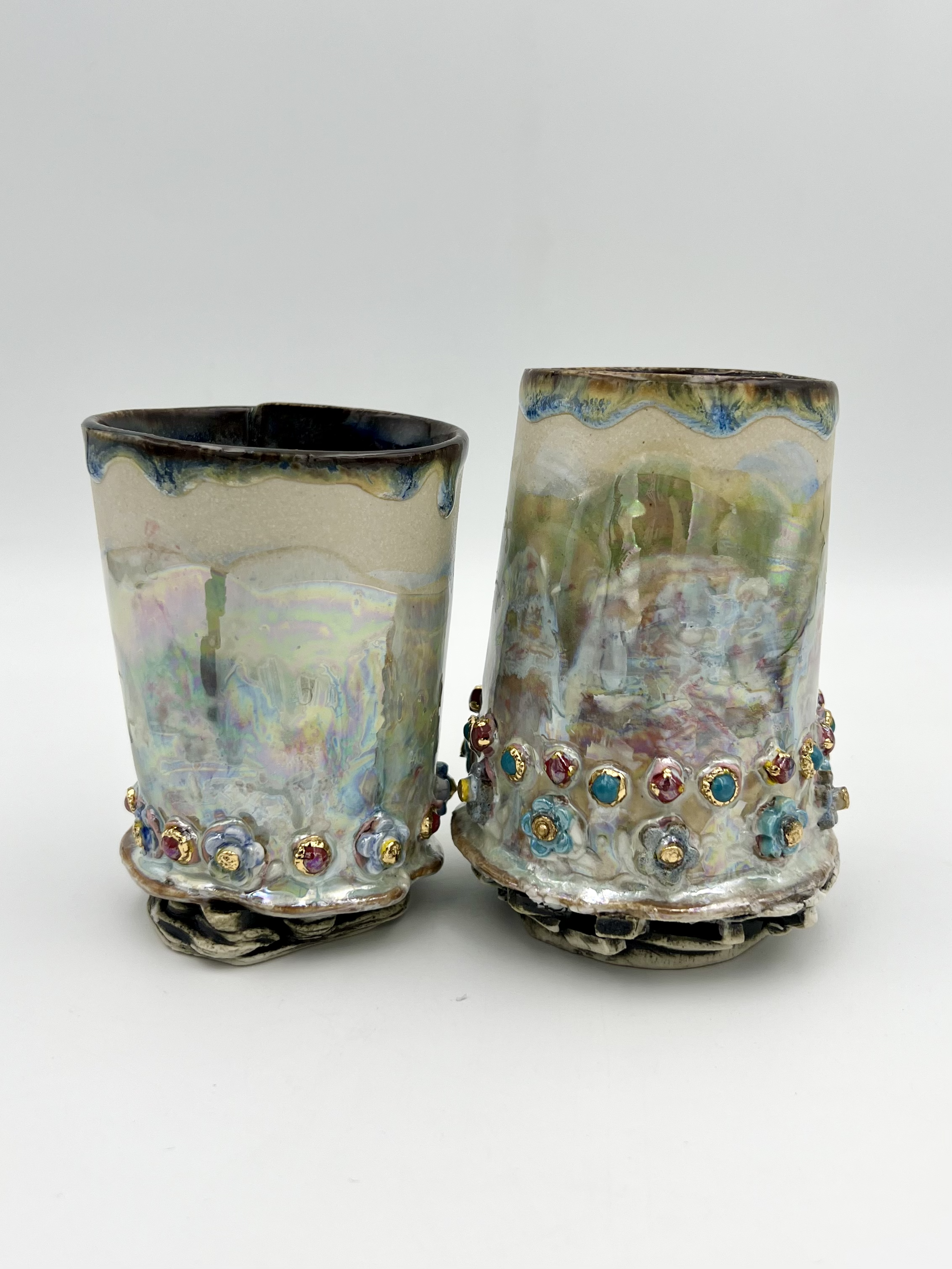
Ruby Forget-Me-Not, 3.5x3x3” $75.00 ea. (SOLD BOTH)
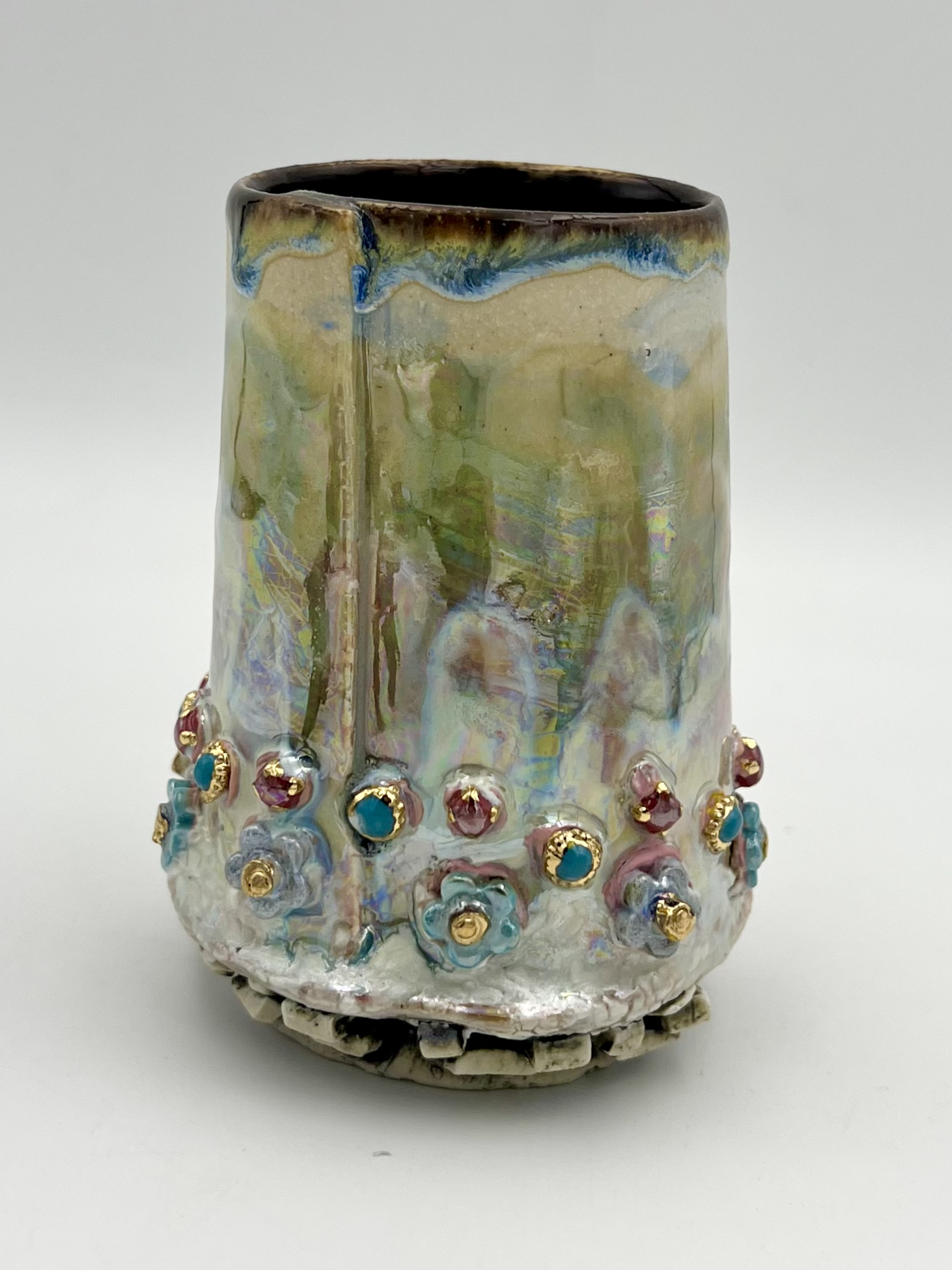
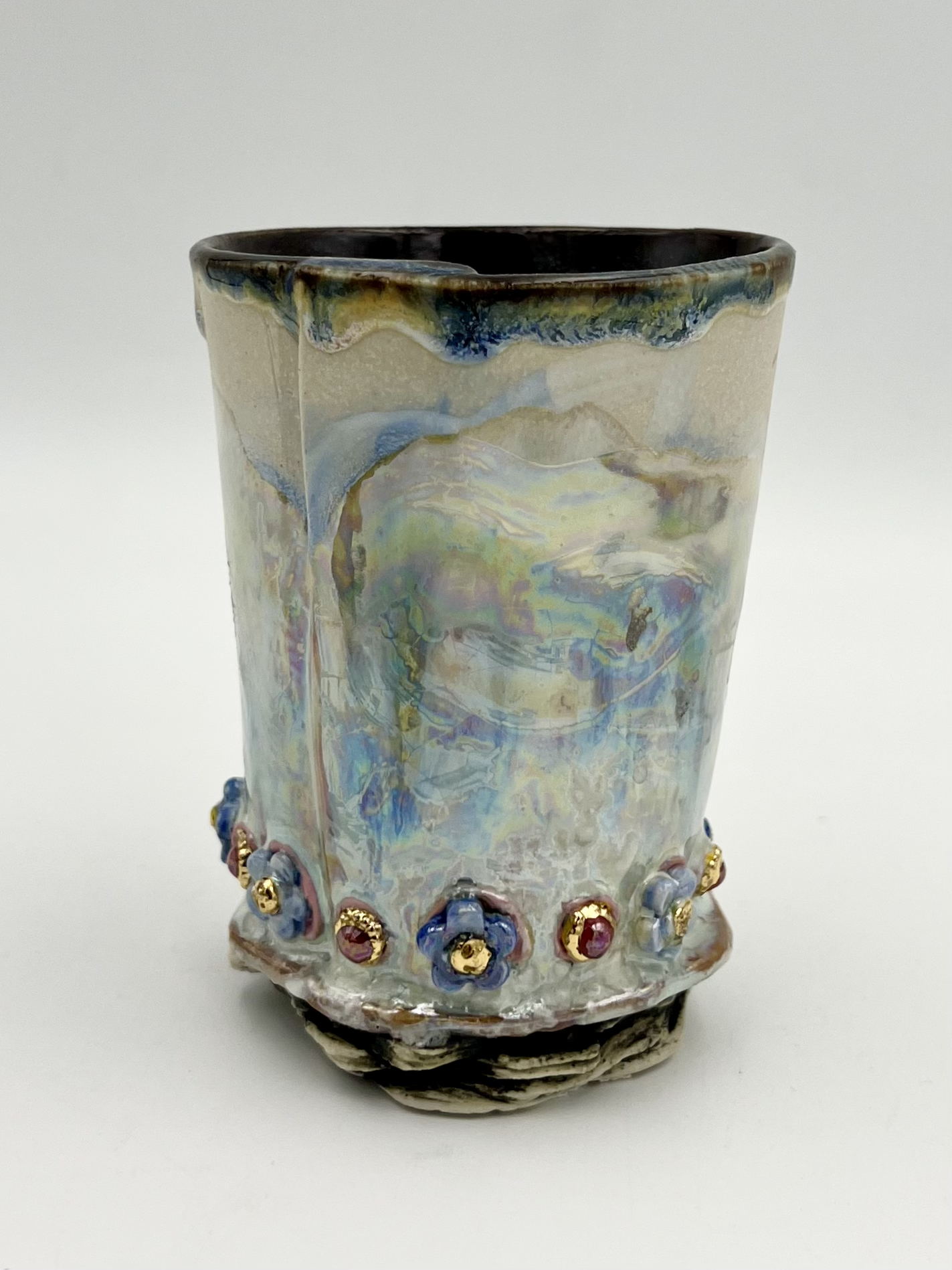
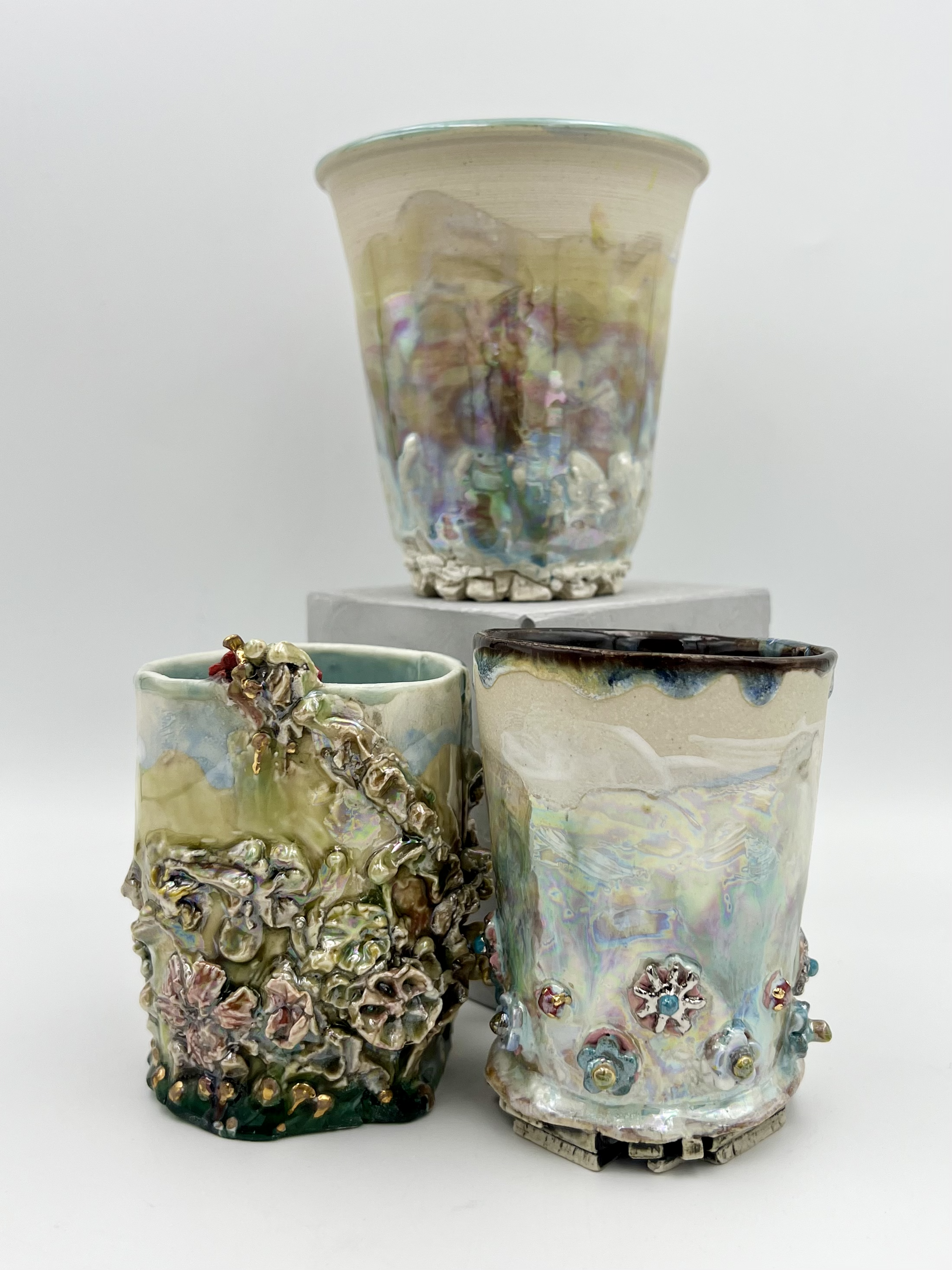
If you were here, vase and two cups, porcelain, vase - 40$, cups - $80 ea (SOLD 2 cups in foreground - Vase available)
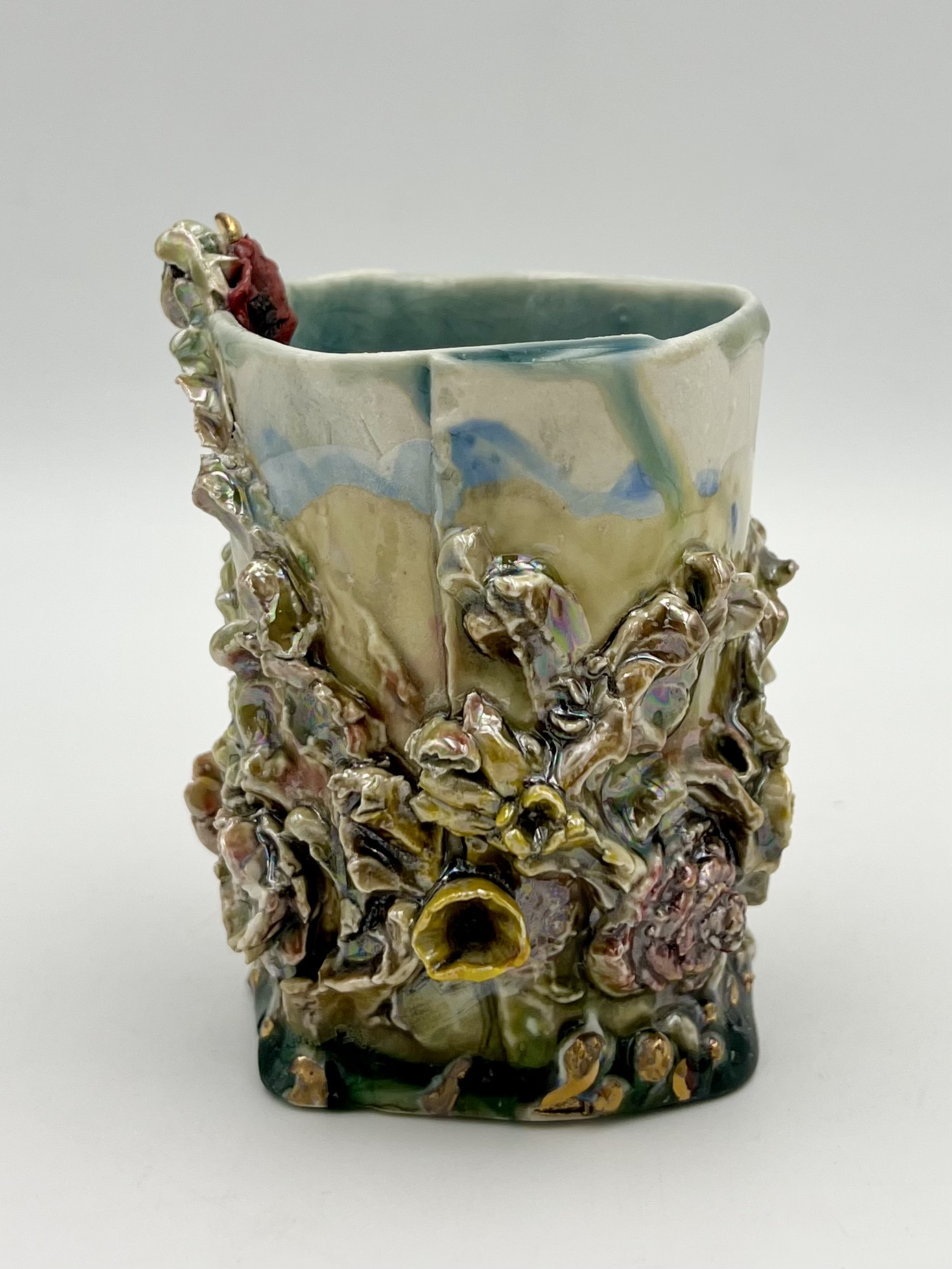
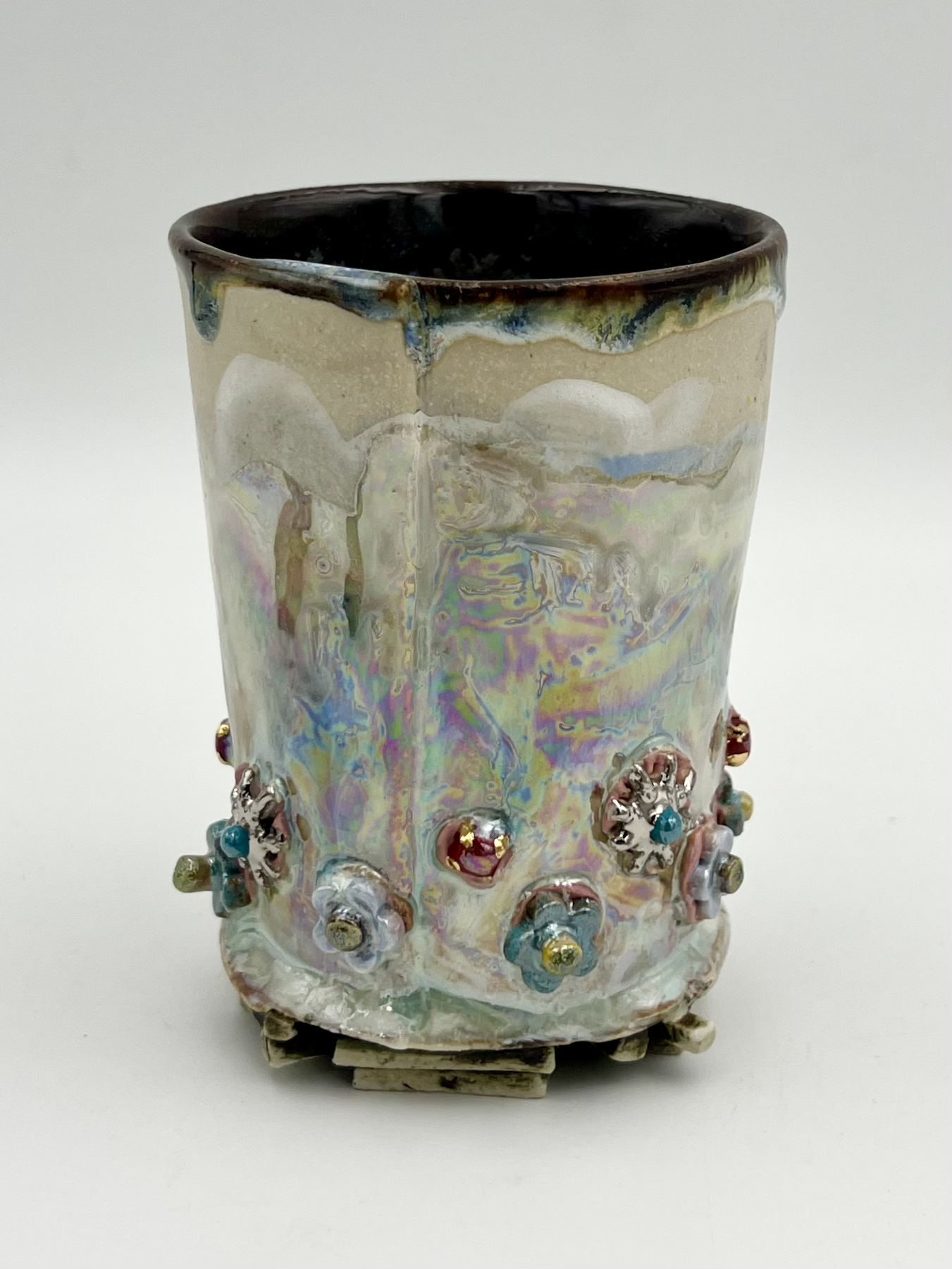
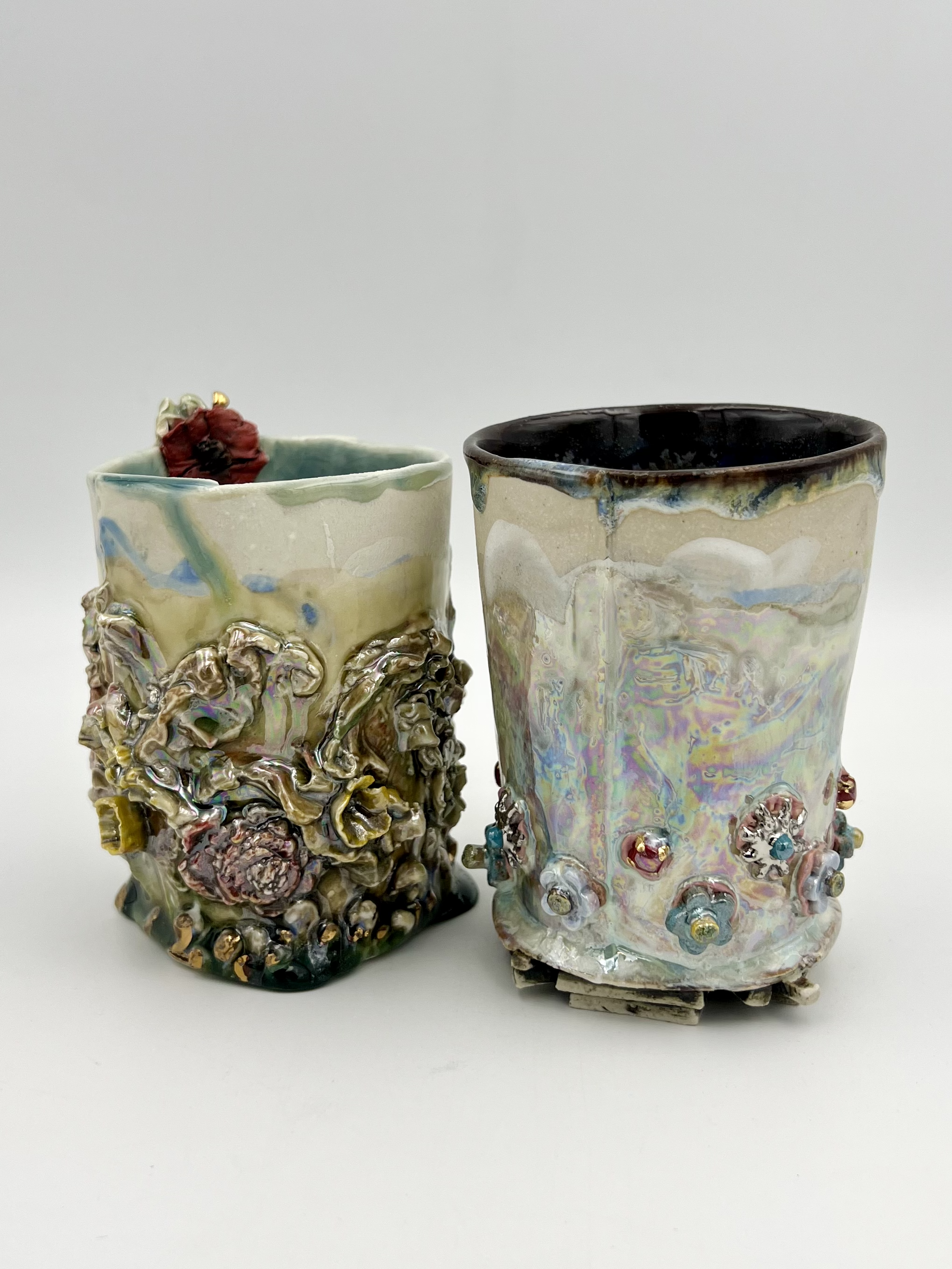
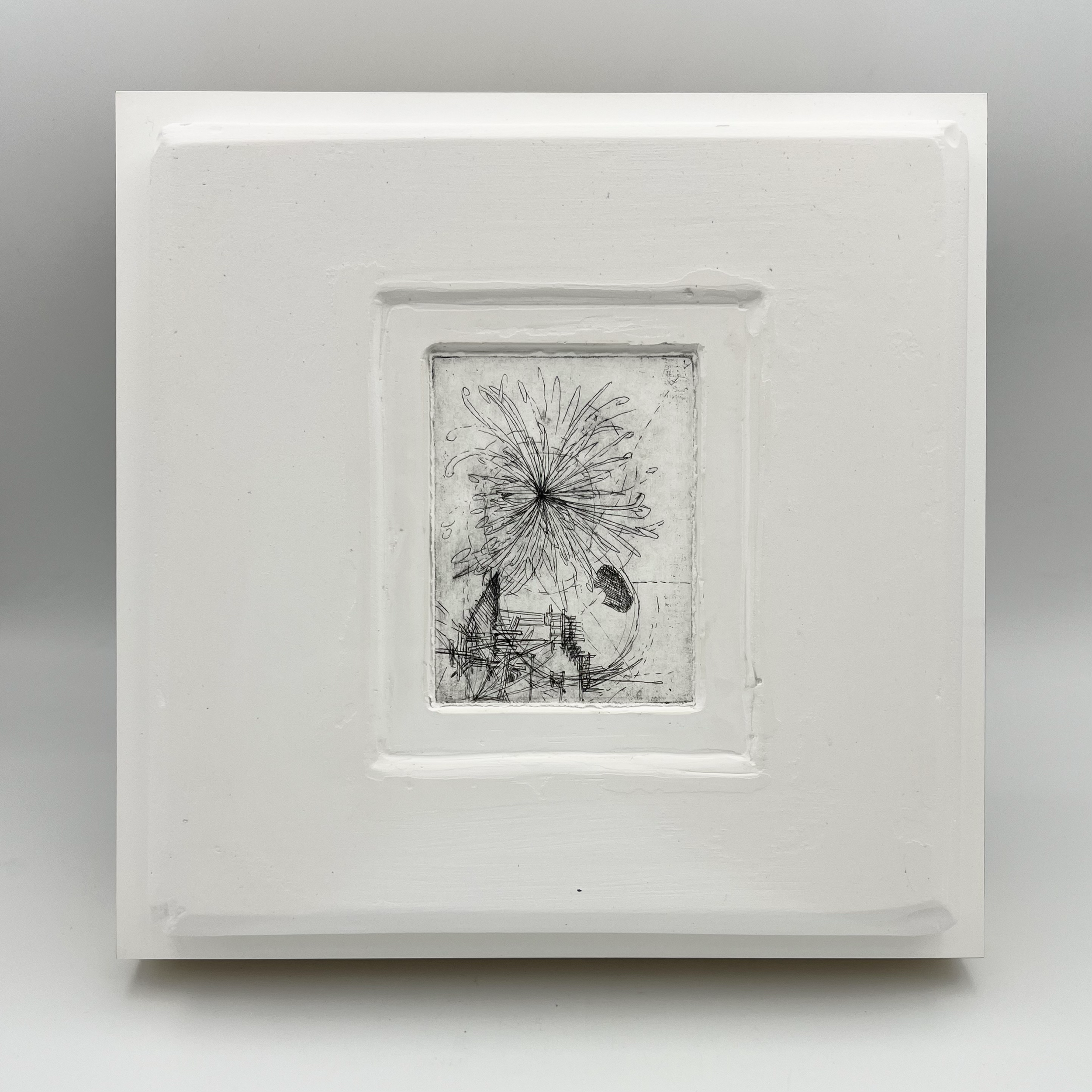
Chrysanthemum for Bill Walton, etching on BFK over cast plaster etching, on 12 x 12” $400.00
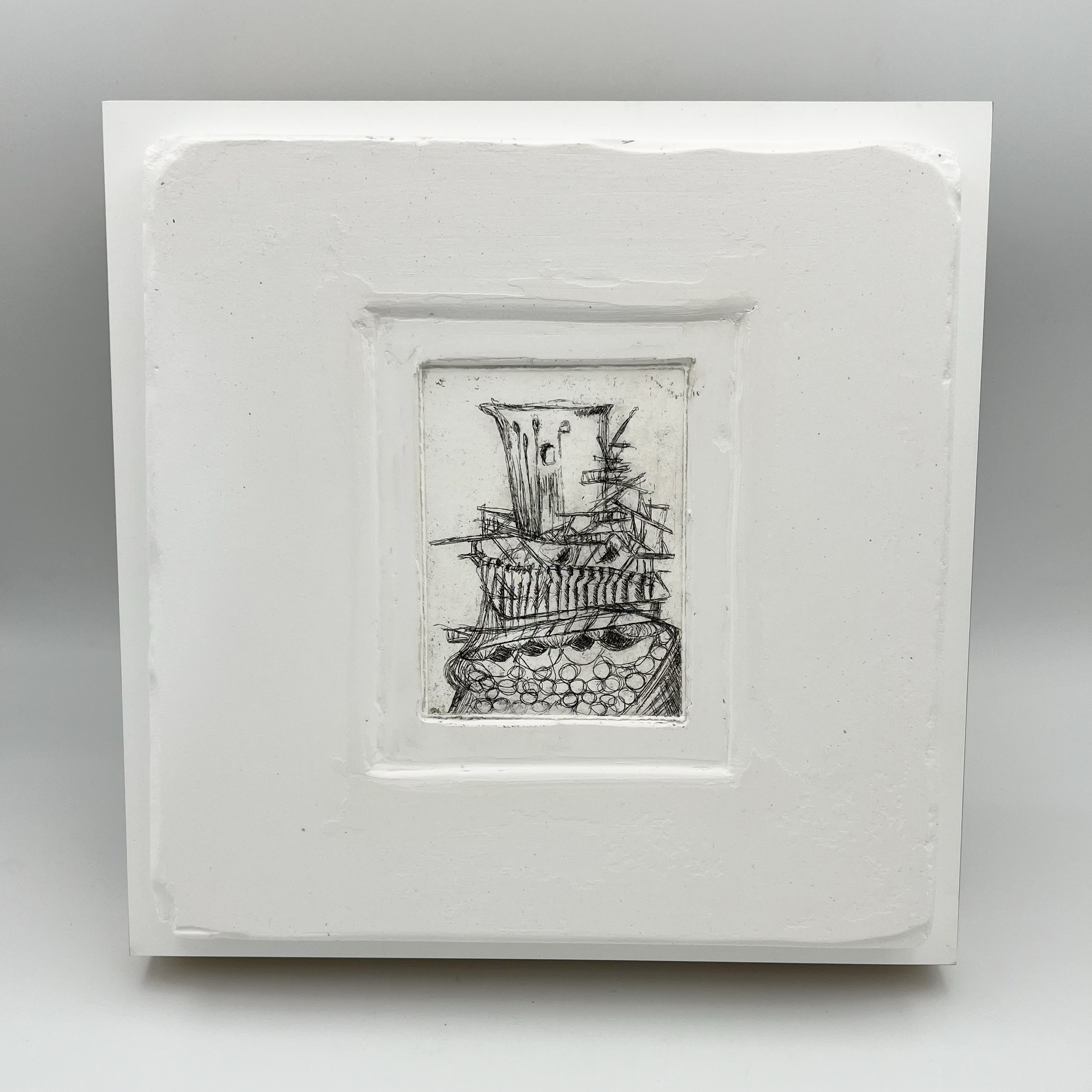
Invisible City for Bill Walton, etching on BFK over cast plaster etching, on 12 x 12” $400.00
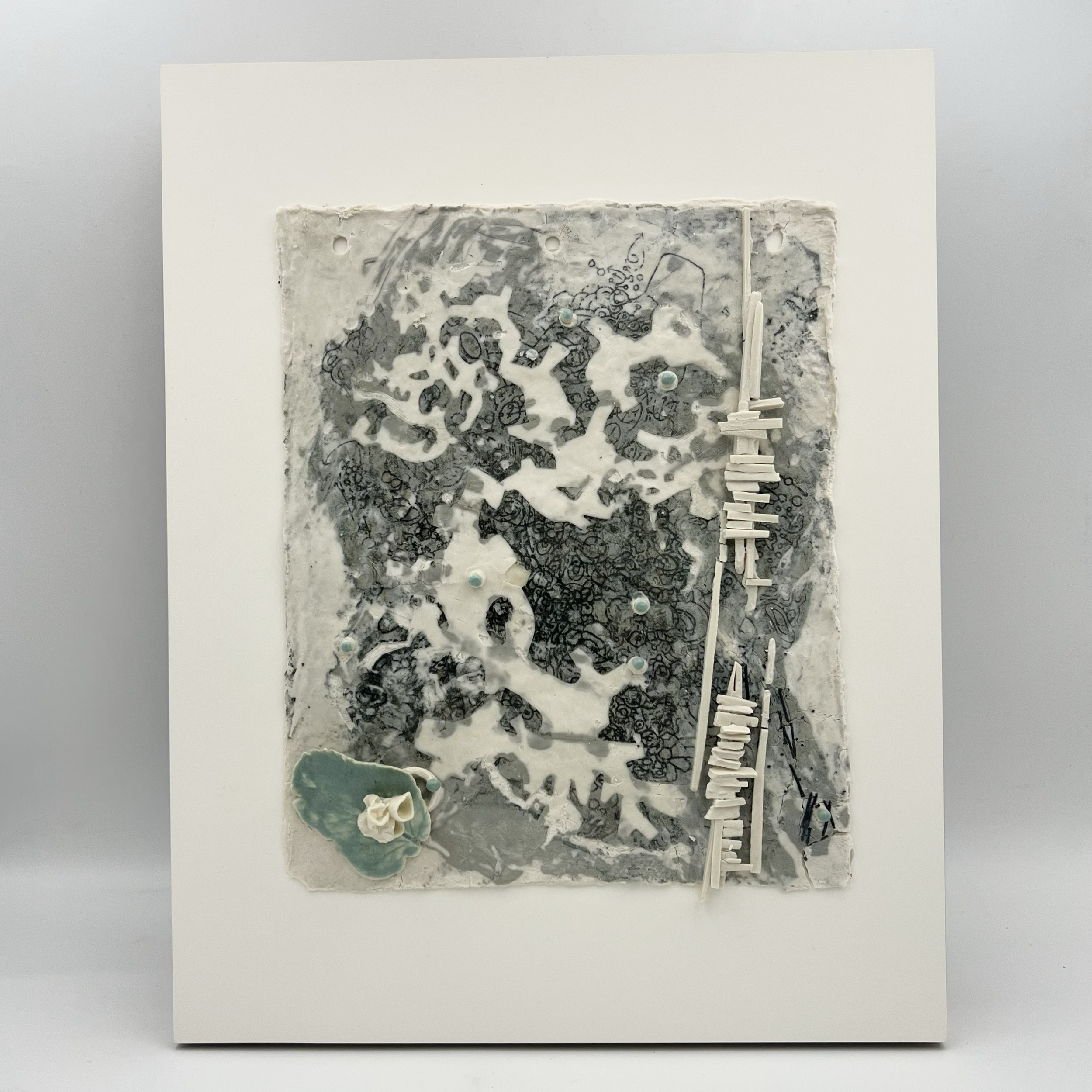
Perseid Meteors I, Lithographic transfer on handmade porcelain paper, staples, glaze, on 11 x 14” panel, $400.00
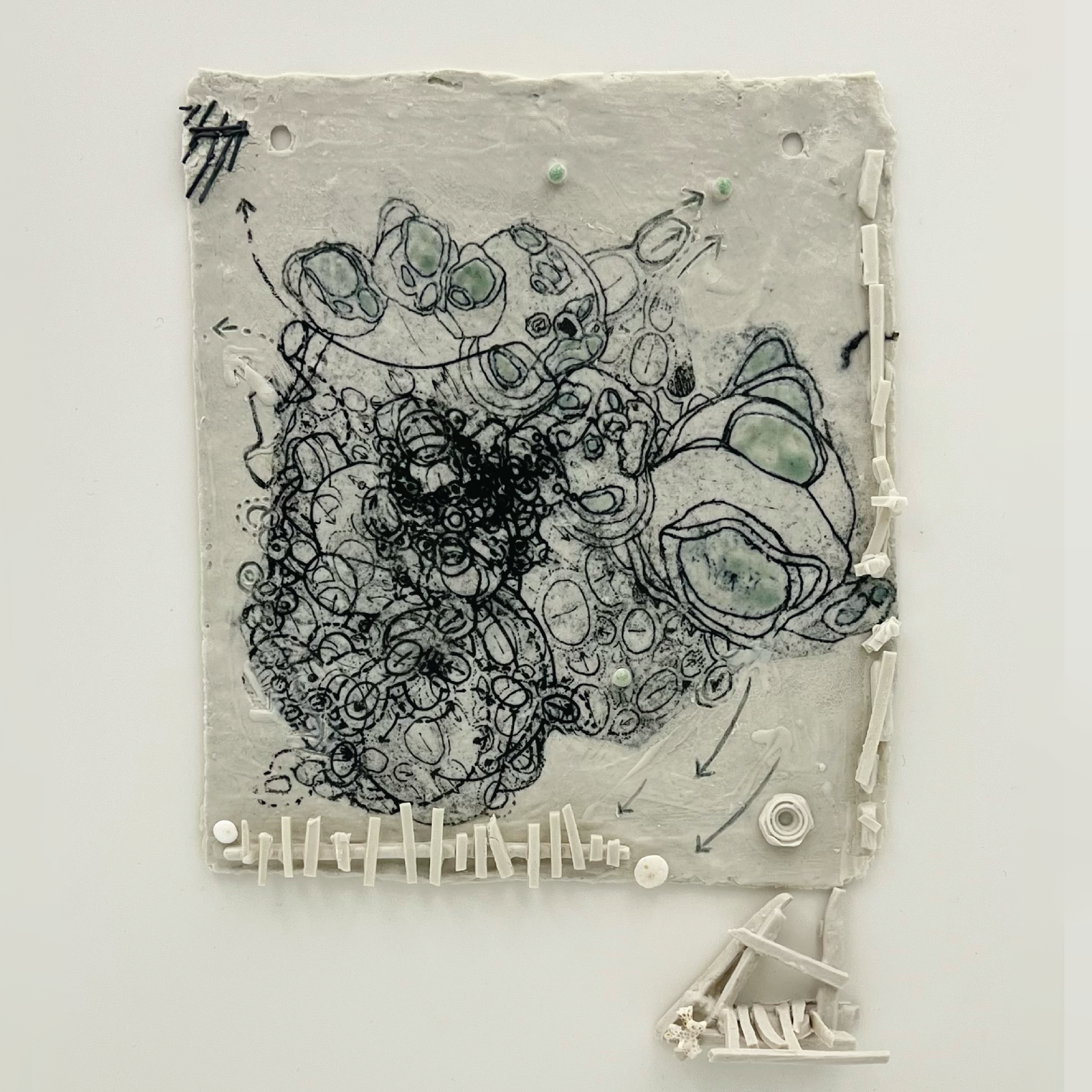
A Small Plot of Land for Bill Walton, Lithographic transfer on handmade porcelain paper, coral, glaze, on 11 x 14” panel (2022) $400.00
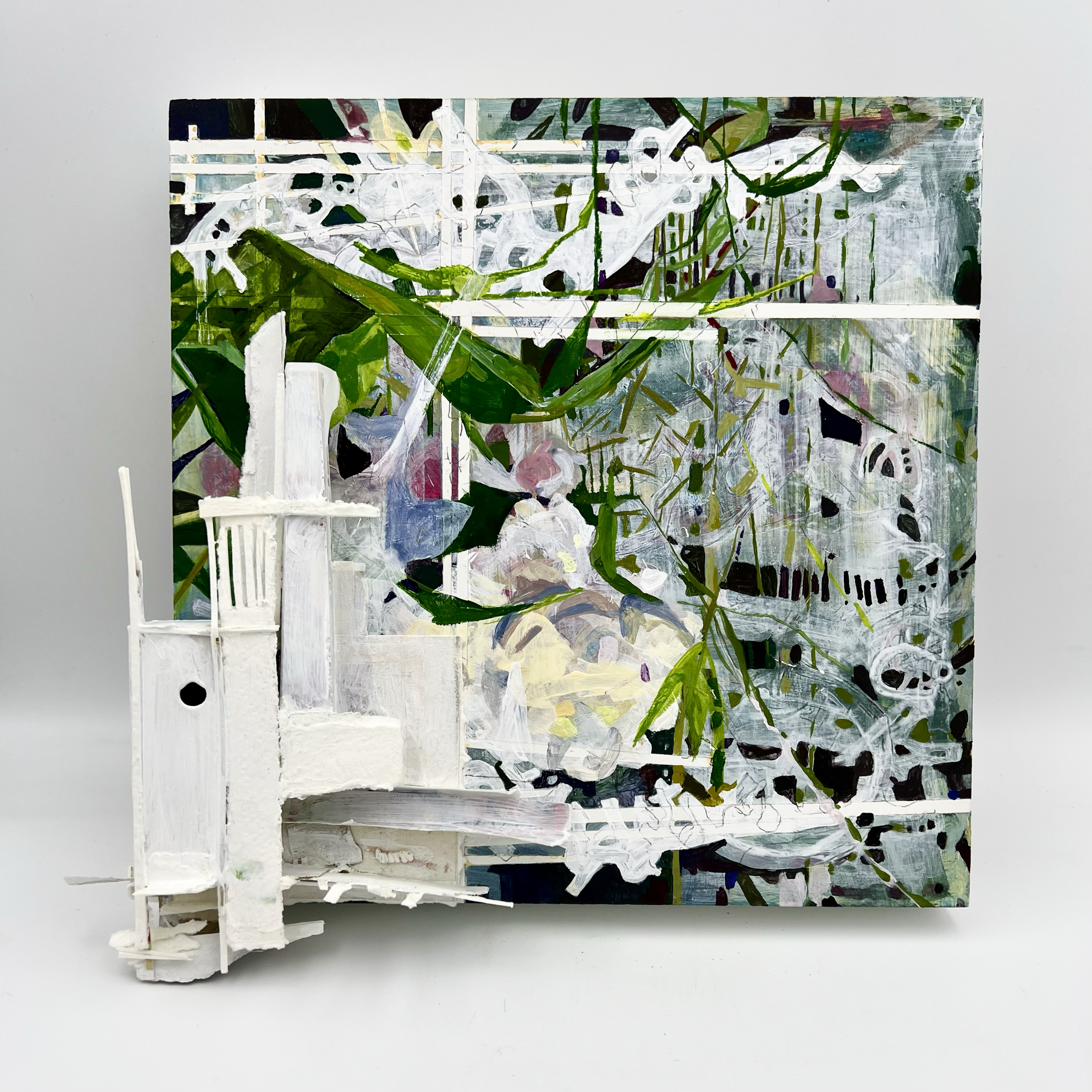
Rhea - Meter Megale II, Acrylagouache, paper construction, 12x12”(2024) $400
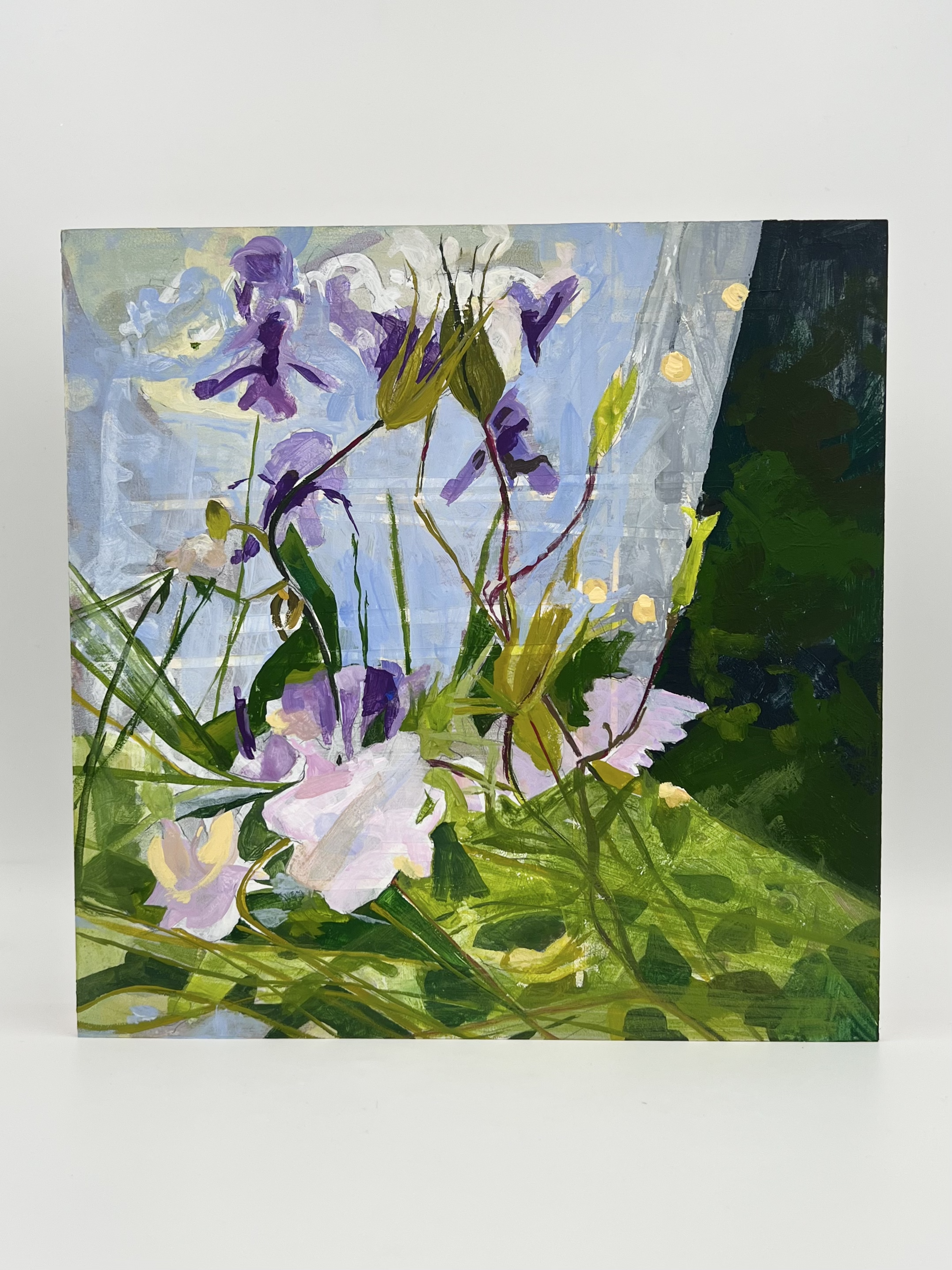
Eleusis, Acrylagouache, gouache, 12x12" $400
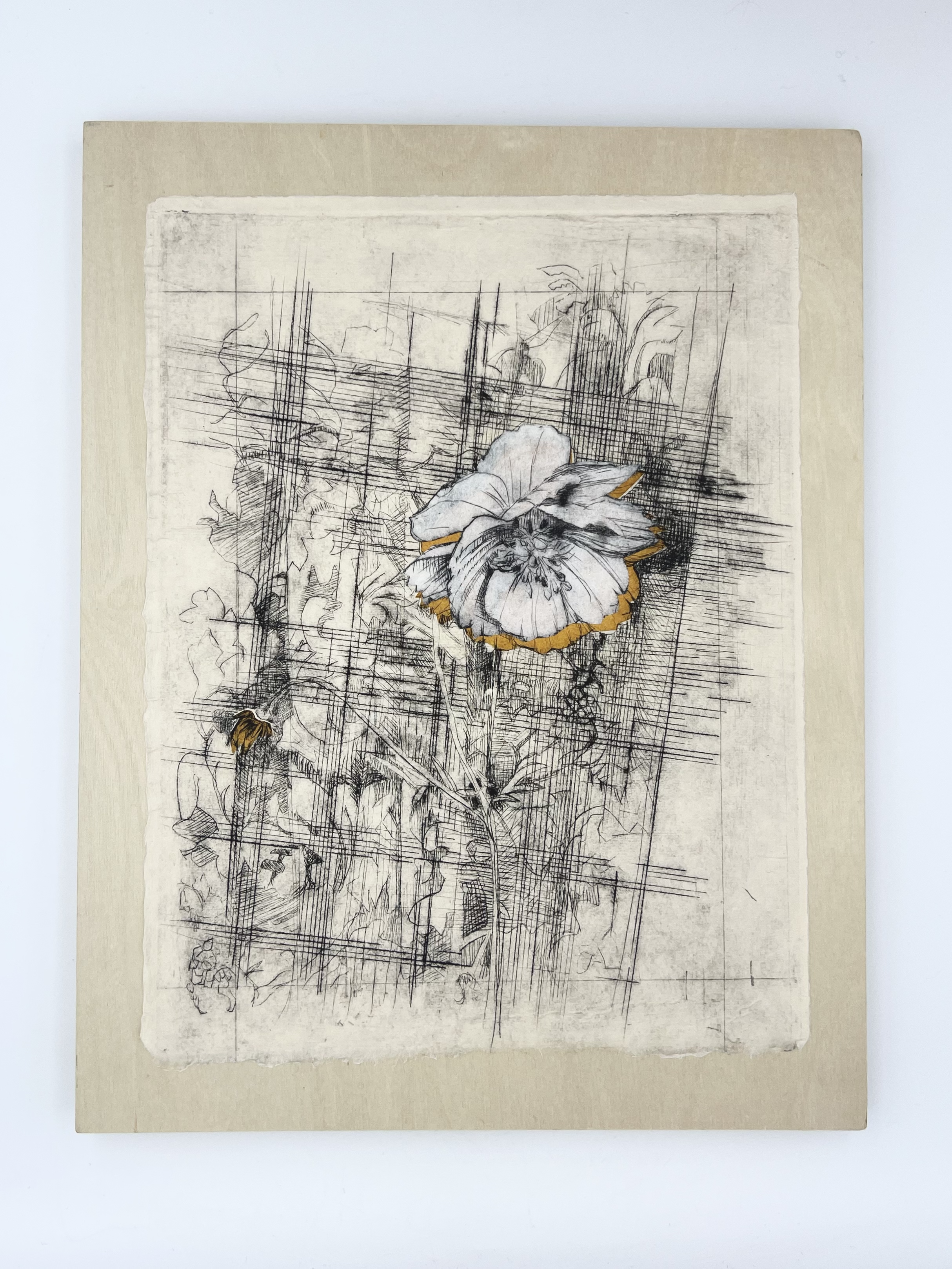
Katherine's Cosmos, Drypoint, chine colle on mulberry, 14x11" $200